

Bees are potters

As you can see from the view from Bradlow Knoll, it was a bright sunny day for a stroll up the hill. What you can’t see is the cool breeze blowing, which made it perfect walking weather. It may not have been a breeze exactly, it was a notch above that, maybe a gust – it wasn’t a waft, zephyr, breath, puff or flurry. It was strong enough to make the trees in Frith Wood whisper, a symphony overhead and a symphony of blue at your feet: the bluebells at their peak.

When you’re bent forward struggling up a hill, your nose is closer to the ground than usual. Which is how I noticed the first Solitary bee crawling out of a hole in the soil. They nest anywhere, and though they are called Solitary bees (or Mining bees) they live alone in burrows but close together in large groups. Not for them the collective work and pressures of the beehive, or the social structure of the honeybee. There are 250 or so species in the UK, including the Tawny mining bee, the Hairy-footed flower bee and the Queen bumblebee. If you find one on the ground looking exhausted, it’s because they need energy: give them a drop of water with sugar (and watch them drink it with their proboscis) and they’ll eventually take off and go back to work. And they won’t sting if you pick them up.
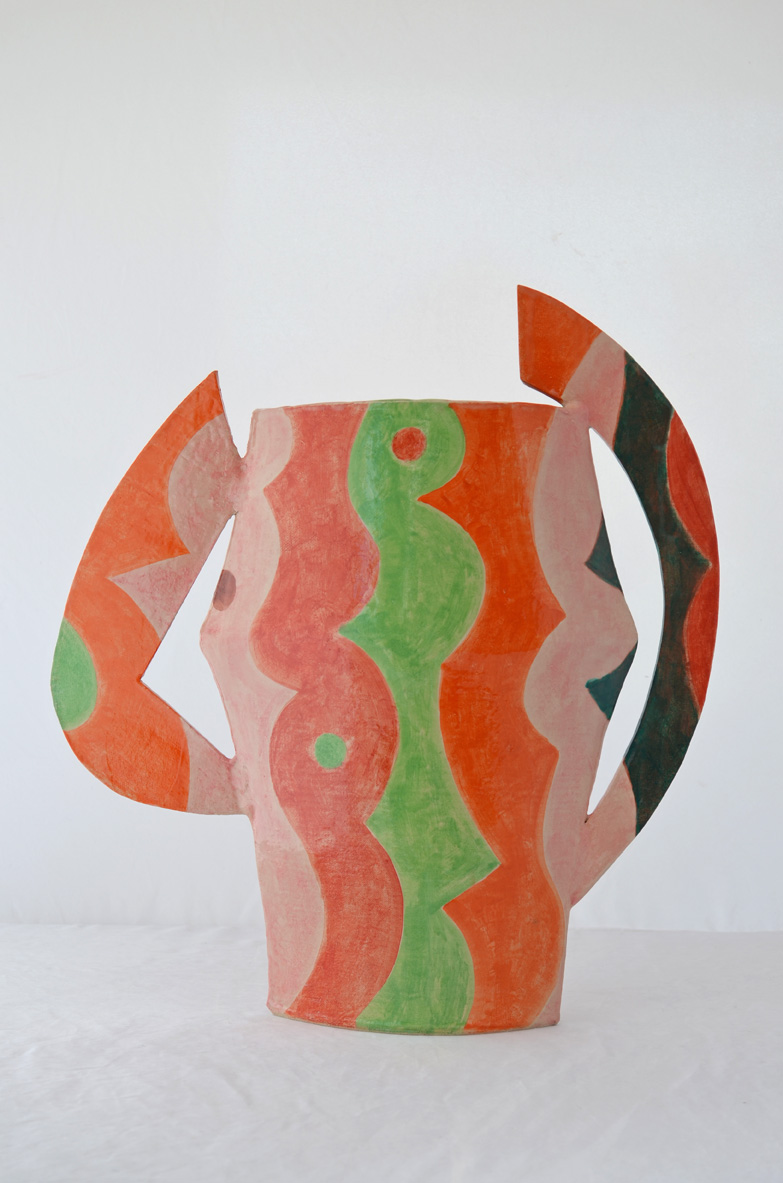
Acton vase – stoneware 46 x 40 cms

Why am I going on about bees and not about ceramics? Before Spyro (marketing) admonished me for not promoting ceramics, my bit of research showed that these ground-nesting bees were working with clay, shaping mud with their mandibles and waterproofing their chambers with waxy secretions millions of years ago. Bees have been master clay workers longer than flowering plants have existed in their current forms. In other words, these bees are ceramicists. They were working clay thousands of years before humans even thought of using mud to make a vessel.

Spyro, being a third century goatherd as well as a bishop (and patron saint of potters), and fond of goat yoghurt, is all for this blog mentioning bees because he loves to pour honey on his. Ziggy, being a spider and therefore a fly specialist, is indifferent.

Miner bee habitat

A brief digression: there are hundreds of Mining bee burrows on a grass strip along a road in Ledbury which for years has been sprayed with a (relatively safe) weedkiller in order to allow drivers a clear view of oncoming traffic. It’s the responsibility of a housing association which, when contacted, were very reasonable and understanding, and confirmed they’ll stop spraying, and may even start seeding it. A victory for nature. Oh if only we humans always listened to each other and acted rationally. Now we just need to apply it to the Straits of Hormuz.

Greater Stitchwort

Because it’s early Spring, the woodland plants are at their best, specially on the edges as you walk into the cool shade of the trees. Once deep inside the canopy, the bluebells and stitchwort take over. Mindful that being outside in the sunshine helps increase vitamin D, which gives your immune system an extra boost, walking through woodland is good for the senses, with different things to see, hear, smell and touch – just don’t touch the nettles, which sting in a treacherous manner when you are reaching in to take a snap of the other (prettier) plants. Not that I want to be unfair to nettles, April is the time to pick the tops off, ideally with washing up gloves. Once you put them in to boil the sting vanishes and you can make nettle soup. Here’s a link to a recipe.
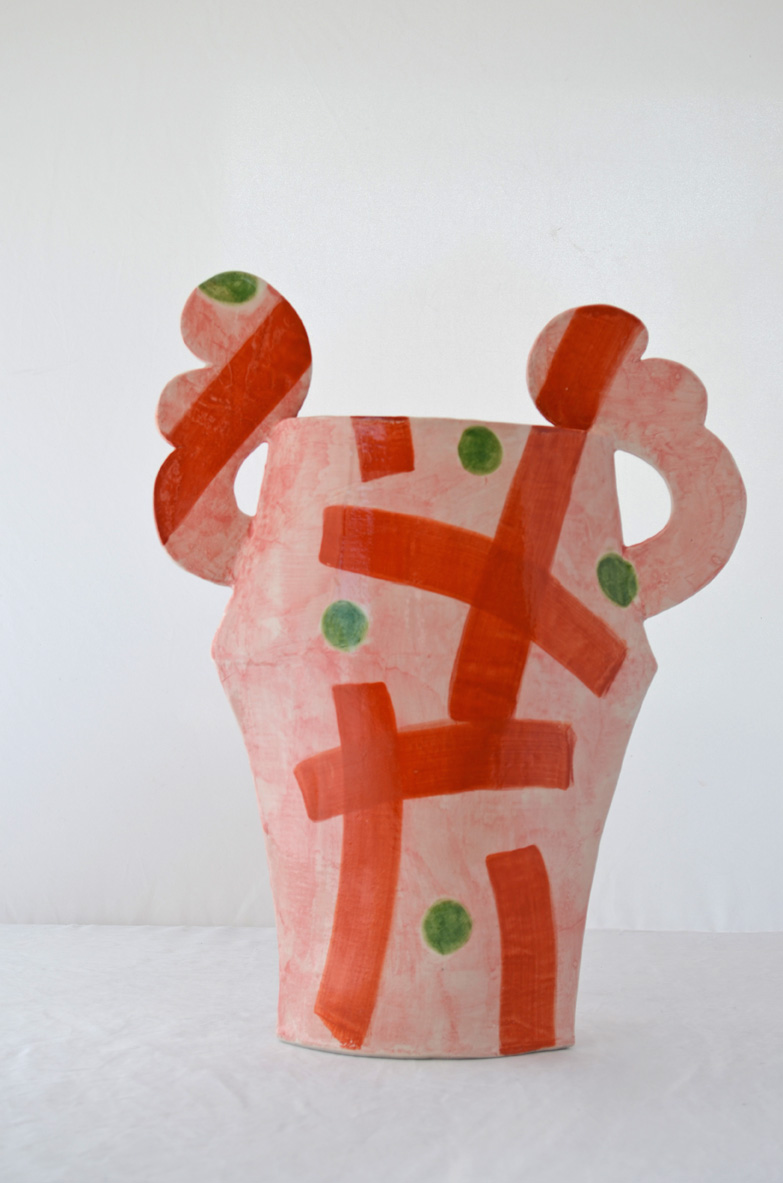
Red signal vase

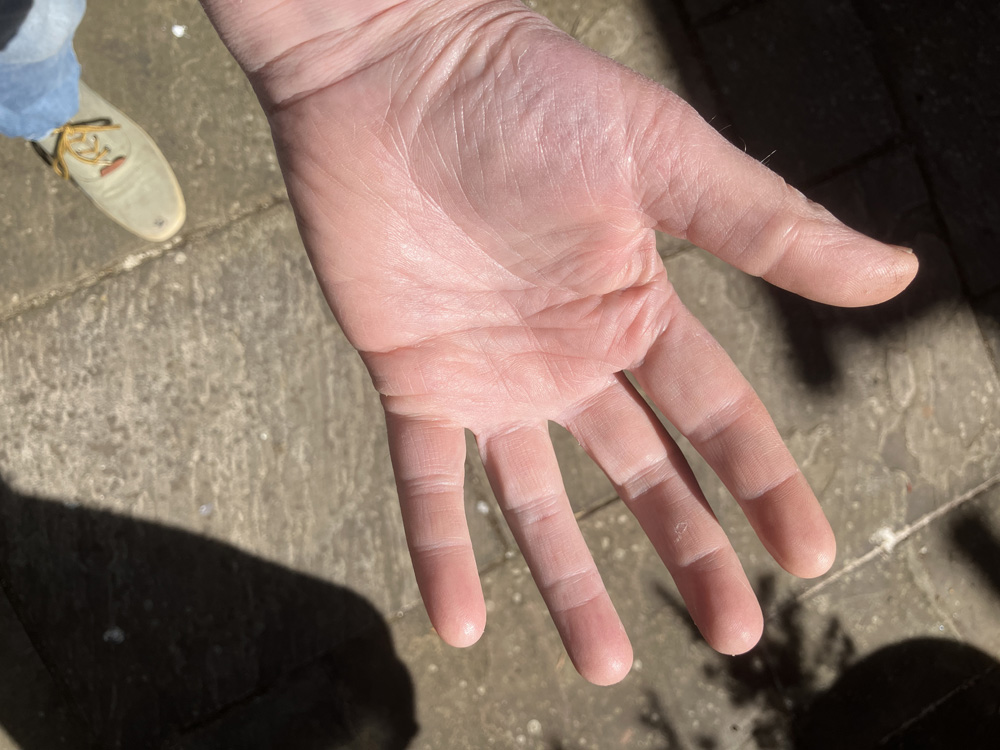
Talking of gloves, after a long session pounding and shaping stoneware clay (ungloved) for the latest batch of vases I noticed, not for the first time, that my hands felt very smooth for a day or two. Of course, we’ve seen pictures of people with their faces covered in mud, so it must be generally accepted that clay is good for the skin. Over time, I expect to be rewarded with skin that’s soft, smooth, and more radiant than ever. Next time you meet a potter, insist on shaking hands, just to test this theory, but don’t hold on for too long otherwise it’ll look weird.
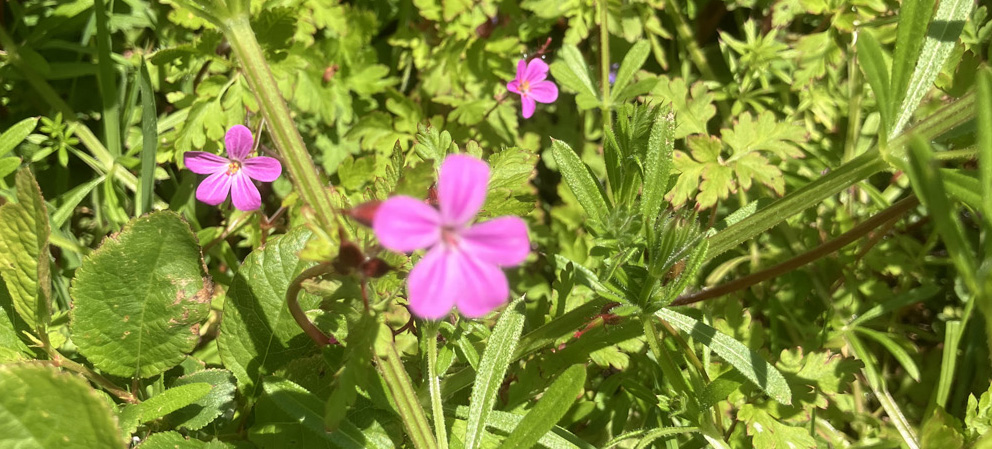
Herb Robert

“Soft hands” implies that you do little proper work, so again, be careful not to tell a potter he or she has soft hands or they may take it the wrong way. Apparently it’s become a meme and is used to tease people with smooth, uncalloused hands by comparing them to someone who works 100 hours a day in a coal mine, showers in diesel oil, washes his hands in gravel and dries them with sandpaper.
I know we’re going off on another tangent but it can’t be helped. The Potter’s Hand by A. N. Wilson is a wonderful book about Josiah Wedgwood, master ceramicist, who embarks upon the now famous thousand-piece Frog Service for Catherine the Great, and includes Josiah’s nephew Tom’s journey to America to buy clay from the Cherokee for this project. He falls in love with a Cherokee woman who becomes involved in the masterpiece called the Portland Vase, which you can see at the British Museum.
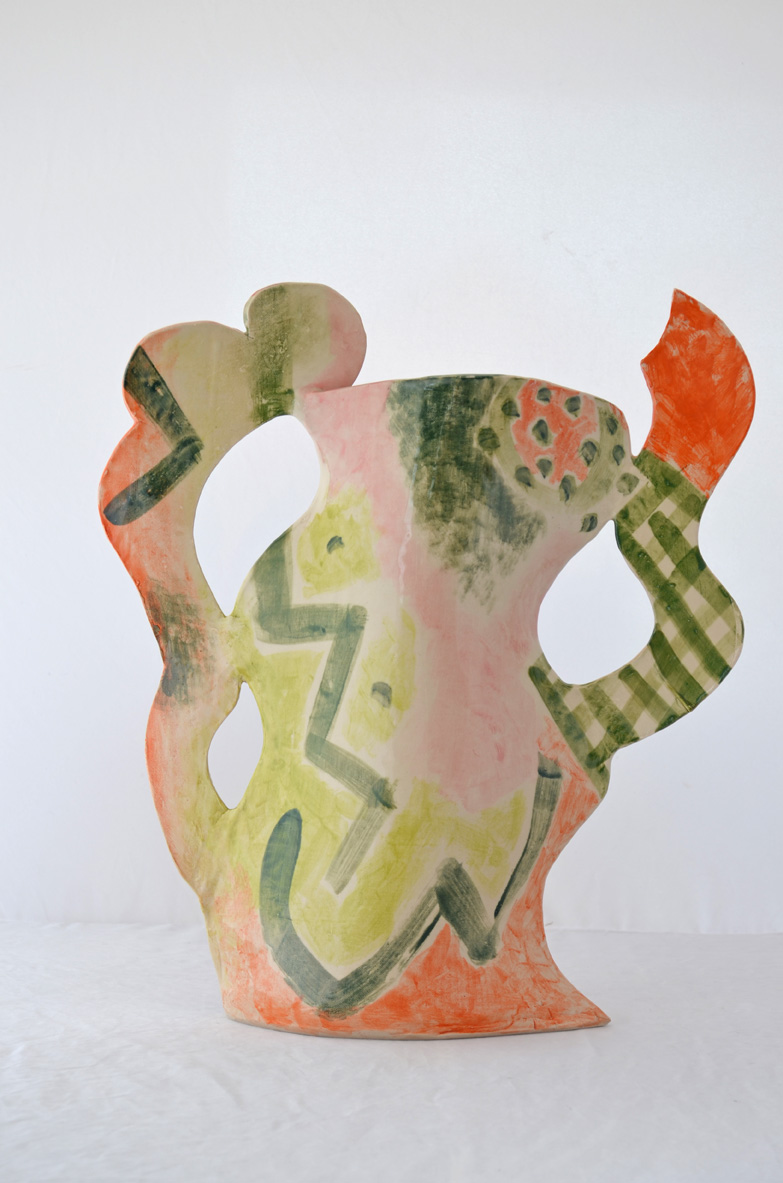
Large listening vase – stoneware

To see a ceramic piece made by the fair and velvety hands of Peter Arscott Ceramics you can visit the Cecilia Colman Gallery in London, or the Palais des Vaches in Exbury.
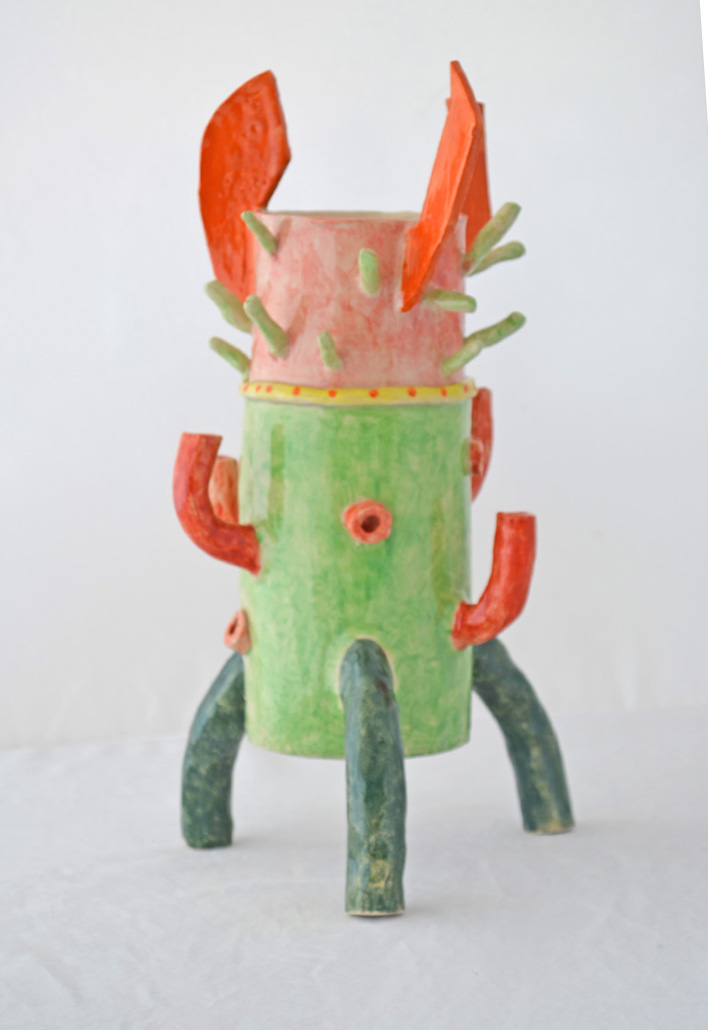
Three legged imp vase

yes, you could win a belatrova ceramic

Please have a long look at this close-up of one of our dishes. Allow the colours and shapes to simmer and bubble away in your mind, and then come up with a name for that range. Anything permitted, barring whatever might get us sued.

close up of ceramic platter

name it and win it

Either go to our website and send us an email via contact page or simply add a comment on the blog. If you are successful, not only will the name be forever associated with this particular belatrova style, but you may win a prize: the very ceramic you see in the picture.

The result will be democratically decided (ie much discussed and argued over) by the team on Friday 1st November at No 9 Bankside at 5pm, and announced officially in the next blog.

close up of Valencia range

Valencia

We all know that belatrova makes unique hand-made and painted tables and ceramics. The variety of one-off designs is apparent when you walk into our workshop in Ledbury. Within the multiplicity of colours, brushstrokes and shapes there are a few discernable themes or ranges; one example being the mellow ochre look produced by mixing a little red iron oxide in the glaze into which the painted dish or bowl is dipped before firing. What to call this range? The team scratched its chin and mused one late Friday afternoon as it unwound with a Dry Martini (see blog May, Relocation). Names are important, after all, and after a great deal of discussion we decided that the range in question would be given the name of Valencia. There is something of coastal Mediterranean Spain in the tones.

 Inspired, the team went on to name three other ranges or “looks”. Here they are:

close-up of Manhattan range of ceramics

Manhattan

close-up of brushstroke blues range

Brushstroke Blues

close-up of allegro range

Allegro

We think highly of you and expect to receive some poetic and/or pithy ideas, so please give it a go. There’s a whole lot of biscuited bowls and dishes just waiting for the belatrova touch.

piles of biscuited bowls at belatrova

ready and waiting

Fiat Lux

shorter days mean less light

fading light

As the nights draw in and the days get shorter with the coming of Autumn and Winter (at least here in the Northern Hemisphere) belatrova‘s thoughts turn to light and dark, and to the importance of that everyday object, the lightbulb. Where would we be without it?

image of lightbulb

lightbulb

Imagine the belatrova team groping around in the workshop carrying tallow candles or rushlights – an Elfin Safety issue, surely.

Rushlights? Well, rushlights were the medieval poor person’s lightbulb, made by repeatedly coating a rush in hot fat, building up the layers to create a thin candle.

rushlight being lit

lighting a rush light

The rushes were peeled and then hung up in bunches to dry. Fat was melted in boat-shaped grease-pans that stood on their three short legs in the hot ashes in front of the fire – belatrova’s tripods look a little like them. The bunches, each of about a dozen peeled rushes, were pulled through the grease and then put aside to dry.

three legged bowl

belatrova tripod

Tallow candles do not sound so good either – a sooty wick burning in animal fat, usually from cows or sheep, though pig’s fat was the worst – given to letting off a great stink when burning.

madieval depiction of chandler

buying your tallow in the 14CAnyway, along came the oil lamp, with all the smell and smoke and sooty walls that must have created. Then the oil lamp was superseded by gas, which must have improved people’s ability to read or write and do so many other things, though it did have its drawbacks: explosions and lack of oxygen in the air – the latter a reason for Victorian ladies fainting, other than for their tight corsets, in their gas-lit drawing rooms.

Today our gas is natural, piped from beneath the sea.  It burns much more brightly than the baked coal gas used between late Georgian times and the 1970s.

Electricity on the other hand opened up new opportunities.

Thanks to Michael Faraday‘s principle of electromagnetic induction in 1831, generators could start to produce electricity in large quantities at a modest cost. This meant that scientists were able to experiment with electricity and lighting.

The first electric lights were Arc Lamps. The principle is that two pieces of carbon, connected to an electricity supply, are touched together and then pulled apart. A spark or ‘arc’ is drawn across the gap and a white hot heat is produced.

And so to the lightbulb

While most modern light bulbs barely last a year, the Centennial Light is still shining on after an incredible 110 years. It is the world’s longest-lasting lightbulb. It is at 4550 East Avenue, Livermore, California, and maintained by the Livermore-Pleasanton Fire Department. Is this evidence for the existence of planned obsolescence in modern lightbulbs?

You may be asking yourself why belatrova is rambling on about lighting. Well, we too are doing our bit in the fight against encroaching darkness. We just want to show you our first ceramic table and floor lamps.

table lamp with bowl

belatrova honeyglaze table lamp

What do you think? We like the twist in the ceramic base – it takes two to of us to make, but we think it is worth the effort.

ceramic floor lamp

belatrova floor lamp

The Art of Selling?

6 squared dishes by belatrova

platters (Photo C. de la Torre)

The easy part of a business like belatrova, and any other art/design/craft-based project, is the making of the product. Far more mysterious and challenging is the art of marketing, of finding your target audience, those human beings you know have been put on this good earth to buy your merchandise.

Excellent advice abounds, like The Design Trust run by Patricia van den Akker which really gives helpful insight into website traffic and media tools (“no nonsense business advice and tips for designers and makers”), or the many design blogs which promote certain products but also publish tips by designers and makers on a regular basis. You could easily spend a day surfing and googling them and come out a little wiser if disconcerted because of the many options available.

belatrova already has its website, its facebook page, and its blog. It has its first outlet in London in the Horsebox Gallery, and is taking part in its first “open workshop” week, opening its doors to the public as part of h.Art, the very successful Herefordshire Art Week when visitors can see an array of artwork at exhibitions in locations such as castles, manor houses, barns farms, churches, workshops and galleries throughout the county.

Many have paid us a visit, and we have benefitted from a great deal of feedback and comment, and learnt about the elementary art of selling. The basic, essential, person to person, market place, art of selling.

view of wall display of belatrova ceramics

the view from the entrance

Though No 9 Bankside is strictly a workshop we did set it up as a showroom for the occasion and learnt soon enough that when people came through the main entrance the “wow” factor set in as they faced the display of ceramics on the wall opposite. All very well, but a display does not always invite the viewer to touch and handle the objects, it can actually keep the potential customer at arm’s length.

We noticed that most visitors preferred to go to another shelving unit that was lower and easy to stand close to, and which provided a waist or chest high access to the displayed ceramics. These were always being picked up and touched, and (importantly) purchased. Unlike the main display opposite the entrance, with nothing between it and the person entering but an empty floor space which dramatised the display – most people warm to proximity and clutter rather than to distance and minimalism.

table with ceramics on display

an invitation to touch

Solution: a table placed right in the middle of the room, between display and door, with stacked ceramics and a notice inviting customers to handle the goods.

Result: more sales.

customers handling ceramics around a table

handling

Other tips we have picked up in this temporary market place include:

– welcoming visitors as guests and offering them tea or coffee helps create a relaxed atmosphere that is friendly enough for the customer not to feel that she or he is perceived as only a customer but also as someone who might share an interest or a delight in common with the maker

– establishing eye contact makes it easier for the customer to come back to you with questions

– if you have a bowl to sell put some fruit in it

– do not display anything above the eye line, waist level is best , and tables are friendlier than shelves

We suspect that most of you know all this, and that we have been teaching grannies to suck eggs, but we have enjoyed observing and learning things that we may well apply to exhibitions and trade shows. And we have specially enjoyed meeting you – getting to know some of our supporters and customers is a real plus.

ceramic lamp base with shade

belatrova’s table lamp

And you can still come and visit us at 9 Bankside in Ledbury (HR8 2JQ) until the end of h.Art on Sunday 15th, just follow the pink signs. Come and see our new range of floor and table lamps.

Or you could just come and gaze at the Maestro, Stuart the Wheel, throwing pots and jugs in his mesmeric way.

potter Stuart Houghton on his wheel

mesmeric Maestro

poetry / pottery

Poet Jacob Polley standing with banana

Jacob Polley (copyright Harry Rook)

The annual Ledbury Poetry Festival came to town this July; ten days of the best writers, poets and performers, and belatrova took full advantage, enjoying Juliet Stevenson‘s Sylvia Plath reading, as well as Jacob Polley and Sean Borodale together at the Burgage Hall, Martin Rowson‘s tone-lowering Limerickiad, Benjamin Zephania‘s jamming with Tony Benn, and a wonderful celebration of Benjamin Britten’s centenary with Ruthie Culver and the Utter:Jazz quartet and Sam West re-imagining the composer’s settings of WH Auden’s poems.

Cartoonist Martin Rowson

Martin Rowson (copyright Harry Rook)

There were over ninety events in all, including Japanese and Italian poetry, digital poetry, turntabling with Jah Wobble, bike rides, a Cerys Matthews sing-a-long, underwater sound poetry – belatrova tried to imbibe as much as possible and came out of it satiated and inspired. And there was the bookArt 13 exhibition at the Shell House Gallery with five artists, Jeanette McCulloch being one, giving us a rich visual experience with the text.

We did reject the idea of a Ledbury Pottery Festival to run concurrently with the poetry (and someone also came up with the idea of a yearly Ledbury Poultry Festival), and instead took up Jacob Polley’s suggestion to read an essay by Barry Lopez on anagama ceramic firing (“Effleurage: The Stroke of Fire” from his collection “About this Life”). Anagama kilns are wood-burning tube chambers usually built on a gentle slope to promote draft and reach great temperatures, producing ware that is “licked and scorched by wood flame, glazed and encrusted with wood ash”.

His descriptions of the process, the patience needed, the constant feeding of the fire night and day, the unpredictability of each firing, explains the attraction it holds for potters drawn to social cooperation, physical work and subtle firings. It is the antithesis of the rigid commercial kiln processes. Anyway, it is beautifully written and is now being circulated amongst the local potters.

opening a top loading kiln

apprehension

The belatrova kilns are electric, so control over the heating is simple compared with the mixture of instinct, experience and know-how required for the anagama firings, but there is nevertheless a similar feeling of apprehension and excitement just before you open the lid to see what the gods of fire have done with all your hard work. We usually lift the lids when the temperature goes down to 80° or lower, the kilns having spent two days slowly climbing down from their peak, in our case, of 1280°.

split ceramic plate being lifted out of kiln

more than just a hairline crack

A gentle stoicism permeates the workshop on these occasions as the ware is slowly revealed and brought out into the light, sometimes with a tiny hairline crack, sometimes with an obvious split, sometimes in small pieces, but most often the ceramic is good to the eye and it is placed on its shelf ready for any wet sandpapering.

Here’s a three legged bowl that came out unscathed, on a belatrova table:

scooped ceramic on painted table

a happier result: scooped tripod on belatrova table

grit to pearl

brick kilns in Stoke

gritty Stoke

Here at belatrova increased production and a subsequent urgent need for clay led us on a lightning visit to Stoke, heart of the Potteries.

Sitting on a hill, its grittiness is somehow heightened by the green beauty of the surrounding countryside. Its long association with the pottery industry goes back to the 17th Century and though in the past it was primarily an industrial conurbation, steel and coal being the main source of employment, it is now a centre for service industries and a growing distribution centre.

Plastic bags of clay and glaze in boot of car

clay and glazes in the boot

However, the link to its glorious pottery past remains in places like Etruria, site of Wedgewood’s business and where Potclays are based. They manufacture clay, grogs and glazes themselves at their South Staffordshire clay mines, and belatrova drove there to top up with glazes and then drove on to Valentine’s to load up with porcelain.

hill in Peak District glimpsed through trees

craggy hill on the way to Buxton

The car struggled going up hills from that point on as we made our way through the Peak District to Buxton, then Bakewell and finally arrived at Chatsworth House.

The contrast between the tough and practical character of Stoke and the self-conscious elegance of this stately home is evident, they almost seem to belong to different worlds. But belatrova was struck by something else: the clay that Stoke mined and dug up out of quarries, the poisonous powders of glazes being mixed, the heavy bags carried and stored, all that hard work and toil produced something that could end up being shaped, glazed and fired into the most extraordinary objects that visitors can now see displayed at Chatsworth.

Hard to believe, isn’t it, that a ball of what is generally 40% aluminum oxide, 46% silicon oxide and 14% water can be turned into this:

display of ceramic flowers, fruit and dishes at Chatsworth

ceramic buffet at Chatsworth

tall cream cermic pots lined along chimney mantel

ceramic installation by Edmund de Waal

Or this: ‘A Sounding Line‘ is an installation of numerous cream and white-glazed porcelain vessels of varying form and size made as an installation by Edmund de Waal, leading British ceramic artist, author of The Hare with the Amber Eyes, who inspired by the porcelain that has historically been on display in the house, designed them specifically for display in the Chapel Corridor at Chatsworth.


Or this:

Two clay pots with household paint poured over them by artist Ai Weiwei

Ai Weiwei’s pots at Chatsworth

The Chinese artist Ai Weiwei also had work on show. Two ordinary ceramic jars, the type bought at any market in Peking, looked down on us from a shelf just above head height – with the household paint the artist has poured over them, they are striking: a comment on art as commodity.

 
blue and white ceramic stack up to 15 ft high

15 ft ceramic stack at Chatsworth

Or this: a giant stack of blue and white  pots reaching a height of about 15 feet at the base of the main stairs, a reflection of the structure of bamboo scaffolding used by builders in China. It was made by Felicity Aylieff who likes to blur the boundaries between ceramics and sculpture. She has developed a relationship with factories in Jingzhen, China, where she produces monumental pots such as this.
Perhaps it is a theme for another day, when is ceramics “art” and when is it “craft”? Looking up at this work from below it was easy to accept that there is a point when a pot can be understood as sculpture.
Anyway, outside in the gardens of Chatsworth we said “hello” to Barry Flanagan‘s Hare – always cheering and heartening to see, and enjoyed the outdoor exhibition of William Turnbull‘s sculptures; the Horse Head in particular looks stunning in this setting.
Metal sculpture of horse head

William Turnbull’s Horse Head with Chatsworth in the distance

bronze sculpture of hare jumping over bell by Barry Flanagan

one of Barry Flanagan’s hares jumping over a bell

Perfidious Albion in Barcelona

Barcelona, like the rest of Spain, is going through hard times. Unemployment is on the rise, specially among the young, many of whom are leaving for jobs abroad if they can get any.

Paseo de Gracia and Diagonal with Pedrera building in backgropund

The distinctive roof of Casa Milá in the background

It is also a vibrant city associated with art, architecture and design, not least with Gaudi’s Parque Guell that overlooks the entire city and the sea beyond, and his “Casa Milá” with its singular rooftop – you can see it in the background in the photo taken from the top of Paseo de Gracia.

The capital of a culture that has produced Miró, Dalí, Casals, that nurtured the young Picasso, that gave us Catalan Modernism, that developed its own distinctive cuisine and arguably the best football team ever, is unlikely to take things lying down.

Four red bars on a yellow background represent Catalunya

Catalan flag

Next year is the 300th anniversary of Catalunya’s loss of independence to Spain after the Treaty of Utrech and so I was reminded that this culture and language have had to survive many difficulties, and the growing feeling among many in the city is for separation and independence – the Catalan flag was everywhere we went.

By the way, we Brits can hang our heads in shame; despite an agreement with the Catalans we abandoned them in 1714 to the tender mercies of their foes while we got Gibraltar and Menorca in return.…perfidious Albion.

Anyway, enough history.

belatrova  walked everywhere, visited galleries and design outlets, and used the efficient and smooth metro and buses to go further afield. We really liked the Room Service Design Gallery, run the day we visited by Jordi, and which displays furniture by the Dutch designer Piet Hein Eek – sustainability, efficiency and social responsibility are his guiding principles, and his stuff is visibly hand made, using mainly recycled material.

hand made furniture

Piet Hein Eek chair at Room Service Design

The gallery also takes seriously the promotion of young designers and has a section for graduates to show their work. Drop in when and if you’re there; the MACBA  (Museu d’Art Contemporani de Barcelona) is a block away and the neighbourhood is part of the city in which anybody could easily spend a day walking, drinking, snacking and rubber necking. Which is what we did.

table displayed at Room Service Design Gallery

ceramic table by Piet Hein Eek

Museum of Contemporary Art in Barcelona

the MACBA building

By the way, watch out for skate boarders zipping past as they are encouraged to use the open area in front of the building.

Here are two close-up shots of tapas that we thought might inspire some new colour combinations in our ceramics. Or perhaps not.

close-up of egg salad

yellow white red and black

close-up of sea food salad

black white green red

Monumental window, part of an early 20th century building on the Diagonal, where we went to see how our tables looked away from home and asked two of our customers to allow us into their homes to take a snap or two.

Large stone window and balcony

Monumental window with balcony on the Diagonal Avenue

belatrov table in Barcelona flat
Victoria and Josep Maria’s table

Victoria and Josep Maria keep theirs in a space filled with greenery and the effect is lush and fresh. Veronica and Alberto have theirs nicely set off by the dark floorboards and deep green of the furniture.

Both tables are getting a lot of TLC from their owners.

belatrova table

Veronica and Alberto’s table

belatrova’s top 6 favourite things to do in Barcelona:

Go up onto the roof of Casa Milá (also called “La Pedrera”)

Visit the geese in Barcelona Cathedral’s cloisters

Have a coffee at Meson del Café off St Jaume’s Square

Take the No 14 bus from Calvet/Fransesc Maciá down to Siete Puertas

Eat stuffed squid at the Bar Neutral (Ganduxer 26, Barcelona)

Visit the Fundació Miró – a quick trip inspired belatrova to make a tripod ceramic bowl.

tripod ceramic bowl

hint of Miró?

relocation

view of interior of belatrova workshop

No 9 Bankside

Most people find relocation stressful and will experience symptoms such as irritability and exhaustion. Psychologists say that those who find ways to establish security and meaning in their new situation, and who regain a sense of perspective, will suffer less. Well, belatrova has broad shoulders and has taken the move from Bishops Frome in Worcester to Ledbury in Herefordshire in its stride.

Unfazed by the hugeness of the new space, walls were painted white (this took a week), new racking was put in place, heavy kilns were transported and hooked up, the floor painted, a new glass entrance fitted, and, of course and very importantly, a small fridge connected for that Friday evening special: the belatrova dry Martini. We find that this is one way to regain a sense of perspective.

wooden structure to hold 32 table topss

new double table rack

sit and relax

sit and relax

The new address is:
belatrova
9 Bankside Industrial Estate
Little Marce Road
Ledbury
Herefordshire
HR8 2DR

OLYMPUS DIGITAL CAMERA

wall of ceramics

Anyway, we are already in production, concentrating mainly on tripod bowls and lamp bases. Both kilns are behaving, and the new space is airy and light, with a whole wall given over to our ceramic dishes. Everything is looking good and belatrova is brimming with ideas and projects.

Roger Payne on his mobile at No7 Bankside

You want how many?!

By the way, a possible reason for liking the previously mentioned cocktail is surely the shape of the glass: another design classic (see previous blog). And it looks so good on a belatrova table.

Here’s our version of a Dry Martini:

1. Pour the amount of gin required into a shaker or any robust container that withstands freezing temperatures. Use good gin, of course.

2. Pour in a bit more gin (when very cold the gin contracts).

3. Add a few drops of Dry Vermouth (roughly one drop per glass)

4. Put in freezer at least 2 hours before consuming.

5. Place Martini glasses in freezer.

6. When ready, pour out Martini from shaker into glass.

7. Spear 2 (or 3 if you’re feeling generous) green olives with a toothpick and put in glass.

8. Serve immediately – it should give your tongue and throat a pleasingly cold sting, and set you up for the weekend.

belatrova is always open to experimentation – send us your favourite unwinder and we might (might) try it.

Caersws (pronounced “Kay-suss)

acrylic on canvas, painting of pregnant woman in orange and blue

pregnant woman by Nicky Arscott

belatrova paid a visit to the Mid Wales Arts Centre just outside the above-mentioned town in Powys on Sunday, in part to get some fresh air and a bit of Welsh countryside, but also to get some ceramic inspiration as well as a look at Nicky Arscott’s paintings.

It’s a two hour drive from Ledbury so we stopped in Rayader and had a snack at the Old Swan Tea Rooms in the middle of the town. Let me tell you that you will not find a better toasted cheese and bacon sandwich anywhere in the world, or a warmer and friendlier café.

Rayader, The Old Swan Tea Rooms.

The Old Swan Tea Rooms in Rayader.

We drove on.

The views were as beautiful as ever, even with the white pockets of snow that still dotted the higher parts of the hills along the way. Lots of sheep, and a few daffodils just starting to show, and (a rare sight nowadays) a very unlucky hedgehog that had not managed to make it to the other side of the road.

Brick facade of Georgian building housing the Mid Wales Arts Centre in Caersws, Powys.

Georgian facade of the Mid Wales Arts Centre in Caersws, Powys.

The Centre  is a fabulous old Georgian house, and contains original artworks and craft in every room, a contemporary art gallery and a sculpture park in the 18 acres of grounds.

It is a wonderful place to stay for casual visitors, walkers, cyclists and artists. All food is home grown, and the Welsh breakfast is a speciality.

It is all run by Cathy Knapp, whose late husband the Polish-born sculptor and enamellist Stefan Knapp left a collection of his work which is on display in the house and grounds.

work by Stefan Knapp

Stefan Knapp’s work on display at Mid Wales Arts Centre

Stefan had many commissions in the 1950sand 60s, including work for Heathrow, and the Shell and Seagram buildings with others such as Rothko and Pollock, and he was a great experimenter and technician, working with Rowneys to develop Cryla acrylic paint. Artists are involved in the

centre’s direction, and there are all sorts of courses on offer, including life drawing, enamelling workshops, poetry events, felt design and ceramic weekends.

tea cakes

tea at Mid Wales Arts Centre

Anyway, we had a good look around and enjoyed the mixed exhibition. There is plenty of pottery on display, and a wide range of paintings on the walls, all of it well exhibited and spaced out and using all the rooms available, which guests are encouraged to walk around in, cup of tea or coffee in hand.

Did I mention that Cathy makes the most mouth-watering cakes in Powys?

I liked the shapes of the assorted bowls that filled the rooms and the importance of their weight and texture came to me when I picked them up.

porcelain bowls on glass shelf with painting of still life in background

bowls at Mid Wales Arts Centre, with background acrylic painting

There is an article in the New York Times International Weekly (Julie Lasky 14/04/13) that highlights the sale of a small white ceramic bowl that was sold for more than $2.2 million. We take the bowl so much for granted and yet its shape has not changed for thousands of years – essentially the shape of cupped hands to hold water in it. Its simplicity is so attractive – another source of inspiration to belatrova, I think.

Have a look at the website for the Mid Wales Arts Centre:

www.midwalesarts.org.uk

full length photograph of Cathy Knapp, organiser and curator of the Mid Wales Arts Centre

Cathy Knapp

enamel sculpture in the garden of the Mid Wales Arts Centre, Powys.

enamel work by Stefan Knapp

bedroom for paying guests, filled with artwork.

Guest bedroom

Good Design is…

belatrova is a collaboration between a painter, a potter and a musician, so each one of us brings his particular slant to any discussion during the Tuesday morning meetings. To our surprise, we often agree on a number of issues, and this week we ended up in general agreement about “good design”.

hand painted belatrove table

table / painting

Good design (we three nodded) has to strike a balance between commercial imperatives and aesthetic ones. A customer buys the product in order to use it, its design clear and understandable, and good design points to this whilst also highlighting the product’s aesthetic value. And design must be honest, in the sense that the product should “do what it says” and not be weighed down by details that only confuse. Another more recent definition has become part of the debate, and that is that good design ensures a product achieves positive results for all involved, while having as little impact on the planet as possible.

Personally I have always had a soft spot for the Coca Cola bottle: its shape is the perfect invitation to grip it, and it shows its content openly. When it first came out in 1916 it must have been perceived as futuristic, its contours a contrast to the straight-sided bottles that preceded it.

Nowadays, of course, it is considered a “classic” and probably associated with the 50s more than any other decade. Unless it is recycled after use, though, I am not sure that it fully fits into our description of good design.

I naturally assumed that Josh of Josh Thomas Design House (www.joshthomasdesignhouse.co.uk) would agree with me, specially since he favours the fifties look. But I was surprised when he told me what summed it all up for him: the Bic pen. Why? Because it hides nothing. It says to the customer: “I am for writing, I am easy to hold, I am cheap, you need not worry about loosing me, you can throw me away”.

image of bic pen

throwaway

By the way, is there a way to recycle the Bic?

And what product design does it for you?