

Bees are potters
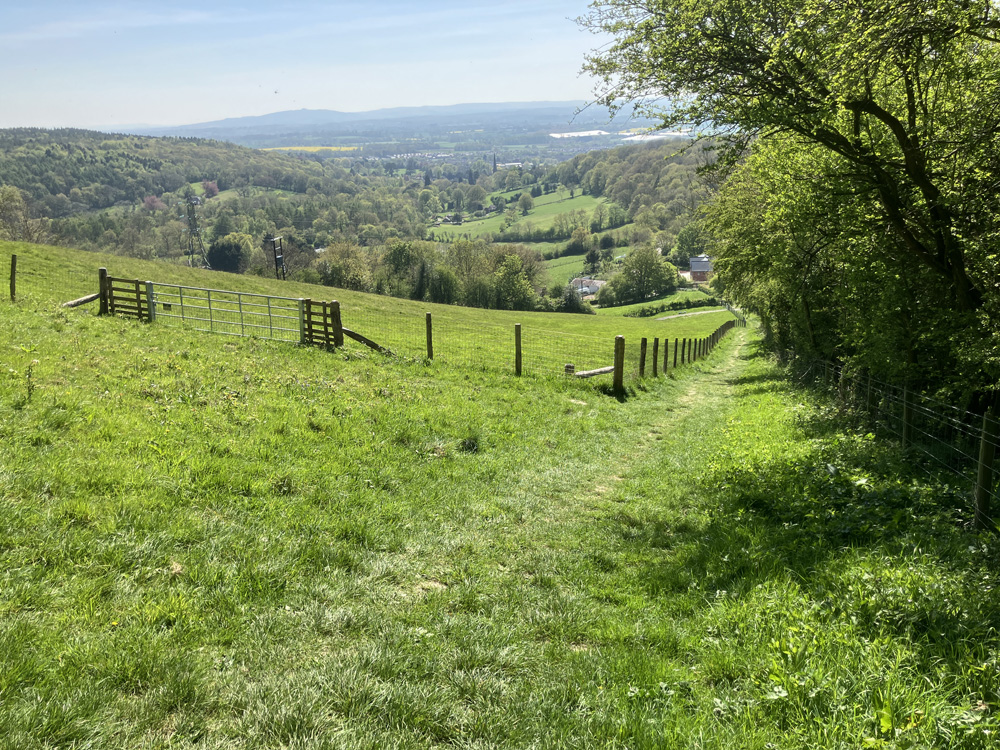
As you can see from the view from Bradlow Knoll, it was a bright sunny day for a stroll up the hill. What you can’t see is the cool breeze blowing, which made it perfect walking weather. It may not have been a breeze exactly, it was a notch above that, maybe a gust – it wasn’t a waft, zephyr, breath, puff or flurry. It was strong enough to make the trees in Frith Wood whisper, a symphony overhead and a symphony of blue at your feet: the bluebells at their peak.

When you’re bent forward struggling up a hill, your nose is closer to the ground than usual. Which is how I noticed the first Solitary bee crawling out of a hole in the soil. They nest anywhere, and though they are called Solitary bees (or Mining bees) they live alone in burrows but close together in large groups. Not for them the collective work and pressures of the beehive, or the social structure of the honeybee. There are 250 or so species in the UK, including the Tawny mining bee, the Hairy-footed flower bee and the Queen bumblebee. If you find one on the ground looking exhausted, it’s because they need energy: give them a drop of water with sugar (and watch them drink it with their proboscis) and they’ll eventually take off and go back to work. And they won’t sting if you pick them up.
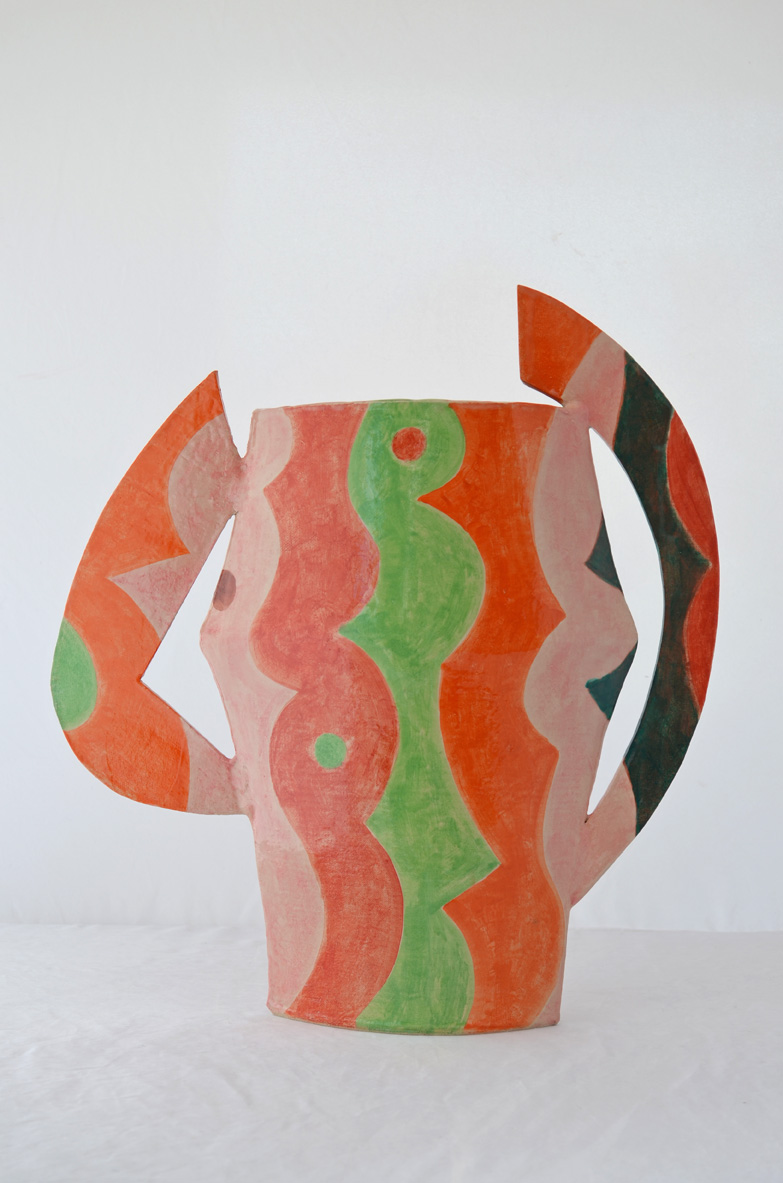
Acton vase – stoneware 46 x 40 cms
Why am I going on about bees and not about ceramics? Before Spyro (marketing) admonished me for not promoting ceramics, my bit of research showed that these ground-nesting bees were working with clay, shaping mud with their mandibles and waterproofing their chambers with waxy secretions millions of years ago. Bees have been master clay workers longer than flowering plants have existed in their current forms. In other words, these bees are ceramicists. They were working clay thousands of years before humans even thought of using mud to make a vessel.
Spyro, being a third century goatherd as well as a bishop (and patron saint of potters), and fond of goat yoghurt, is all for this blog mentioning bees because he loves to pour honey on his. Ziggy, being a spider and therefore a fly specialist, is indifferent.
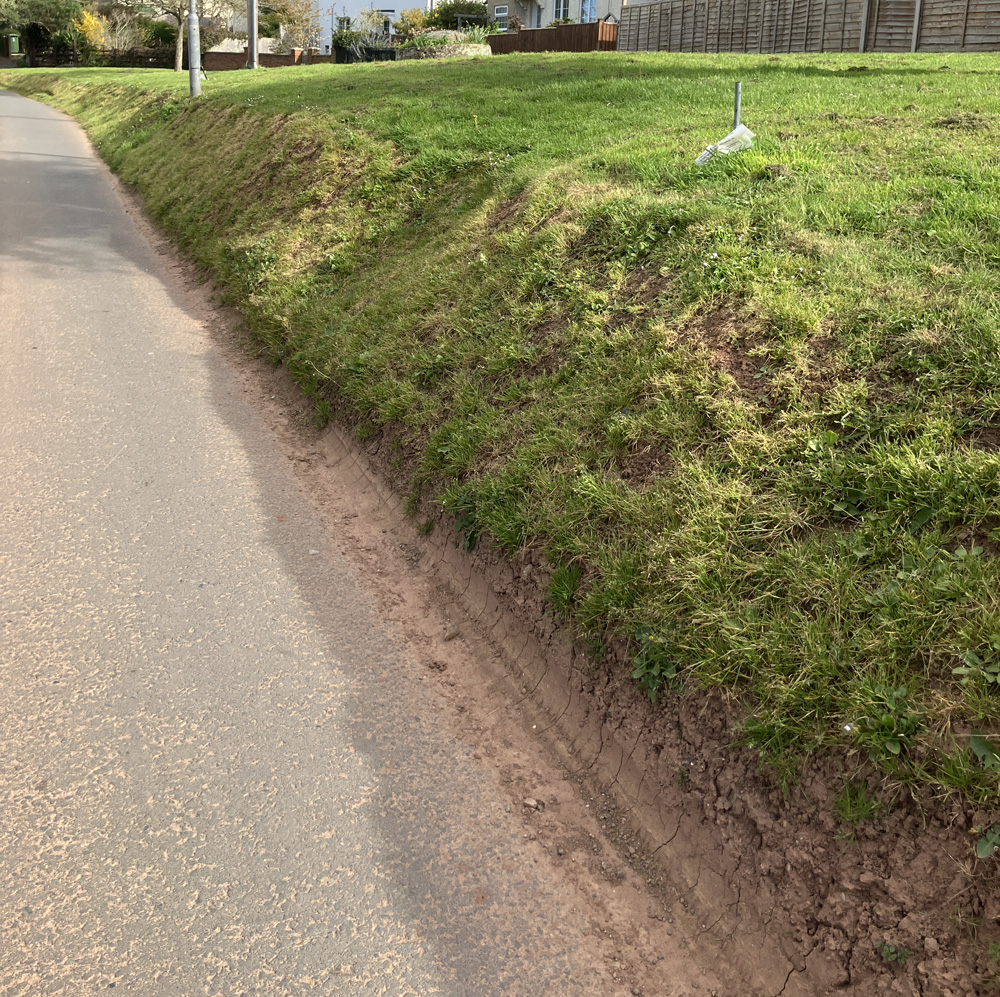
Miner bee habitat
A brief digression: there are hundreds of Mining bee burrows on a grass strip along a road in Ledbury which for years has been sprayed with a (relatively safe) weedkiller in order to allow drivers a clear view of oncoming traffic. It’s the responsibility of a housing association which, when contacted, were very reasonable and understanding, and confirmed they’ll stop spraying, and may even start seeding it. A victory for nature. Oh if only we humans always listened to each other and acted rationally. Now we just need to apply it to the Straits of Hormuz.
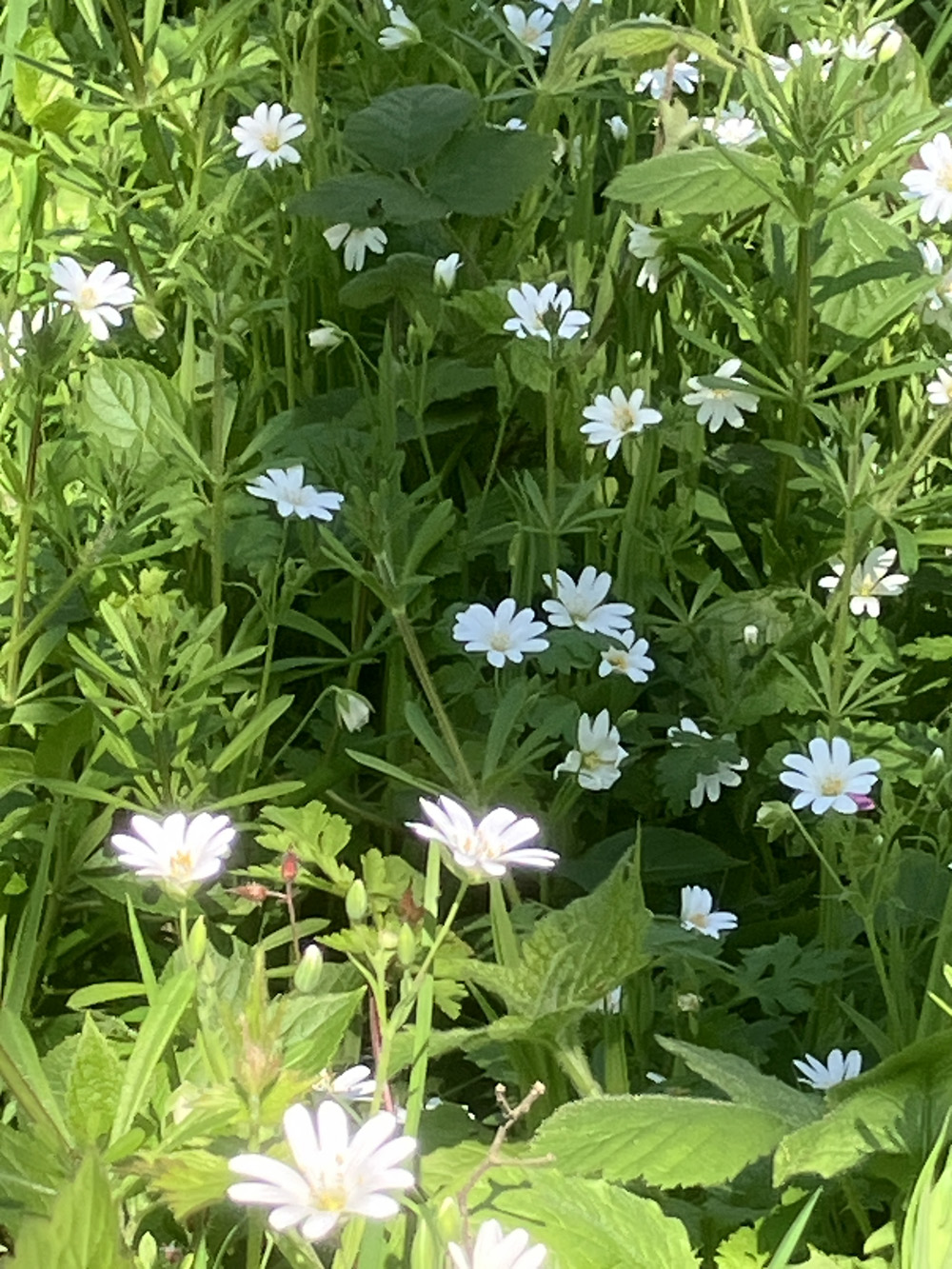
Greater Stitchwort
Because it’s early Spring, the woodland plants are at their best, specially on the edges as you walk into the cool shade of the trees. Once deep inside the canopy, the bluebells and stitchwort take over. Mindful that being outside in the sunshine helps increase vitamin D, which gives your immune system an extra boost, walking through woodland is good for the senses, with different things to see, hear, smell and touch – just don’t touch the nettles, which sting in a treacherous manner when you are reaching in to take a snap of the other (prettier) plants. Not that I want to be unfair to nettles, April is the time to pick the tops off, ideally with washing up gloves. Once you put them in to boil the sting vanishes and you can make nettle soup. Here’s a link to a recipe.
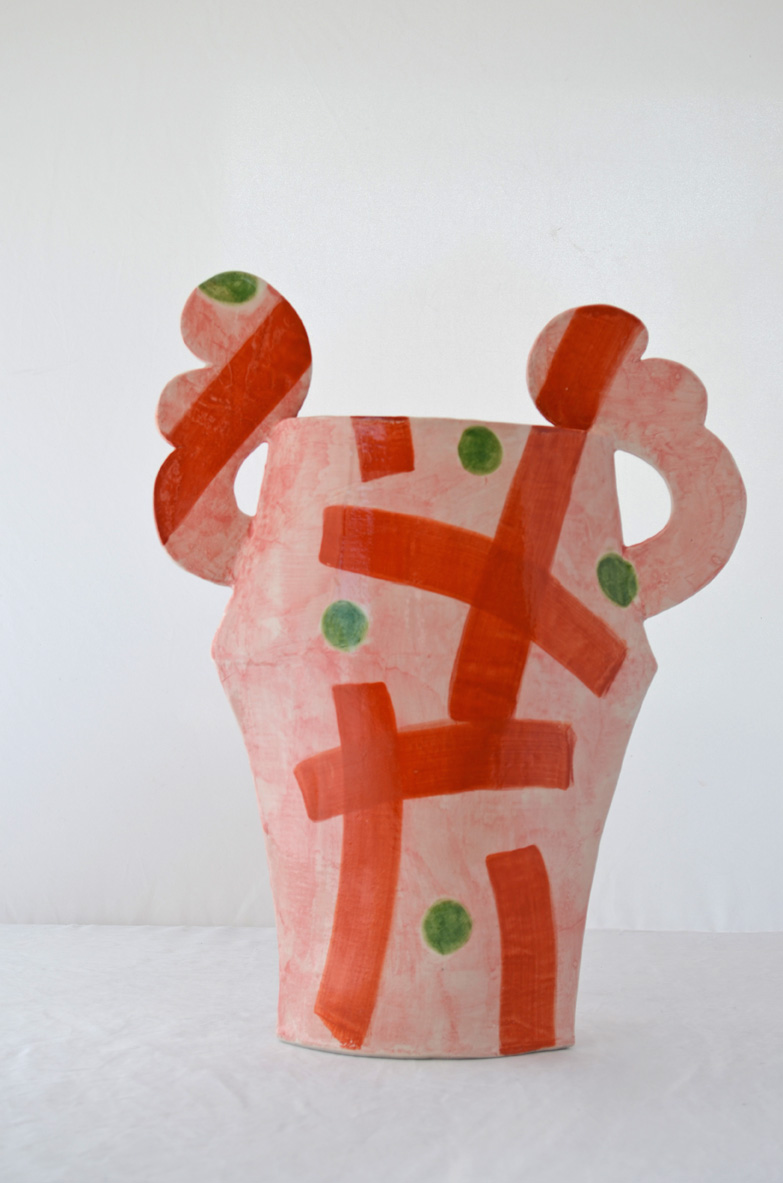
Red signal vase
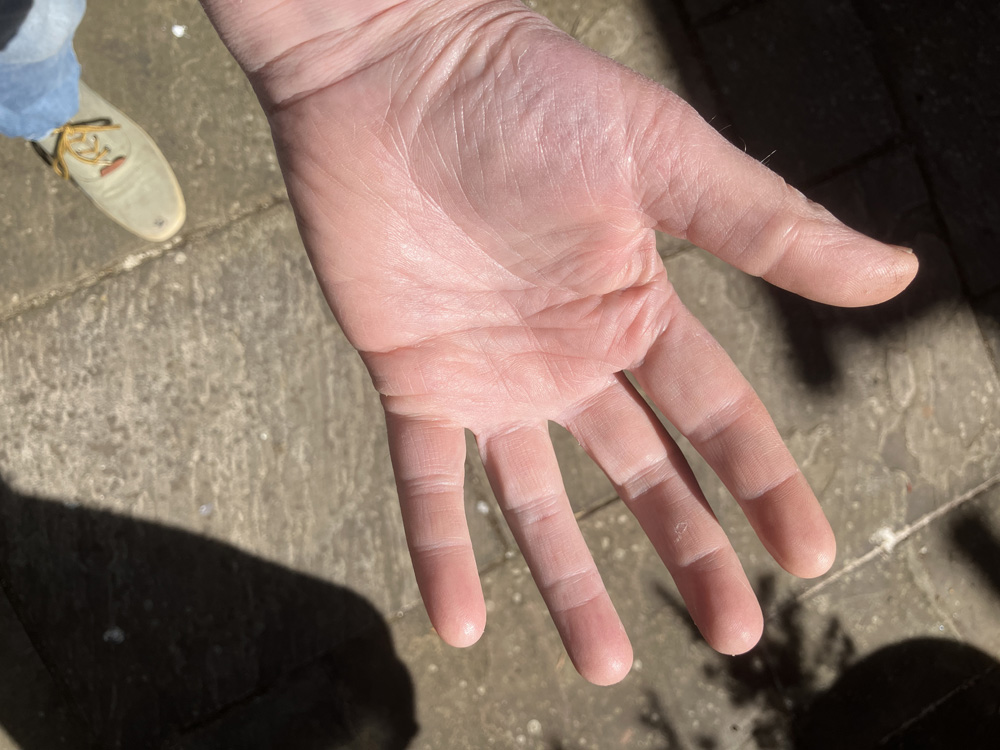
Talking of gloves, after a long session pounding and shaping stoneware clay (ungloved) for the latest batch of vases I noticed, not for the first time, that my hands felt very smooth for a day or two. Of course, we’ve seen pictures of people with their faces covered in mud, so it must be generally accepted that clay is good for the skin. Over time, I expect to be rewarded with skin that’s soft, smooth, and more radiant than ever. Next time you meet a potter, insist on shaking hands, just to test this theory, but don’t hold on for too long otherwise it’ll look weird.
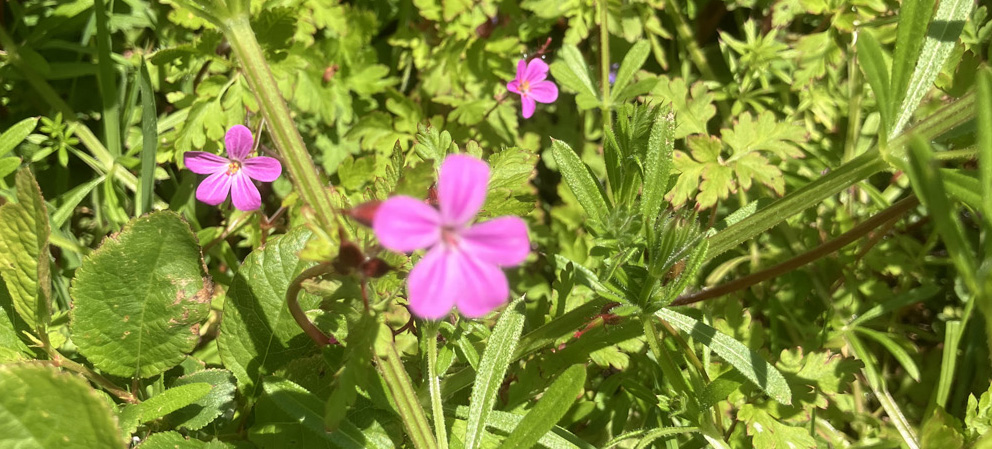
Herb Robert
“Soft hands” implies that you do little proper work, so again, be careful not to tell a potter he or she has soft hands or they may take it the wrong way. Apparently it’s become a meme and is used to tease people with smooth, uncalloused hands by comparing them to someone who works 100 hours a day in a coal mine, showers in diesel oil, washes his hands in gravel and dries them with sandpaper.
I know we’re going off on another tangent but it can’t be helped. The Potter’s Hand by A. N. Wilson is a wonderful book about Josiah Wedgwood, master ceramicist, who embarks upon the now famous thousand-piece Frog Service for Catherine the Great, and includes Josiah’s nephew Tom’s journey to America to buy clay from the Cherokee for this project. He falls in love with a Cherokee woman who becomes involved in the masterpiece called the Portland Vase, which you can see at the British Museum.
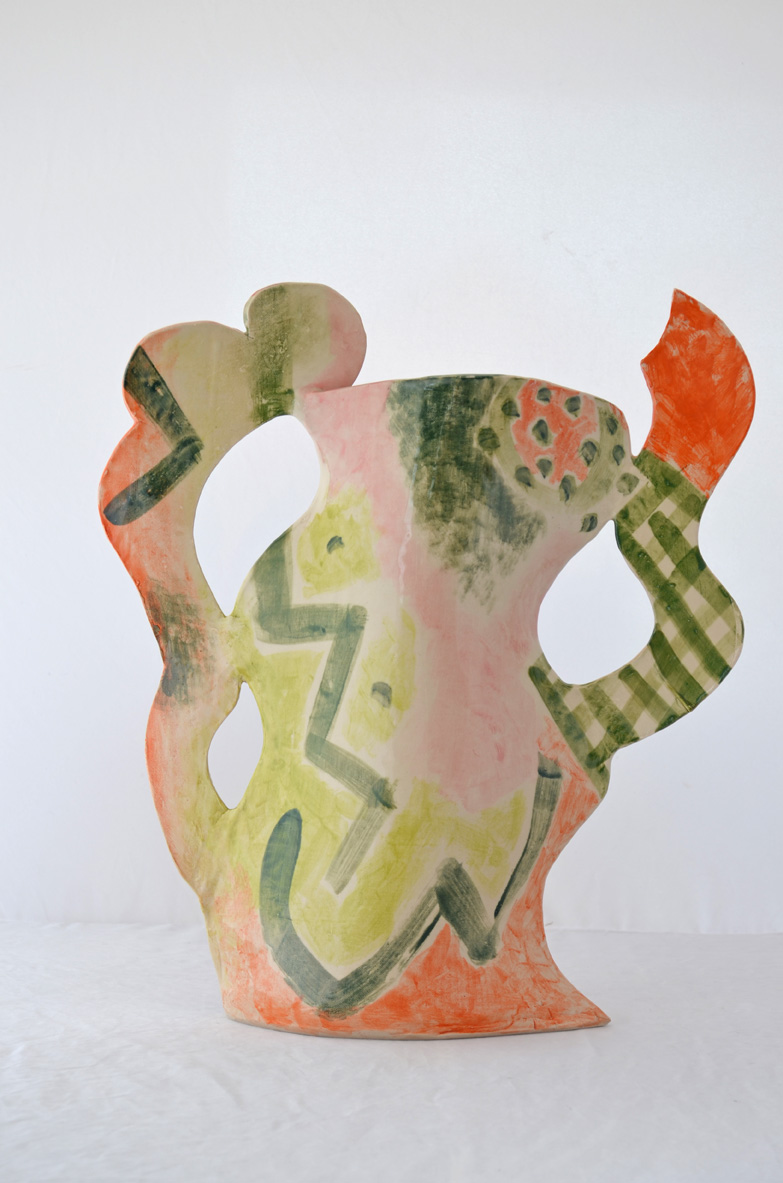
Large listening vase – stoneware
To see a ceramic piece made by the fair and velvety hands of Peter Arscott Ceramics you can visit the Cecilia Colman Gallery in London, or the Palais des Vaches in Exbury.
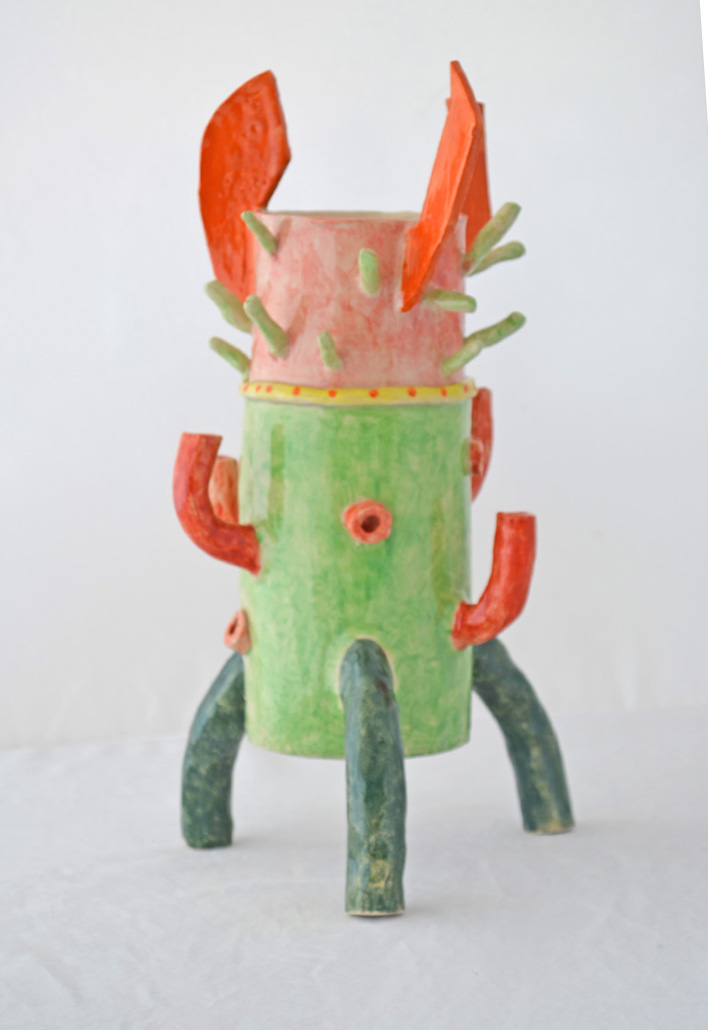
Three legged imp vase