Posts

The Patron Saint of potters

Llangollen

It must have been hard for Lady Eleanor Butler and Miss Sarah Ponsonby living in Plas Newydd, a stone built house converted into a gothic ‘fantasy’, since all they wanted was to be left alone after running away from their families and setting up home in Wales in 1778. They lived there for 50 years but became such objects of curiosity that they often had to politely receive visitors.

“Who is it at the door this time, Sarah?”

“Oh, it’s the Duke of Wellington again. Shall I show him in?”

And so on and so forth: Wordsworth, Shelley, Sir Walter Scott, Josiah Wedgewood, Byron all beat a path to the heavily ornamented Gothic door of their remote “Cottage.”

the two ladies of Llangollen

I, however, was on another mission linked more to the great Josiah Wedgewood than cultural curiosity, because I was delivering some pieces to Gwalia Ceramics in the heart of Llangollen and discovering that ‘The Ladies of Llangollen’ must have been attracted to the area by the beautiful Welsh hills, the fast running River Dee and the woodlands that surround the town.

Gwalia Ceramics

How to pronounce Llangollen: [LAN] + [GOTH] + [LUHN]. Or click here to hear it pronounced.

big Klee vase

The Gwalia Ceramics is a jewel of a gallery run by Jacqui Atkin, herself a very fine ceramicist and potter, as well as editor of Clay Craft magazine. Any visitor would enjoy dropping in – it is a small space but the ceramics are beautifully displayed. Wedgewood would have loved it because even though he is credited with the industrialisation of the manufacture of pottery, it was the beauty of ware such as the Portland vase that spurred him to innovate.

loop vase

And Llangollen is a place with an easy charm that invites walking about and exploring.
The Ellesmere Canal runs along the Dee here and it is unusual amongst Britain’s artificial waterways in having a strong flow (up to 2 miles per hour). The route, twisting through hills and across the Dee Valley, has made it the most famous and busiest in Britain. The canal is an important part of Llangollen’s attraction as a holiday destination. A marina, built at the end of the navigable section, allows summer visitors to moor overnight in Llangollen. I mention this in case any of you decide to visit by boat.

another vase

You can get there by train, changing in Liverpool, and then getting a bus, alighting at the Llangollen Memorial. And for steam enthusiasts, there is the Llangollen steam railway located beside the Dee Bridge. The journey is a relaxing 10 miles travelling through the stunning Dee Valley to the lovely town of Corwen the crossroads of North Wales. This small section of line, which in its day went from Ruabon to Barmouth taking people to the seaside on holiday and transporting various goods including slate and chemicals, follows the River Dee for its entire length, passing through some of the finest natural beauty North Wales has to offer.

torrential Dee

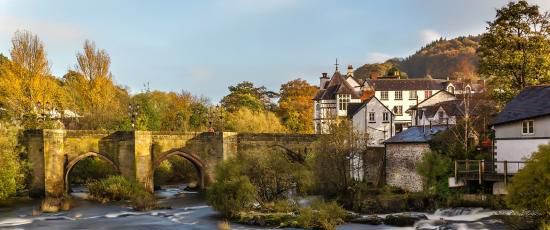
The bridge over the Dee is 16th century and gives you a dramatic view of the torrents below (it was a particularly wet and rainy day), and the High Street has enough good coffee shops for a break. I discovered a seriously good pastry shop selling something I have not come across before: Yorkshire Wraps. This is essentially a large circular Yorkshire pudding with raised edges which is then filled with a delicious thick meaty stew – not very Welsh, I agree, but somehow it did not matter, and it means I can slip in the one about the man from Barnsley who goes to the vet. Vet says:
“I hear you’ve got problems with the cat?”
“Aye” the man replies
“Is it a tom?”
“No,” replies the man, “I brought it wi’ me!”

Yorkshire wrap

Llangollen was established in the 7th Century when the monk St. Collen was instructed to find a valley by riding a horse for one day and then stop and mark out a “parish” a place to build his hermitage. This got me thinking about saints and I realized I had no idea who the Patron saint of potters is.

St Spyridon

Well, it is St Spyridon. He converted a pagan by using a piece of broken pottery to illustrate how one single entity could be composed of three unique entities (fire, water and clay); a metaphor for the Christian doctrine of the Trinity. As soon as Spyridon finished speaking, the shard is said to have miraculously burst into flame, water dripped on the ground, and only dust remained in his hand. So, good man though he undoubtedly is, it is probably best not to lure him into the Gwalia gallery

Arscott Ceramics goes pannaging

Lord Lyons

If you’re given champagne at lunch, there’s a catch somewhere”, said one of the great diplomats of 19th century Britain, Lord Lyons, a man who loved gastronomy and agreed with Palmerston’s remark that ‘dining is the soul of diplomacy’, and offered at least five courses of Moet & Chandon champagne at his diplomatic dinners because he found that, as ambassador to the United States, it made senators more accommodating.

Lymington

Lyons was born in the coastal town of Lymington, which is where Arscott Ceramics was heading with a delivery for the Coastal Gallery. It turns out that it is also the birthplace of  Ben Ainslie, Britain’s foremost competitive sailor, and the singer Birdy. The things one learns.

Landscape vase

To get to Lymington one has to drive through the New Forest, one of the largest remaining tracts of unenclosed pastureland, heathland and forest in Southern England and proclaimed a royal forest by William the Conqueror way back in the 11th century.

Vase 3

Pre-existing rights of common pasture are still recognised today and are enforced by official verderers, and Commoners’ cattle, ponies and donkeys roam throughout the open heath and much of the woodland. It is largely their grazing that maintains the open character of the Forest. They are also frequently seen straying into the Forest villages, shops and pubs (horse walks into a bar. “Hey!” says the bartender, “You read my mind” says the horse). The New Forest pony is one of the indigenous horse breeds of the British Isles and most of the Forest ponies are of this breed, but there are also some Shetlands and their crossbreeds.

Brusher Mills

It remains a habitat for many rare birds and mammals. All three British native species of snake inhabit the Forest. The adder, the grass snake and the rare smooth snake. It was mainly adders which were caught by Brusher Mills (1840–1905), the “New Forest Snake Catcher”. He caught many thousands in his lifetime, sending some to London Zoo as food for their animals. You can see Brusher’s grave in St Nicholas’ Church, Brockenhurst, where villagers paid for a marble headstone to mark his final resting place. It does not say how he died.

salt marshes outside Lymington – Isle of Wight on horizon

A quick watercolour of the salt marshes outside Lymington was affected by blustery winds blowing the easel down and by an irrational awareness of the possibility of any three of these species of snake having an opinion on landscape art – all British snakes are now legally protected, and so the New Forest snakes are no longer caught and it logically follows that there must be many more of them lurking in bushes nowadays.

porcus beatus

One or two of the ceramic pieces rattled around in their boxes as the car suddenly braked to avoid running over a pig. Yes, a pig. In fact there were various small porkers rooting around on the edge of the road and it turns out that it is not an uncommon sight to see pigs roaming in the autumn months. Pannage is the practice of releasing domestic pigs into a forest to eat fallen acorns and other nuts. Acorns are poisonous in large quantities to cattle and ponies and can lead to cholic whereas piggies spit out the toxic skins and enjoy eating the acorns. Pannage: late Middle English: from Old French pasnage, from medieval Latin pastionaticum, from pastio(n- ) ‘pasturing’, from the verb pascere ‘to feed’.

Up to 600 pigs and piglets will work their way through the forest but must be fitted with a ring through their nose which still enables them to forage through leaf litter and surface vegetation but stops them from rooting into the ground with their snouts causing damage to the Forest.

Those of you who have been following this blog since the start will know that pigs are often brought up because of their link to ceramics, and this blog is no exception. Yes, the word “porcelain” is derived from the Italian porcellana which translates as cowrie shell and refers to porcelain’s similarly smooth surface. Porcella means little pig, which describes the small plump shape of the cowrie.

Klee vase

Which is the point of this blog, of course, to tell you about Arscott Ceramics and what is new. The stoneware pieces seen in these images can all be inspected at the Coastal Gallery in Lymington, a small but wonderful gallery run by Stewart and Bev. Do pay them a visit and combine the experience with a walk into town, perhaps a dip in the Sea Water Baths (the oldest lido in the country) and, to recover, a stiff drink at the quayside where you can sit and gaze across the harbour at the UK’s most expensive coastal real estate, Sandbanks. Finish it off with a slow drive through the New Forest.

Man walks into a bar with a pig under his arms.

Where did you get that disgusting creature?” asks the barman.

I won him in a raffle” replies the pig.

loop bottle

Arscott’s ceramic wanderings

cloud vase petulant

I found myself wandering about in the grounds of a ruined castle, somewhere near the Welsh border, probably Skenfrith, or White Castle, when I came upon an open enclosure, the portcullis and dry moat lay ahead and the grassy area was walled in and contained a massive oak tree. But what most intrigued me a very large vase that stood in the middle – it was familiar to me, in fact one of my own pieces called Cloud Vase, but it was huge.

“What are you doing here?” I asked it, I don’t know why.

“I could ask you the same thing”, it answered rather petulantly.

“But what has happened?”  I was very confused.

“Nothing much. What’s up with you?”

“Nothing. What do you mean?”

“Well, look at yourself. You’re stark naked.”

I looked down and saw this was the case. Which is when, thankfully, I woke up.

vine vase in the Welsh hills

This is how reality, or the day to day, elbows its way into your sleep and there’s always some reason behind it. In this case I blame Mr Dale Chihuly. Let me explain.

dream vase at Cecilia Colman’s

On the way back from leaving some ceramics with the Cecilia Colman Gallery in St John’s Wood (see June 2018 blog), a friend suggested we visit Kew Gardens and look at the exhibition of glass sculpture by Dale Chihuly, Emperor of Blown Glass, whose work he often sites in natural settings, landscape or gardens, and whose technique, as he says himself ( he doesn’t like to use a lot of tools), it is all about fire, gravity and centrifugal force: “It’s these natural elements that make the pieces begin to look like they were made by nature”.

Chehuly’s Persian Column in the Temperate House at Kew

This outdoor exhibition brings together work from the past 50 years, the only site-specific piece being the Persian Column suspended from the roof of the Temperate House.

Lime Chrystal Tower

Main ingredients of glass?  Liquid sand, or rather sand, soda and limestone. melted at around 1320 degrees Celsius. This makes a typical glass which can be formed by blowing by mouth or machine, by casting, by pressing and by drawing.

Glass Hornets in the pond at the Temperate House viewed from the gallery

So, it’s a cousin of stoneware, which is also fired at a high temperature and is essentially a vitreous ceramic made from naturally occurring stoneware clay containing kaolinite, mica and quartz, and is thus water resistant and frost proof – like the pieces I make, only mine are really for a domestic setting, though what if….?

Sapphire Star

How big could a ceramic sculpture be, I wondered? The glass work on view is large, and mainly made out of many hand blown pieces which are carefully slipped onto steel rods that stand out from an inner steel core or tube planted deep into the ground. Like the Summer Sun by the lake, or the Sapphire Star by the Victoria Gate entrance. They are very large and dominating, and impressive. Which is why I ended up dreaming about man made ceramics in outdoor settings.

Summer Sun

If you haven’t been to Kew, you have a treat awaiting. It is a garden that houses the largest and most diverse botanical collections in the world (30,000 different kinds of plants), a World Heritage Centre, 132 hectares of gardens, glasshouses, listed buildings and the fabulous Palm House built in 1848. Parking is challenging unless you go early, otherwise it is best to arrive on the underground, either Kew Station or Richmond. The sandwiches are good.

small vine vase at Cecilia Colman’s

So, back to nocturnal wanderings of the mind, finding yourself in a state of undress in a dream is no big thing, nothing to worry about. Everybody has had one of these dreams, or at least that’s what the giant vase on the hill tells me.

giant vase that tells me things

A Stoneware Wolf in a China Shop

towards Paincastle

Delivering ceramics is a way to get to know a country. I found myself in the car, ceramic pieces carefully packed in boxes at the back, on a narrow road in the Welsh countryside of Powys, marooned in a sea of wool as a flock of sheep was driven to an adjacent field by two men and a woman. It was warm enough to have the windows open and as the woman walked by, I asked her what breed they were (the sheep, not the people). Badger Face Welsh Mountain was the reply. I nodded sagely, as if I knew my sheep.

green vs brown

The countryside I was driving through was an upland area above the Wye River and I was on my way to Erwood but had allowed the satnav to dictate terms, so instead of going the direct way, I was doing the “picturesque” route via Paincastle, which meant dealing with slow, winding, single track lanes in an undulating landscape,  but it also presented me with the unexpected opportunity to enjoy a rural backdrop that seems little touched by man…. until you realize that the place owes its personality to the sheep that graze it and the farmers that have shaped it through the ages. On this particular early Spring morning the sky was bright and clear, and the green was taking over from the Winter grey and the brown bracken. Clean air and only a whiff of sheep.

clean air

inside one of the Erwood carriages

Erwood itself is tiny but used to have its own train station until 1962. Nowadays, three railway carriages from the 1880s mark the spot, and form part of the largest privately-run contemporary applied arts gallery in Wales, the Erwood Station Gallery. There’s even a diesel locomotive from 1939 parked outside, a restored Fowler 0-6-0 engine. It is only a few yards from the Wye river, and attracts not only anglers, but also walkers and cyclists.

Fowler 0-6-0

A stone’s throw from Erwood is the village of Crickadarn, which was the remote “East Proctor” in the cult film “An American Werewolf in London”. The gory scenes on the lonely moors with the rampant lycanthrope feasting on Badger Face Welsh were all shot in the nearby Black Mountains, but a Stoneware Wolf (yes, sorry) would undoubtedly calm down at the site of the ceramics on offer at the Erwood Station Gallery. Unless there is a full moon, in which case there would be little chance of protecting the fabulous pieces on show from any lupine loss of control.

Werewolf thrilled at having found an Arscott ceramic

By the way, if you have recently developed a craving for raw meat and a sudden fear of water, have begun ripping your clothes off during a full moon, have a unibrow across your forehead, find yourself screaming with anger when it’s nothing to do with Brexit, then you may well be a werewolf. Click here to see what happens during a full moon – warning: remember it’s all pretend.

Some of the pieces on view at the gallery:

fish vase

ivy vase

Following your visit to Erwood you may well want to have a meal, in which case Hay-on-Wye is 20 minutes away by car. There you could spend a whole day just browsing in the bookshops for which it is famous, visiting the Erwood sister gallery, the Lion Street gallery, mainly showing the work of Welsh artists, or prowling around the open market (Thursdays only). Or you can hire a canoe and paddle down the Wye – if you are lucky you will catch sight of a flash of brilliant blue and green dropping into the water. A kingfisher.

early morning River Wye

Peter Arscott Ceramics in Ledbury (part 1)

pink ochre vase grogged stoneware

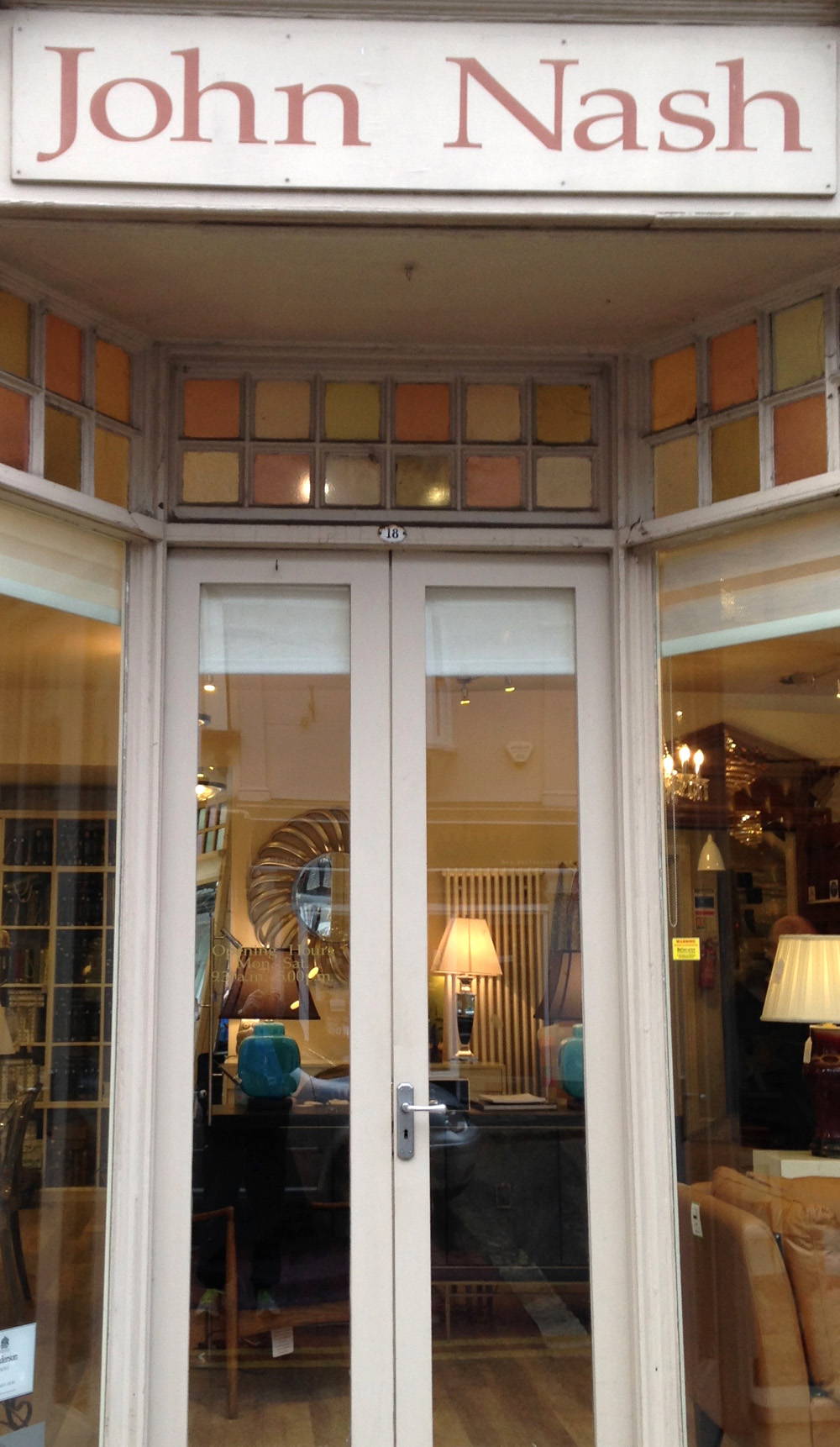
These blogs usually spring from the places and galleries where Peter Arscott ceramics can be seen, places like Worcester, Brighton, London and Cambridge, and despite all this geographical weaving around, until now the actual heart and home of production has never been properly introduced to you: Ledbury, where you can also now see some of the recently made ceramics displayed at John Nash’s in the town centre.

C vase at John Nash

It’s a market town with the ingredients to make its High Street attractive to the eye: a curving length, a slight dip in the middle and buildings on either side that are as tall as the street is wide. Founded in 1123, it has inevitably changed a great deal since then, though the ground plan in Bishop Capella’s rent book shows that it still is the same essential High Street made up of burgages, strips of land 200 ft long and 20ft wide with house frontages onto the street and access via alleyways to the rear where animals were kept. Hard to believe when you look at the shop fronts today; the cafes, pubs, grocers and bookshops hide what is still there – a medieval layout.

Ledbury High St

A saunter down Church Lane and its carefully laid (small) cobbles is a pleasant experience but over a century ago you would have had to deal with petrified kidneys, large sea-worn flint lumps used for paving which caused terrible problems for clog-wearing Ledburians. Today anybody seen having problems walking down Church Lane might well be a local coming out of a pub late at night.

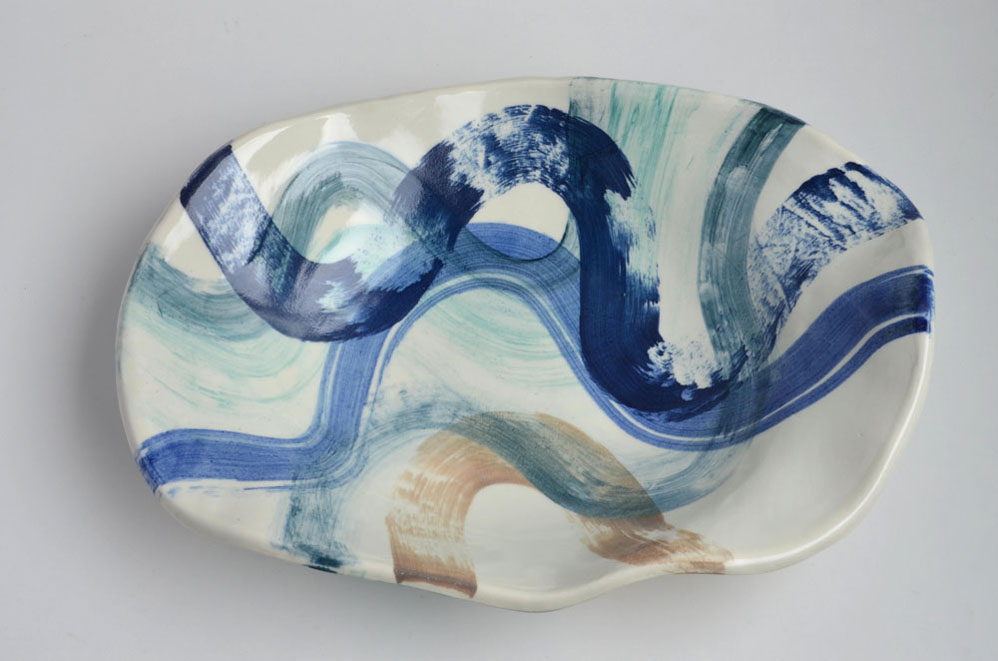
blue scoop bowl

Water used to run down the centre of Church Lane from the hill above town, Dog Hill Wood, and the lake in the grounds of Upper Hall, and gather in the dip in front of the old library, the Barrett Browning Institute, where detritus from nearby tanneries and blood from the Butchers’ Row, a row of 15 shops which originally stood in the middle of the High Street, mingled. The effluvia was blamed for the outbreak of typhoid in 1826 and eventually led to their dismantling after prolonged resistance from the occupants.

whistle, don’t thigh

One shop was saved and rebuilt behind what is now Boots, and later transferred to its present location outside the Burgage Hall – it’s a museum of curiosities: a hurdy-gurdy, pots, breastplates and a Tibetan flute fashioned from a human thigh bone; the femur of a criminal or a person who died a violent death is preferred. Alternatively, the femur of a respected teacher may be used, though I do hope none of the kids from John Masefield High School gets the wrong idea.

entrance to John Nash Interiors

Next door to the alley entrance is John Nash Interiors, contemporary and period interior design, who are showing various Peter Arscott ceramic pieces with the launch of a new collection of furniture by Andrew Martin.

three legged bowl

The Andrew Martin Interior Designer of the Year Award celebrates the best of design from around the world. Designers from all six continents take part. Every year, a panel of celebrity judges, are charged with the fiendish task of selecting one overall winner. One of this year’s judges was Elizabeth Hurley of this parish (the winner was Ohara Davies-Gaetano Interiors).

retro charger

Do drop in anytime, perhaps combining it with a visit to the Ledbury Gallery next door, and a coffee at one of the town’s seven fine cafes. If you have any time left, nip into St Michaels Church and greet the medieval being halfway up one of the pillars near the choir: the stone Manticore. It has the head of a human, body of a lion and a tail. It eats its victims whole, using its triple rows of teeth, and leaves no bones behind. The Ledbury Manticore, however, looks rather baleful, so just say “hello” and move on.

…………… (to be continued)

sad, sad Manticore

a curly tail of two cities

a pier with no equal

Brighton and Hove is an engaging place and I was wandering around in an aimless way when I came across a giant donut surrounded by very happy people, two of whom has just got married, all of whom were drinking champagne, and one of whom offered me a glass. The donut is a huge circular shape cast in bronze and its centre at eye level allows a view of the world through the sculpture. It’s called “Afloat”.

Afloat

Some of you will know that expectant feeling that takes over when a kiln is opened up and the work of weeks is revealed fully glazed– smooth shiny shapes that are pleading to be picked up, weighed and felt for the first time. Stoneware and, occasionally, porcelain is what’s used at the workshop, and recently after my trip to Brighton and Hove, I was thinking about piglets for some unaccountable reason. The brain is a strange and wonderful thing.

whirlpot set

Stay with me on this one. The point of the story is that the donut is sited at the seaward end of the groyne, a word I had never heard of but which turns out to be a man-made barrier designed to trap sand which the waves have moved along the beach and to prevent the sand being moved too far along the coast. Groynes are usually made of wood, or concrete.

porker

If you are like me you will want to know why it is so called. Well, it comes from the Old French groign, which derives from the late Latin grunnire (to grunt) and thus from grunium ( a pig’s snout). I suppose groynes do stick out like porkers’ snorters towards the sea. I was relieved to work out that this was the reason for my porcine daydreaming and pleased to realize that it afforded this blog yet another tenuous link with ceramics.

How? Well, porcelain comes from the Italian porcellana, literally “cowrie shell,” the chinaware so called from resemblance of its lustrous transparency to the shiny surface of the shells. The shell’s name in Italian is from porcella (young sow), the feminine of the Latin porcellus (young pig), diminutive of porcus (pig). The smooth and plump little cowrie does have piggy qualities though some experts point out its resemblance to a pig’s genitalia. You judge

Robin and Kirsty

All this preamble leads me to the reason for my visit. I was there to deliver some recent ceramics to the Cameron Contemporary Arts Gallery run by Robin Cameron and Kirsty Wither. Scattered throughout this page are examples of pieces you can see if you visit the gallery.

leaf vase

The gallery shows a changing programme of high quality established and up and coming British artists, ranging from traditional to modern, figurative to abstract, and each exhibition is accompanied by a selection of sculpture, ceramics and jewellery.

blue/green stoneware vase

The gallery is in the more laid-back Hove half of this twin city, less dense and intense, but because of its Regency buildings, villas and art-deco housing, wide roads and general leafiness, it is as expensive as Brighton but still attracts young families perhaps drawn by the wistful names of the areas there: Poet’s Corner, Wish Park, Palmeira Square, Adelaide.

seagulls go free

Brighton itself is certainly busy and cosmopolitan. I heard the sing song tones of Swedish, the emphatic sounds of Spanish, a lot of French glissando and very loud screeching Seagull. Seagulls own the promenade and perch all over the place in wait for something edible – they stare back at you unblinkingly and with a certain smugness because they are the only ones who do not have to pay to climb to the top of the British Airways i360 tower, from which you can view Brighton and the south coast. Visitors glide up gently to 450ft in the glass viewing pod, designed by the creators of the London Eye.

the Pavilion

Brighton’s famous lanes, narrow and crowded, are home to jewellers and a few restaurants, but a stone’s throw from them is the exotic Brighton Pavilion built for George IV, with its extraordinary exterior, its Chinese decor indoors, and its huge kitchen designed to feed a monarch who became very piggy-like in middle age.

Gorgeous George

As well-known as the stout sovereign’s palace is the Brighton pier, formally called the Brighton Palace Pier with its amusement arcade, rides and attractions, candy floss and Brighton rock. A lot of you may remember visiting it as children, and I still remember the smell of candy floss (does candy floss smell, or is my brain playing tricks again?), the one-armed bandits spitting coins at the ever-hopeful and the money I spent at the Shove Ha’ penny machine trying unsuccessfully to get a pocket knife in the shape of Elvis Presley.

three legged leaf bowl

I do remember going blue with cold after being frogmarched to the beach when we came to visit Granny. Luckily by then there were no professional “dippers”, robust women who plunged bathers vigorously into and out of the water for a small fee when the popularity of sea-bathing grew back in the 1790s. The ‘queen’ of the Brighton dippers was the famous Martha Gunn, a large woman who dipped from around 1750 until she was forced to retire through ill health in about 1814.

Martha at the Brighton Museum

It is hard to believe that before George IV made Brighton the “go to” resort it was a very impoverished town after the decline of the fishing industry resulted in much unemployment. It reached its nadir when the population had fallen to around 2,000 by the mid eighteenth century and great chunks of it were being gobbled up by the sea. Daniel Defoe, never one to mince his words, described Brighton as an old and poor fishing town in imminent danger of being completely swallowed by the sea; the proposed expense of £8,000 on groynes was, in Defoe’s opinion, more than the whole town was worth.

ceramic wave bowl – appropriate for a seaside resort

But it is another story now, and should you want to spend a day or two enjoying the sea, the vista, good restaurants and hotels, fairground rides, serious shopping, sailing, museums and galleries – and all of it an hour’s train ride from London – then this is your place.

Do drop in at Cameron Contemporary, and to see other galleries selling my ceramics click here and it will take you to the Gallery page on the website.

Lastly, I’d like to thank my dear old friend C.D.N. and his lovely Sue for putting me up that night, despite the fact that he was celebrating a significant birthday the next day. I hope the party went off with a bang and that all the wine brought in was consumed. I snuck out very early the next morning and tried to write a thank-you message on a paper napkin, but the tissue soaked up the ink in my pen and all I managed was a wobbly “Tha…” Here’s my present  –  an old song we both like (you’ll be hooked with the first note of the sliding guitar).

Arrivederci

image of belatrova stall

Arrivederci – everything must go

ceramic bowl with three legs

a belatrova collectable

We admit we haven’t been in touch for some time but belatrova is discarding its old skin and emerging anew like a butterfly from its ceramic chrysalis.

Arscott, Houghton and pugmill

arrivederci from Houghton, Thelonious and Arscott

So is belatrova closing down? Was it inadequate capital, lack of cashflow, poor research, scattergun motivation, a saturated market, big lawsuits pending?

None of the above. After lengthy discussions on the future of belatrova and the path to be taken, it was Thelonious who moved to dissolve the corporation in a pool of margaritas; glasses were then raised to the next stage in this ceramic odyssey.

Each handmade piece will now be sold under Peter Arscott’s name

something new this way cometh

No longer will we be making lamps, birdbaths and coasters. From now on we will concentrate mainly on vases and three legged bowls, painted in a distinctive abstract style, and we will be selling them through various outlets, from St Ives to Edinburgh (details to follow).

ceramic bowl

new range of three legged bowls

Our website will be a blog and gallery from now on, where new pieces will be shown and developments and outlets announced.

Ledbury Market House

Ledbury Market House

This means that everything must go and we are offering our belatrova pieces for sale at very low prices. From Saturday 5th May we will be selling belatrova pieces under the Market House in Ledbury from 9am to 4pm every Saturday.

image of belatrova stall

stall

Throughout the month of May customers with any queries or just wishing to visit the new studio workshop can do so by ‘phoning ahead on 07734 678667. Do allow for time as we are occasionally not at the studio throughout the day.

image od Naples residents strolling

Neopolitans strolling

Only just back from Naples, arrivederci is most appropriate since it means until we meet again in Italian. Not that any Neopolitan considers himself or herself Italian but a race apart. The city has an energetic buzz and the volume control is set to “loud”, with groups talking on street corners, under trees, in shops, anywhere convenient where views can be exchanged. Politics, football and gossip reign supreme. When we were there Napoli beat Juventus 1 – 0 and the city around us erupted and citizens spilled out onto the streets to celebrate.

Vesuvius mouth

caldera

We visited the Royal Palace, the Archaeological Museum, the San Martino palace on the hill, and, of course, ate pizza. Pompeii was fascinating and the climb to Vesuvius provided the best scenery available: the whole bay of Naples and the islands of Capri and Ischia. The deep crater, or caldera, still oozes a sulphuric whiff which for some reason was reminiscent of the workshop on a Monday morning.

nocturnal shot of bay of Naples

the Bay of Naples at night

Aglianico, a red grape variety of the area, produces a delicious wine that belatrovians (well known for their excellent taste) may want to try.

Once back in soggy Britain belatrova was involved with the launch of an exciting new ceramic project. CUP Ceramics Community is Herefordshire’s first open access ceramics studio and aims to open its doors in Autumn 2018. CUP provides a unique and creative community for beginners, intermediate and advanced ceramicists to share ideas, skills and friendships in an inclusive, relaxed and ambient environment. Excellent facilities, storage and expertise can be accessed for an affordable monthly fee allowing time for experimentation and extensive development of skills.

CUP is currently running a crowd funding campaign to show that there is a demand for what we offer in Herefordshire. Here, you can find out more about us and pledge for discounted courses and membership: https://www.cupceramics.com/

glass of wine

aglianico

Here’s looking forward to the future, and to seeing you under the Ledbury Market House and elsewhere. We will be keeping in touch.