Posts

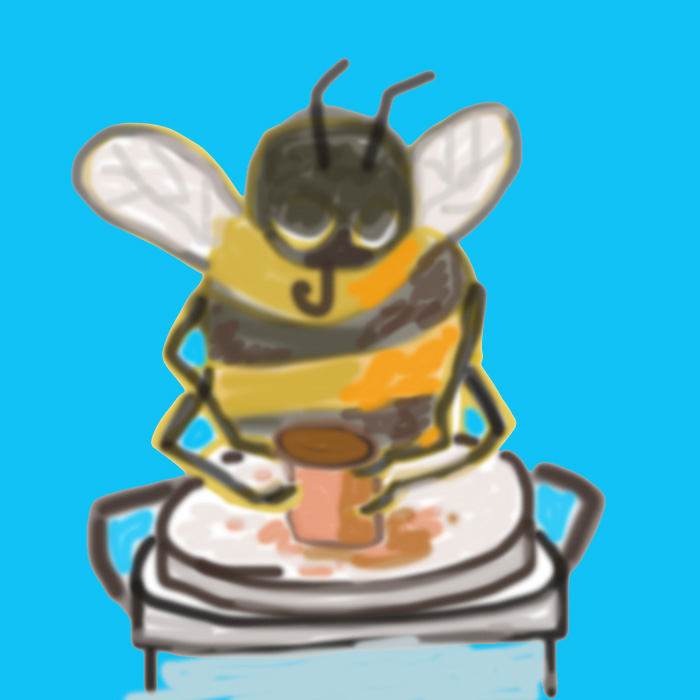
Bees are potters

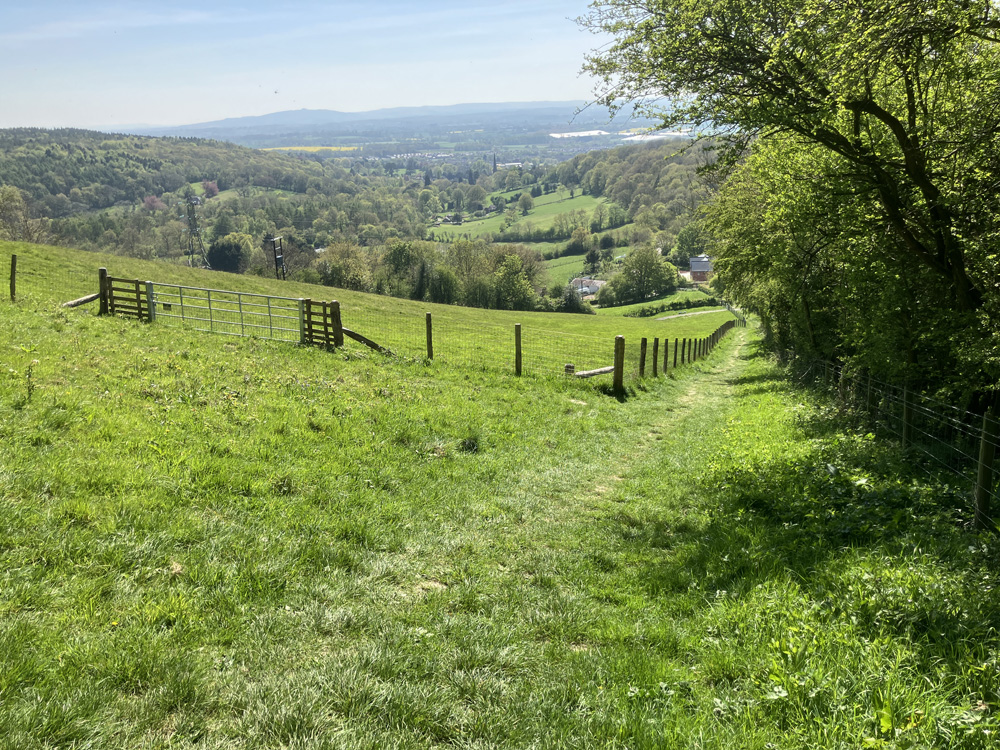
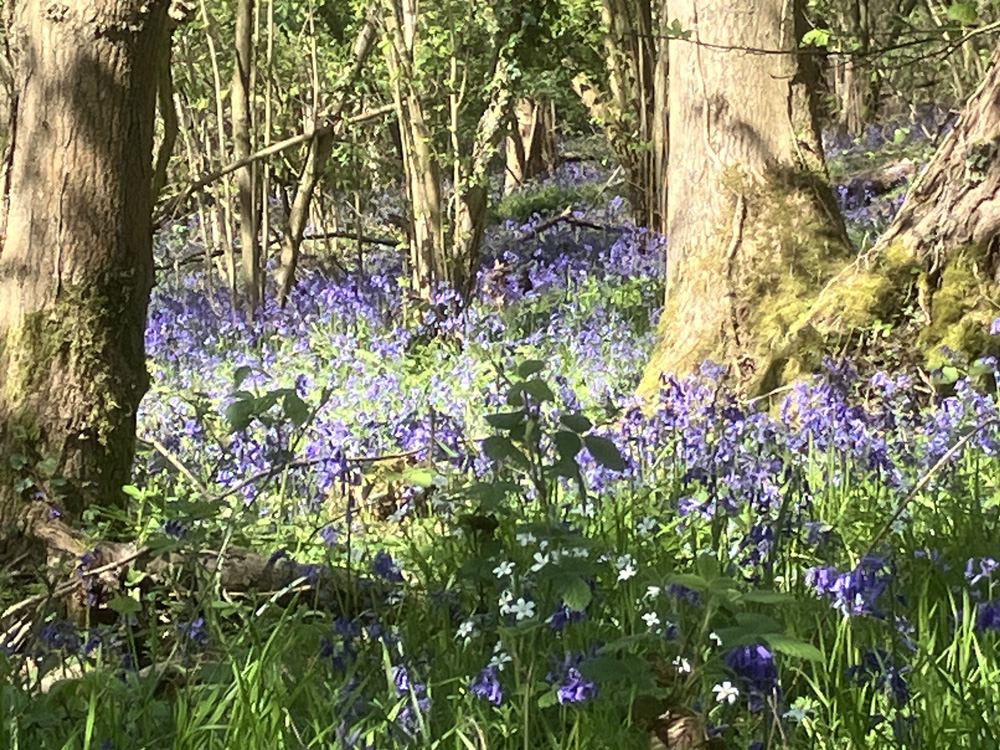
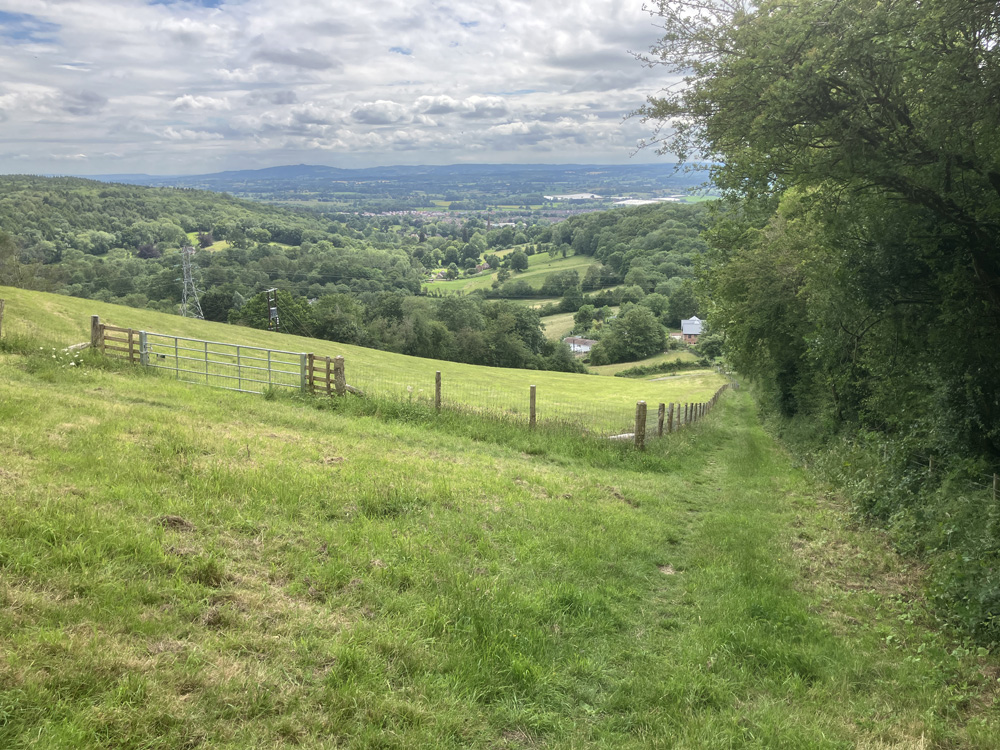
As you can see from the view from Bradlow Knoll, it was a bright sunny day for a stroll up the hill. What you can’t see is the cool breeze blowing, which made it perfect walking weather. It may not have been a breeze exactly, it was a notch above that, maybe a gust – it wasn’t a waft, zephyr, breath, puff or flurry. It was strong enough to make the trees in Frith Wood whisper, a symphony overhead and a symphony of blue at your feet: the bluebells at their peak.

When you’re bent forward struggling up a hill, your nose is closer to the ground than usual. Which is how I noticed the first Solitary bee crawling out of a hole in the soil. They nest anywhere, and though they are called Solitary bees (or Mining bees) they live alone in burrows but close together in large groups. Not for them the collective work and pressures of the beehive, or the social structure of the honeybee. There are 250 or so species in the UK, including the Tawny mining bee, the Hairy-footed flower bee and the Queen bumblebee. If you find one on the ground looking exhausted, it’s because they need energy: give them a drop of water with sugar (and watch them drink it with their proboscis) and they’ll eventually take off and go back to work. And they won’t sting if you pick them up.

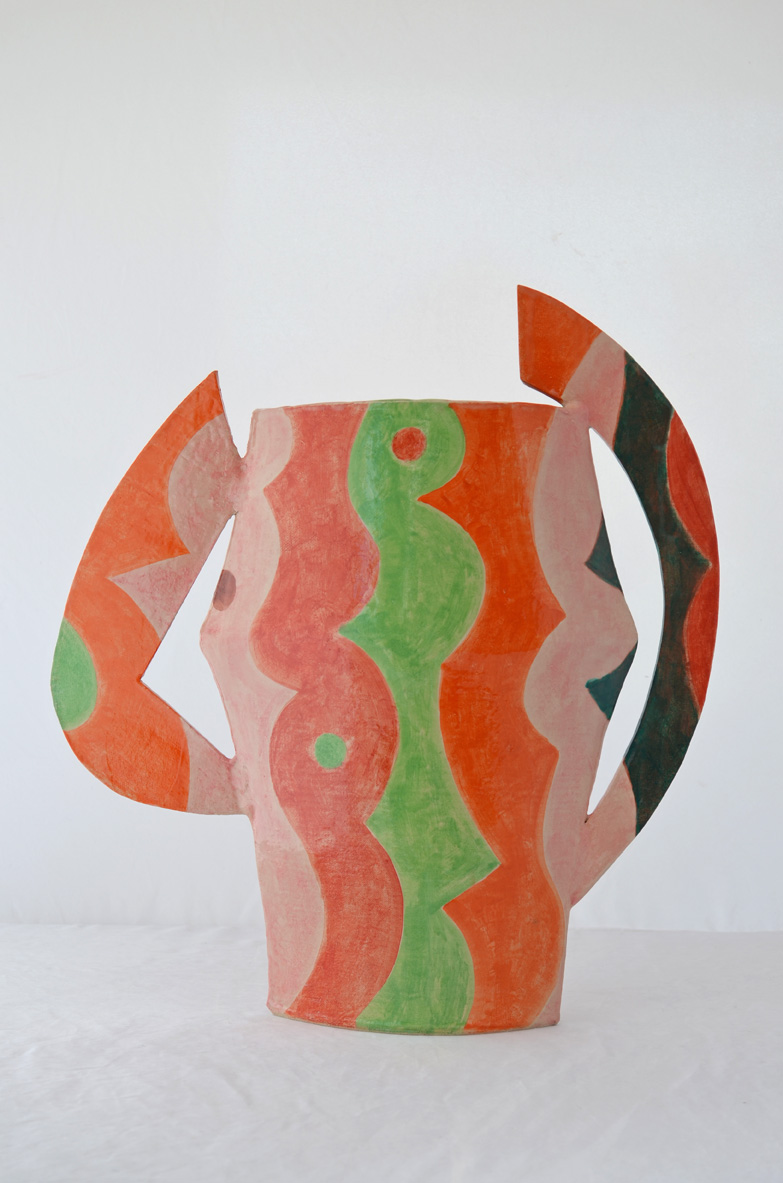
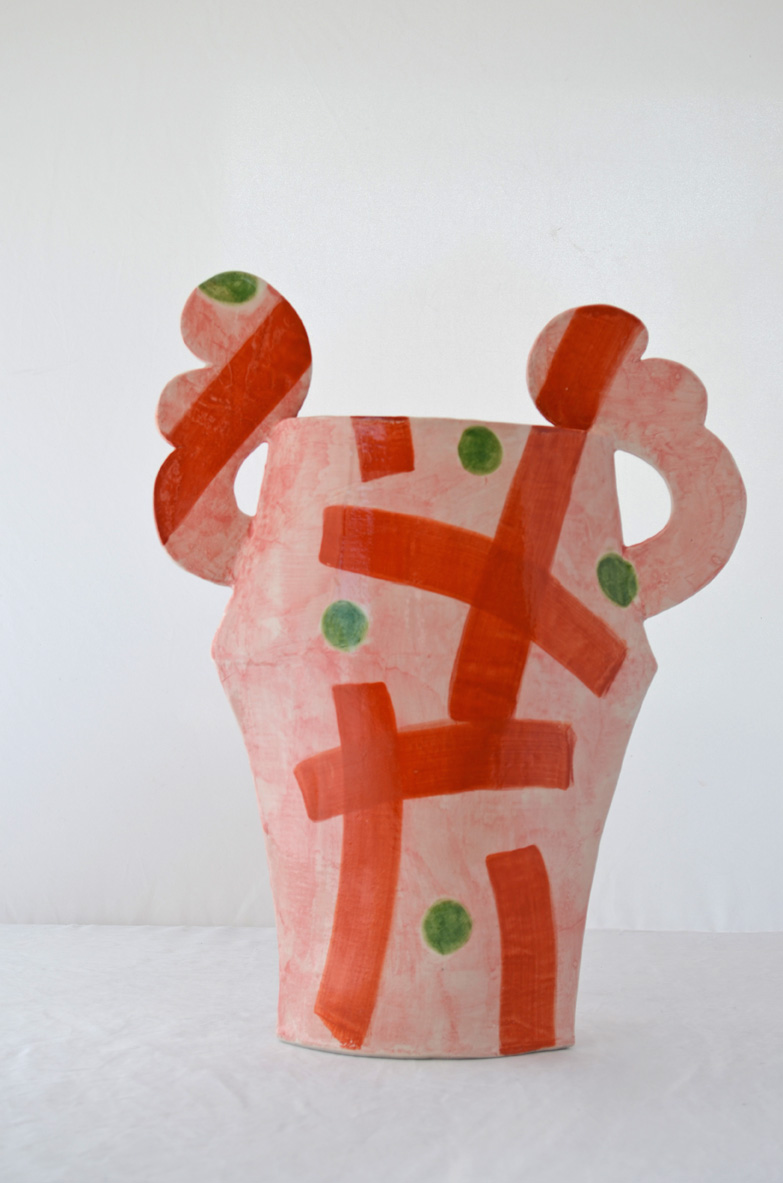
Acton vase – stoneware 46 x 40 cms

Why am I going on about bees and not about ceramics? Before Spyro (marketing) admonished me for not promoting ceramics, my bit of research showed that these ground-nesting bees were working with clay, shaping mud with their mandibles and waterproofing their chambers with waxy secretions millions of years ago. Bees have been master clay workers longer than flowering plants have existed in their current forms. In other words, these bees are ceramicists. They were working clay thousands of years before humans even thought of using mud to make a vessel.

Spyro, being a third century goatherd as well as a bishop (and patron saint of potters), and fond of goat yoghurt, is all for this blog mentioning bees because he loves to pour honey on his. Ziggy, being a spider and therefore a fly specialist, is indifferent.

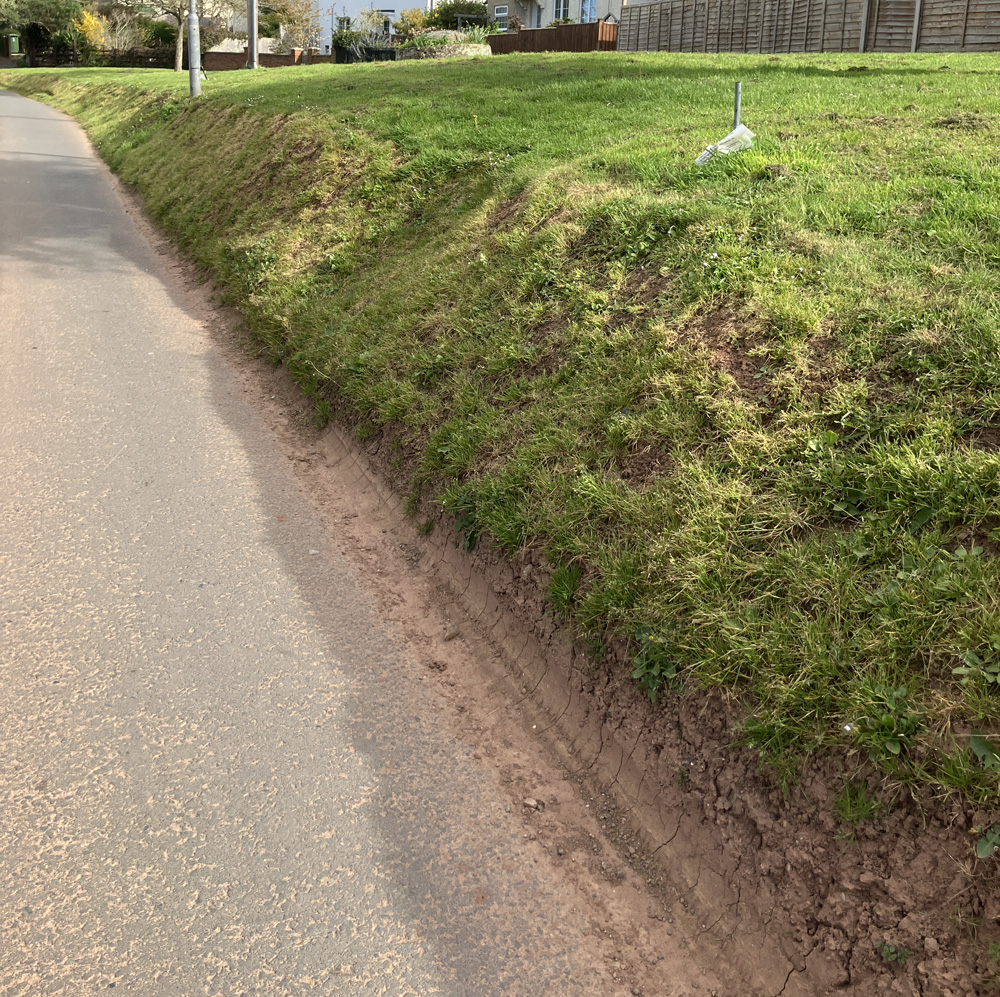
Miner bee habitat

A brief digression: there are hundreds of Mining bee burrows on a grass strip along a road in Ledbury which for years has been sprayed with a (relatively safe) weedkiller in order to allow drivers a clear view of oncoming traffic. It’s the responsibility of a housing association which, when contacted, were very reasonable and understanding, and confirmed they’ll stop spraying, and may even start seeding it. A victory for nature. Oh if only we humans always listened to each other and acted rationally. Now we just need to apply it to the Straits of Hormuz.

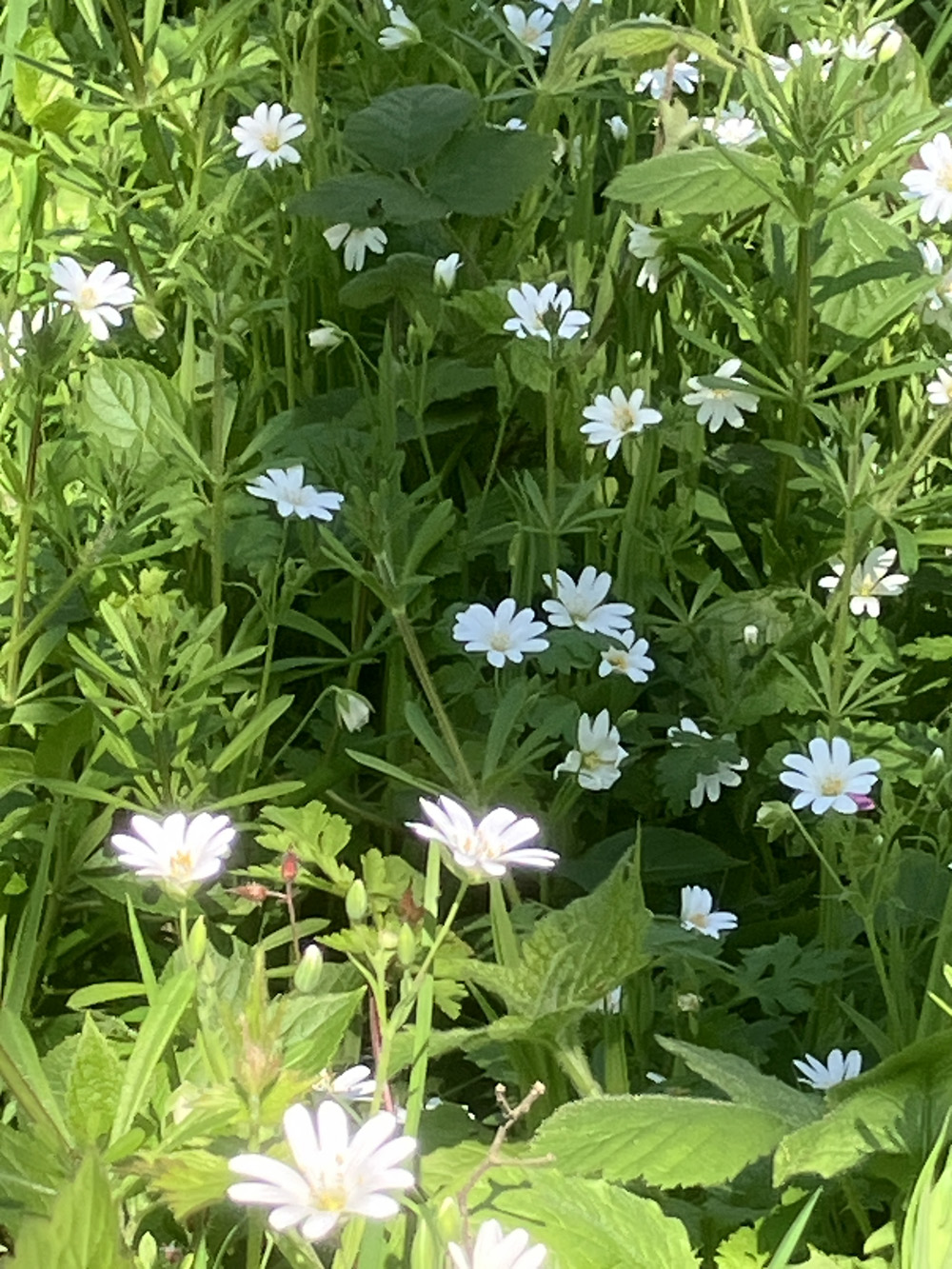
Greater Stitchwort

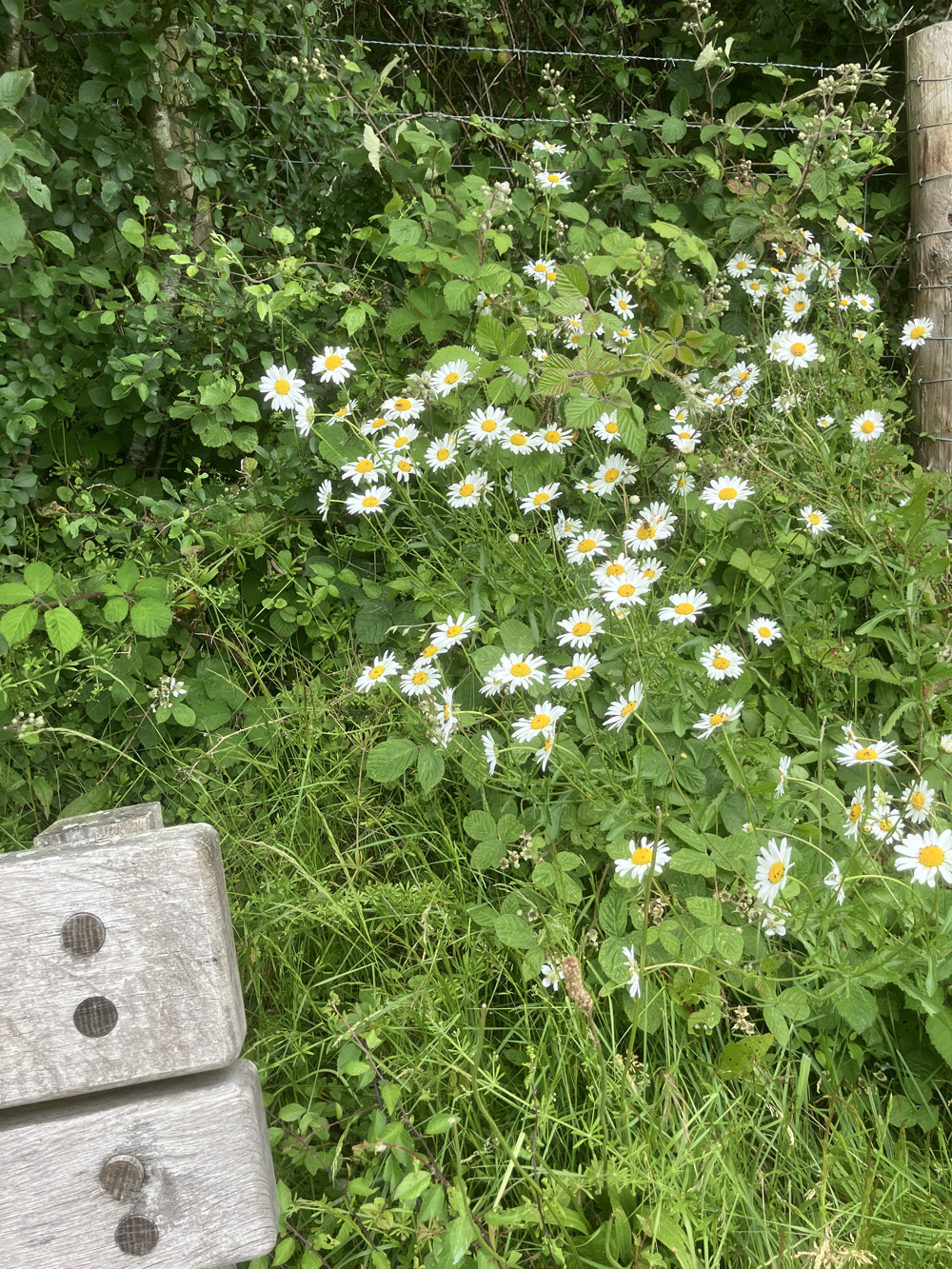
Because it’s early Spring, the woodland plants are at their best, specially on the edges as you walk into the cool shade of the trees. Once deep inside the canopy, the bluebells and stitchwort take over. Mindful that being outside in the sunshine helps increase vitamin D, which gives your immune system an extra boost, walking through woodland is good for the senses, with different things to see, hear, smell and touch – just don’t touch the nettles, which sting in a treacherous manner when you are reaching in to take a snap of the other (prettier) plants. Not that I want to be unfair to nettles, April is the time to pick the tops off, ideally with washing up gloves. Once you put them in to boil the sting vanishes and you can make nettle soup. Here’s a link to a recipe.

Red signal vase

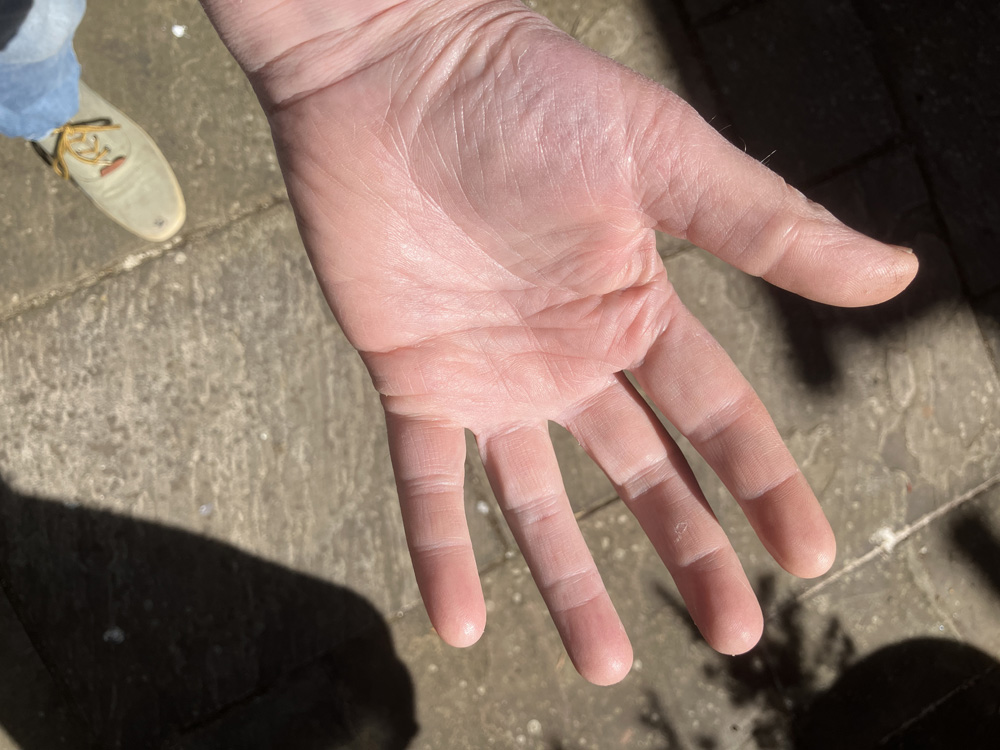
Talking of gloves, after a long session pounding and shaping stoneware clay (ungloved) for the latest batch of vases I noticed, not for the first time, that my hands felt very smooth for a day or two. Of course, we’ve seen pictures of people with their faces covered in mud, so it must be generally accepted that clay is good for the skin. Over time, I expect to be rewarded with skin that’s soft, smooth, and more radiant than ever. Next time you meet a potter, insist on shaking hands, just to test this theory, but don’t hold on for too long otherwise it’ll look weird.

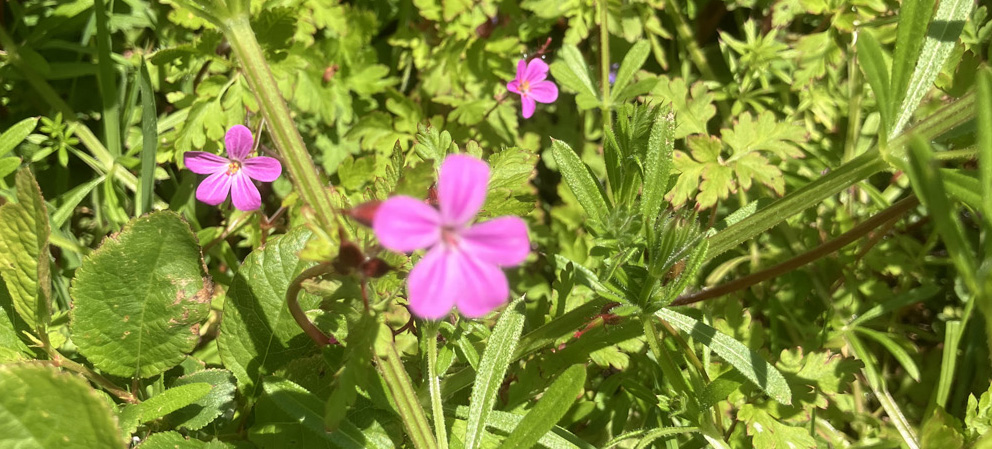
Herb Robert

“Soft hands” implies that you do little proper work, so again, be careful not to tell a potter he or she has soft hands or they may take it the wrong way. Apparently it’s become a meme and is used to tease people with smooth, uncalloused hands by comparing them to someone who works 100 hours a day in a coal mine, showers in diesel oil, washes his hands in gravel and dries them with sandpaper.

I know we’re going off on another tangent but it can’t be helped. The Potter’s Hand by A. N. Wilson is a wonderful book about Josiah Wedgwood, master ceramicist, who embarks upon the now famous thousand-piece Frog Service for Catherine the Great, and includes Josiah’s nephew Tom’s journey to America to buy clay from the Cherokee for this project. He falls in love with a Cherokee woman who becomes involved in the masterpiece called the Portland Vase, which you can see at the British Museum.

Large listening vase – stoneware

To see a ceramic piece made by the fair and velvety hands of Peter Arscott Ceramics you can visit the Cecilia Colman Gallery in London, or the Palais des Vaches in Exbury.

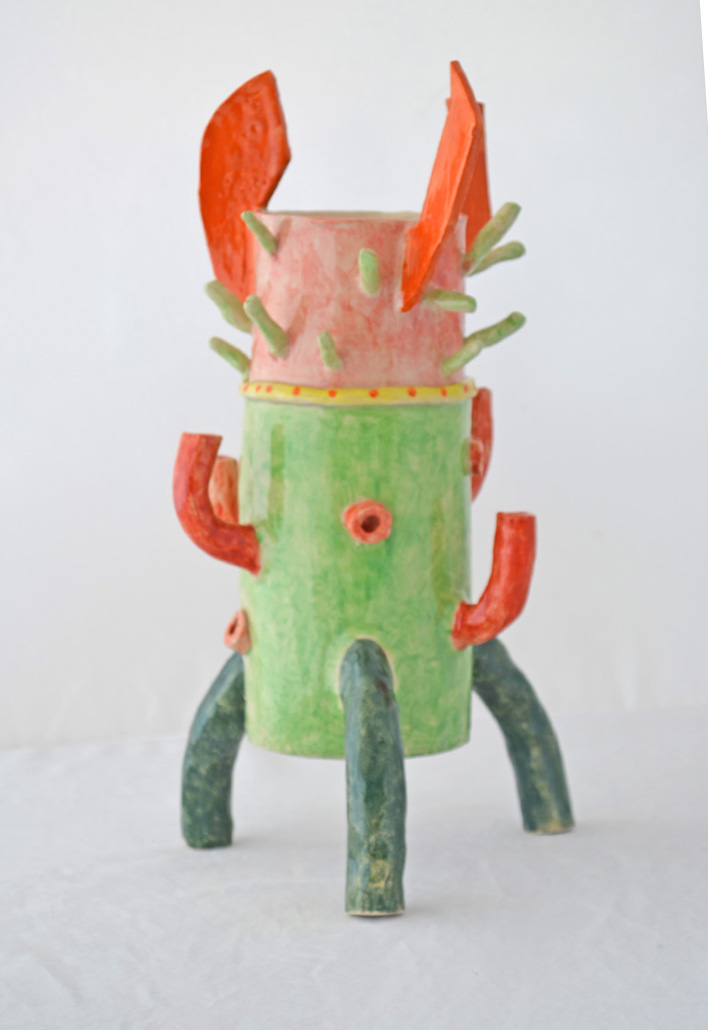
Three legged imp vase

Many Vast Elephants Make Jam Sandwiches Under No Pressure

I wonder of any of you have been craning your necks up at the night sky recently. There’s been an alignment of planets visible to the naked eye and Venus has been the most spectacular and can still be seen as a bright ‘star’ in the early evening, if you look to the west. Its position in the sky is bringing it closer to the Sun as March rolls on, so only a few days left to see it. Mercury, Mars, Jupiter, Neptune, Uranus and Saturn are the other ones vying for your attention, but time is running out and it won’t happen again till 2040.

Photo: Petr Novák, Wikipedia

Venus, named after the Roman Goddess of Beauty, presumably because it’s so bright, brought to my undisciplined and ruminating mind the sadly armless Venus de Milo, the venus flytrap, Venus in Blue Jeans, Men Are from Mars, Women are from Venus, and finally the Venus of Dolni Věstonice (though I did have to come home and check on the spelling). You may have heard of her – the oldest known ceramic in the world, discovered in Czechoslovakia. A clay sculpture figure of a female, which has been dated to 29,000 – 25,000 BC.

Diligent vase

To think we’ve gone from using ceramic for this primitive (but powerful) figurine of a Mother Goddess to making objects as diverse as spark plugs, fibre optics, artificial joints, space shuttle tiles, oven tops, self-lubricating bearings, body armour, and skis. Human progress (?) as measured by clay. By the way, I did not know that enough ceramic tiles are produced each year to pave a path 300-ft. wide around the world. The things you learn.

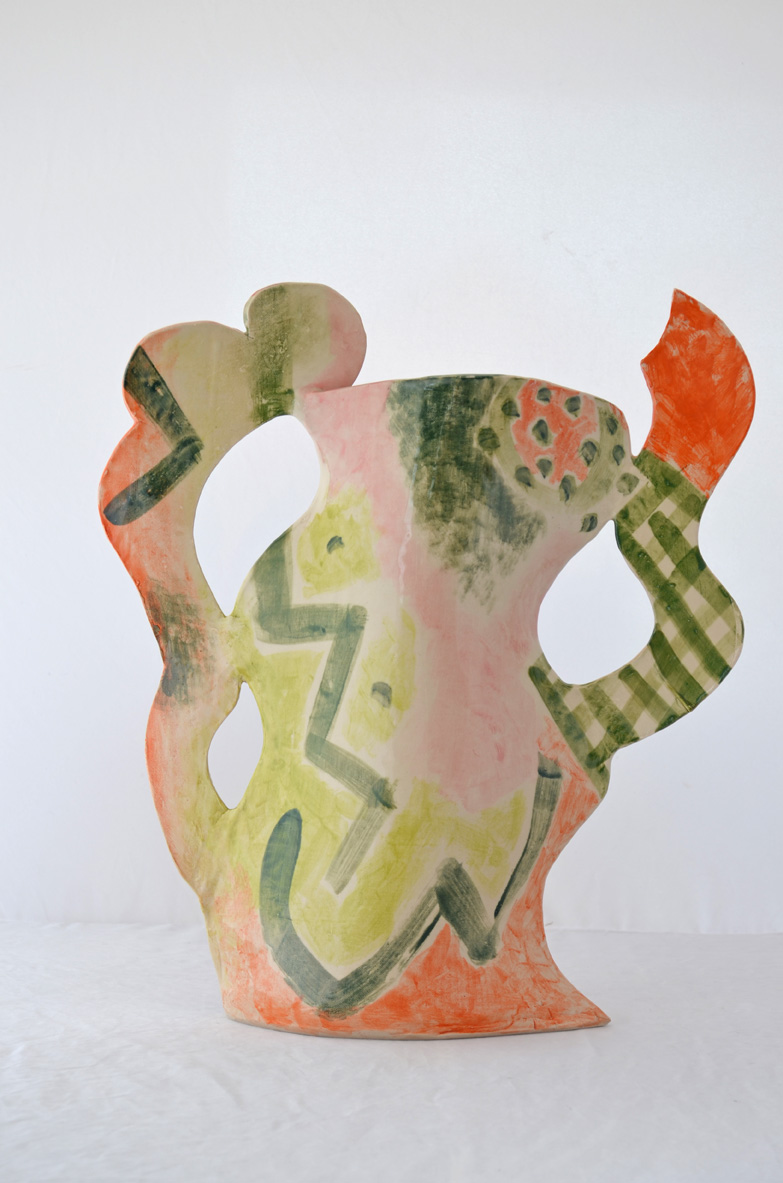
Green striped vase

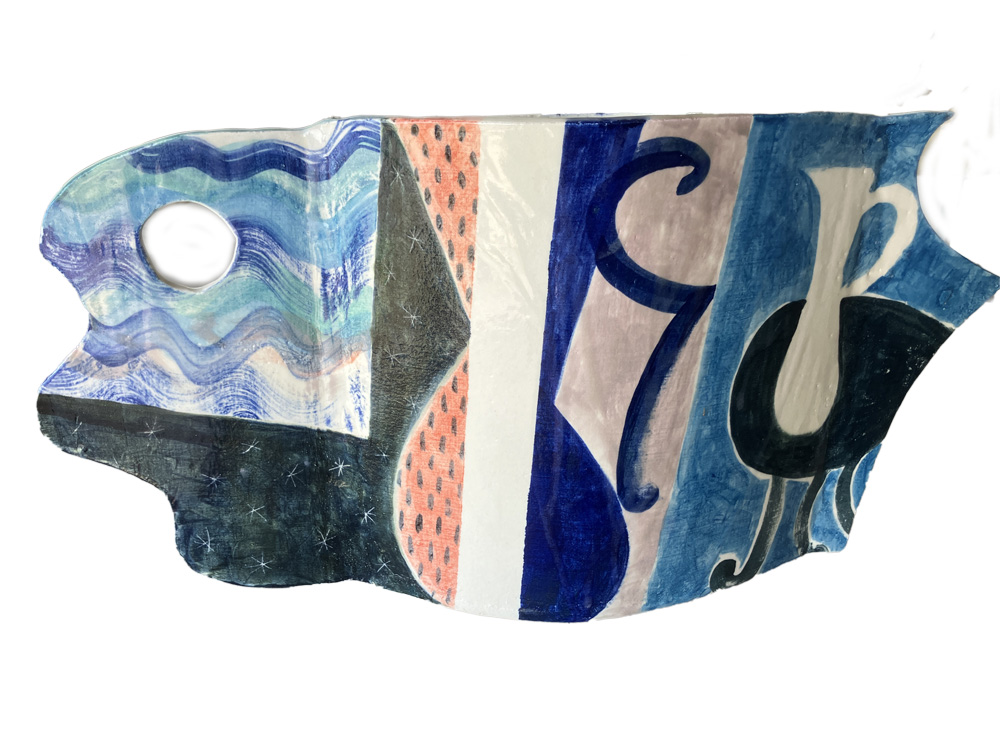
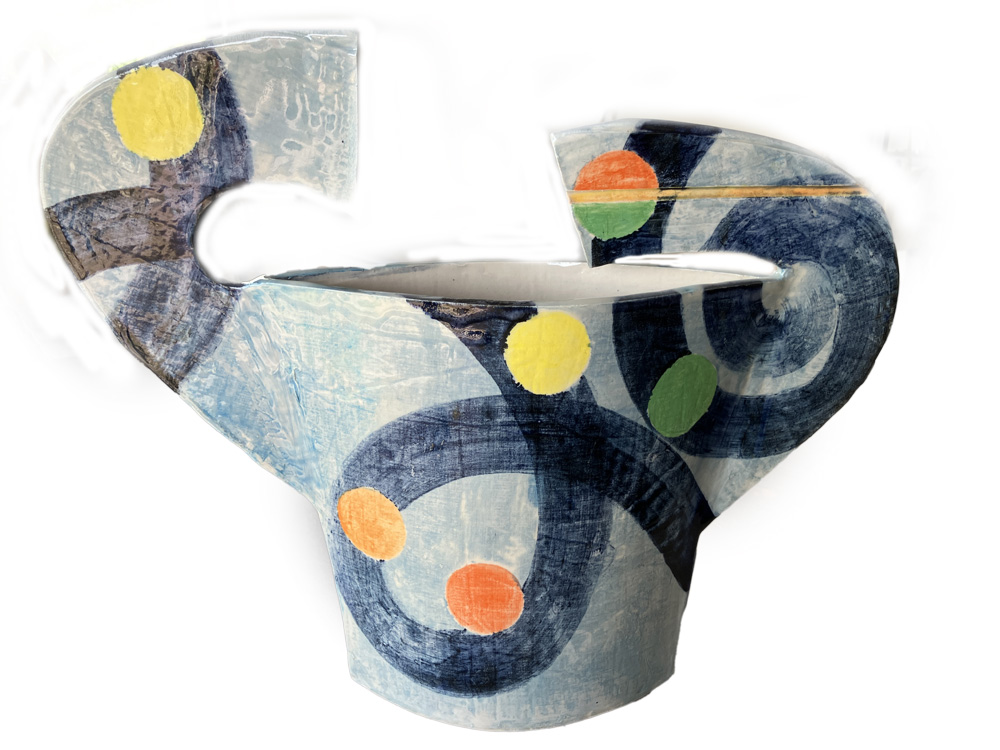
Despite the multiple and varied uses clay can be put to, I instinctively feel that it’s at its best when it is made into a vessel, when it draws the human hand to pick it up, weigh it, feel its surface, fill it with water, and the human eye to admire its shape and colours. Like, for example, Peter Arscott Ceramic (PAC) pieces, new images of which I’ve scattered within this blog.

Lime Welcome vase. Cecilia Colman Gallery

Let me just say that PAC ceramics are well-priced and affordable to those of you who appreciate uniqueness and quality. A PAC vase is not as expensive as a small bowl known as the Chicken Cup from the Ming Dynasty: it was sold in Hong Kong in 2015 for $ 36 million. A rooster, a chicken and a chick are depicted on it, thus its nickname.

Torero vase. Palais des Vaches, Exbury

After patting me on the shoulder for finally getting around to mentioning my vases, Spiro, being Greek, and being Patron Saint of potters, is telling me that the word “ceramics” is traced back to the term keramos, meaning potter’s clay or pottery. I reciprocate etymologically by telling him about my “claggy” walk up to Bradlow Knoll (Spiro does not walk), and that the word is from the Middle English claggen, probably of Scandinavian origin; akin to Danish klagge sticky mud, akin to Old English clǣg clay.

Autumn vase. Cecilia Colman gallery

And indeed, it was claggy, not slippery but viscous and adhesive underfoot, and the weather warm with hazy sunshine, so that by the time I reached CJ’s bench I was hot and bothered. There’s more construction work going on in the nearest adjacent fields, mainly barns, fencing and access tracks, but if you look into the distance around and beyond Ledbury, the reflected gleam of plastic sheeting is more obvious, as soft fruit farming gets into gear for the season, and with the addition of hundreds of houses being built, the town is slowly creeping further into the countryside.

Orange juggler vase

There’s a balance to be struck between the idea of preserving what’s valuable and catering to the needs of a society. Things shouldn’t be preserved for the sake of it: if there’s a housing need then houses must be built. If farming land can be used more efficiently by applying new approaches, why not? And after all, the British countryside is essentially man made and shaped. But we ought to keep an eye-out. Don’t forget what happened to the River Wye – an example of a catastrophic imbalance because a check was not kept on the huge growth of chicken farms.

Pink Green vase. Cecilia Colman Gallery

But back to ceramics, and away from chicken poo. The Palais des Vaches in Exbury has received a new batch of PAC ceramics, as has the Cecilia Colman Gallery in London.

St Sebastian vase. Palais des Vaches.

Exbury is in the New Forest not far from the coast, opposite the Isle of Wight. This part of England is unlike any other: open heathland, wild and intriguing. After delivery, I took a wrong turn and ended up asking the only local in the vicinity for help, but any offer was unforthcoming as he continued chewing grass in the rain and looking rather wary.

Unforthcoming

On the other hand, St John’s Wood in London, where the Cecilia Colman gallery is, belongs to another world: Regent’s Park, Lord’s Cricket Ground, elegant shops and restaurants.

Cecilia Colman Gallery

You may have gathered that the title of this blog is a mnemonic for memorizing the order of the planets, starting with the one nearest the Sun: Mercury, Venus, Earth, Mars, Jupiter, Saturn, Uranus, Neptune, Pluto.


And finally some good advice from an old Congolese saying: If you are asked to join a parade, don’t march behind the elephants.


Marmite explained

The view from CJ’s bench on Bradlow Knoll was appropriate for the day, after all it was St Leger’s, the day of the famous horse race (Saturday 16th September) established by Colonel Barry Saint Leger in 1776 and named for him in 1778. An event for three-year-old colts and fillies, it is run annually at Doncaster, Yorkshire. The winner this year was Continuous, the last horse was Alexandroupolis. They say that Winter comes in on the tail of the last St. Leger horse, but global warming may have done for this old adage.

the last horse at the St Leger

The view was grey, misty and damp, and the leaves on the trees have yet to start turning, but the faint mulchy whiff of tired greenery was hinting at Autumn. Somebody had obviously felt the cold recently as they had left traces of a firepit in front of CJ’s bench. Or perhaps it was an impromptu BBQ. Whoever it was had also forgotten his or her disposable vape – I wonder if CJ would’ve approved of the cherry flavour.

BBQ

Given the weather, I don’t believe that a bonfire would have spread and caused a conflagration in Frith Wood. Apart from a few hot days earlier in the week, it’s been mild. Unhappily that’s not been the story in Greece or Libya, or even Canada, and tramping through the cool damp wood seemed so far removed from those weather extremes. However, even in this neck of the woods, manmade calamity lurks in the shape of the River Wye and its slow poisoning by nutrients leaching from livestock manure (about 70%) and sewage treatment works (20%). Most of the agricultural phosphate pollution is from intensive poultry production (from “What’s polluting the Wye?” – Herefordshire Wildlife Trust blog).

Wye pooper

In order to counter any black outlook that may be developing here, may we urge you to join the fight to save the river by subscribing or following Save the Wye on Facebook, Instagram and Twitter. Here is the link: https://savethewye.org/what-can-you-do-to-help/

Large black and white scrawl vase

Spiro is shouting in my ear that this blog is about marketing ceramics. I have pointed out to him that having unwittingly introduced the word “black” in the context of global warming, I will now exploit its presence in the blog in as measured and respectful a way possible, and with none of the in-your-face cynicism that he always advocates.

Black and white juggler vase at there Palais des Vaches

It is hard to believe Spiro is a 3rd century Bishop of Trimythous, as well as the patron saint of potters, and frankly I am not entirely convinced by his marketing skills. Last month he joined the Ledbury Bank Holiday Carnival Parade saying it was an opportunity to sell pots to the hundreds of Ledburians lining the High Street and was deeply insulted by the pennies people were throwing into the pots he held out, unaware that this the traditional way the parade gathers income for local charities. I had to drag him away when he started berating them in his local Archaic Greek dialect, much to everyone’s amusement who thought this was part of a comedy act.

Poseur vase (Vulcan clay)

Ahem, there is an exhibition at the Palais des Vaches Gallery in Exbury from 29th September, and the theme is “Black & White”. In response to this challenge, Peter Arscott Ceramics (PAC) have made a number of pieces for the show, some are black and white glazed stoneware, and some are made from a dark clay called Vulcan stoneware which comes out of the kiln in a rich dark chocolaty black if left unglazed.

My oh my vase (Palais des caches)

One piece in particular cannot be explained, and for some reason is called Buffoon Vase and wears a top in the shape of Napoleon’s hat. It looks even more inexplicable if you remove the top and insert a flower in it (it can only take one flower, and no water, as it has a leaky bottom). It’s a “marmite” piece – some people will simply like it without having to understand its impractical character, others will just think it’s strange.

Buffoon vase

For those of you unfamiliar with marmite, it is a dark brown yeast extract spread, much liked by half the UK population, and much disliked by the other half. It is used as a metaphor for something that is an acquired taste, or something that divides opinion, like, say, Elon Musk or Nigel Farage or morris dancing.

Buffoon vase with flower

In a neat bringing-together of various themes in this blog (fish, ceramics, rivers), a recent visit to Wales included a fly-fishing lesson with Mr Jones on the banks of the beautiful Dyfi river (unpolluted and very clean, thus salmon and sea trout are happy to swim in it).

Fly-fishing lessons on the Dyfi

The result was a brown trout fished from a smaller river nearby, which was cooked and served to fourteen people on a PAC dish. Thank you Mr J.

Sacrifishal?

A man walks into a fish and chip shop with a happy trout under his arm.
“Excuse me, do you sell fish cakes?” he asks.
The owner replies, “Yes, of course we do”
“Great” the man responds, smiling at his trout, “It’s his birthday.”

With apologies for that old chestnut, farewell and goodbye.

Unhappy trout

My conversation with Eric

Vell Mill meadow near Dymock

This is the time of the wild daffodils, and one of the best surviving wild daffodil meadows in the UK is the Vell Mill meadow, where thousands of people used to visit during the spring – traveling up from London on the train to pick the flowers to take back and sell. They’d load them on the train known as the Daffodil Express.

from Bradlow Knoll

It is an easy and unchallenging walk along the Poets Path – a reminder of the area’s connections with Robert Frost, Edward Thomas and others poets, who used to walk “ankle-deep in daffodils”. And it’s not as challenging as climbing up to Bradlow Knoll, which was achieved for your benefit, and despite the treacherous mud, the strange ominous gunshots and creaking joints. As you can see from the photo, it’s still looking wintry.

Interior vase at the Palais des Vaches gallery, Exbury, Nr Southampton

This blog exists primarily to promote Peter Arscott Ceramics, but regular readers are well aware of my tendency to talk with spiders (Ziggy), with pug mills (Thelonious) and with a long-dead Bishop of Trimythous and Patron Saint of potters, Saint Spyridon (known as Spiro), who is in charge of marketing.  So you won’t be surprised about my conversation with Eric, a rat.

Eric

As I looked out of the studio window last week, I caught sight of a tail disappearing behind the compost. Some of you have already been introduced to Eric (see blog of Spring last year), and he has been a constant affront and aggravation since. His life was saved by a poet then, but by now I had had enough. I borrowed a humane rat trap and smeared a biscuit with peanut butter. Next day I had him at last in my power, though he seemed quite self-possessed given the situation.

Yoohoo vase at Palais des Vaches, Exbury, nr Southampton

‘So, what are you going to do? Shoot me? Drown me?”

“No, no drowning. You rats can hold your breath underwater for three minutes – so it would be prolonged and cruel. Did you know there are other species of rat that can swim for over a mile? So those stories about rats popping up in the toilet are not urban myths – you lot will easily make your way up a drainpipe and bite people’s bums for a laugh.”

“Drainpipes are cleaner than swimming in your rivers. You won’t see me anywhere near the River Wye – it’s like doing the breast stroke in treacle. Disgusting.  And I”m a rat!”, he said rather affectedly.

Good time vase at the Palais des Vaches, Exbury, nr Southampton

Touché. Anyway, I’m taking you over two miles away and releasing you.”

“Oh? May I draw your attention to the Universities Federation for Animal Welfare document whose guiding principles in the humane control of rats and mice cover the welfare of trapped rodents and points out the relevance of the Animal Welfare Act 2006. If you will permit me to quote from the document, (and here he cleared his throat): Release of an animal elsewhere is not necessarily a humane thing to do – translocated animals may fail to adapt to or integrate into new territory and may suffer and die as a result (Mason and Littin, 2003)”.

“What are my alternatives? If I leave you at home, you just breed like…rats. Apparently, just one of your lady rats produces six litters a year consisting of up to 12 ratlets. And you reach sexual maturity after 4-5 weeks, meaning that a population can swell from two rats to around 1,250 in one year, with the potential to grow exponentially. I daren’t think how many of you there are living by the compost.”

“So what difference will getting rid of yours truly make? I’m just one little rat.”

“Yes, but I’ve been after you for a long time. You are the one who flaunts himself in front of the kitchen window, metaphorically cocking a snoop at me, provoking me. And now I’ve got you, thanks to peanut butter.”

Eric’s downfall – crunchy peanut butter on a Hovis biscuit

“Yes, that was delicious, I admit. Will you let me take some when you “release” me? It’ll tide me over until I settle down and get used to eating whatever it is that’s available in the countryside. What do you suggest?”

“ Nuts, berries, wild vegetables, snails, birds’ eggs. It’s a very healthy diet. You have to work hard – it’s not the easy living of feeding off my compost and garbage. And you’ll have to watch out for traffic and cows.”

a cow

“What are cows?”

“Oh dear. You are going to have a hard time, aren’t you. They are large, domesticated, cloven-hooved herbivores. “Vache” is French for cow, you know, and it so happens that I am exhibiting some of my stoneware vases at the Palais des Vaches, a fine gallery in Exbury, near Southampton.”

Here I will stop talking to Eric and tell readers that included in the pieces on show is a new piece which refers to Betty Woodman, one of the great ceramicists whose approach to making pots was always an inspiration to someone who enjoys painting as much as shaping clay. Click here to visit her site.

Betty vase. Palais des Vaches, Exbury, Nr Southampton

To get back to Eric – I did take him 2 miles away in the car and released him in a very inviting meadow with lots of hedgerows and trees. He took with him some peanut butter on a Hovis biscuit, and, as an extra measure and gesture of goodwill, I gave him 50p. I have not seen him since but if any of you see him hitchhiking in the Ledbury area, you are NOT to give him a lift.

River Wye. Photo by Claire Ward

On a less whimsical note, concerned as Eric by the state our main river and its slow poisoning, the whole PAC team has joined the Save the Wye campaign. The Environment Agency says the main excess nutrient that is causing concern is phosphate and that more than 60 per cent of the phosphate in the Wye catchment, which causes harmful “blooms” of algae, comes from poultry and other livestock manure washing into the river during rainfall. This accounts for approximately 72-74% of phosphates entering rivers, turning them into pea soup.

Peggy Sue, pooping polluter

The situation is compounded by discharges from sewage treatment works, which are regulated through Environmental Permits, accounting for approximately 21-23% of phosphates entering rivers. #SaveTheWye is an umbrella campaign to support and build the network of organisations and individuals working to protect and restore the health of the River Wye and its tributaries, for the benefit of both wildlife and people: https://linktr.ee/savethewye

The display at the Palais

Goodbye from Eric

September meander

Exbury Gardens

There is a hint of autumn in the air, but only a hint. Looking down on Ledbury from Bradlow Knoll, the view still offers the usual subtle variation of greens with only a tinge of autumnal orange, though large spiders have started to move into the house and studio, always an indication of colder days ahead, and much to the annoyance of Ziggy, whose insecurities make him prey to anxiety and aggression at the sight of anything he sees as competition in his role as the studio’s “Flycatcher-in-chief”.

Autumn leaf zephyr vase @ Palais des Vaches

Flies are also on the move come autumn. They choose to fly high before the weather gets too cold and enter attics and lofts for the winter. No matter how well the space is sealed, they somehow manage to get in, so that when you visit the loft in spring the whole place is buzzing with blowflies trying to find a way out, presumably having bred throughout Winter. So, all power to the spider, and to anything else that eats them, like fish. Yes, fish, specially trout, are partial to fly, as is the chub – all this came to mind after a walk along the River Leadon.

River Leadon – Chub don’t mind mud

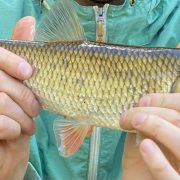
The sad state of the river was highlighted in a blog last September (click here), so it merited another visit. It is good to report an obvious improvement, not least because fish are back, including chub, which can sometimes be seen swimming near the surface of rivers and streams, often in large shoals. One was caught, and then returned – a good indication of better water quality, though there are two outlets pouring into the river that seem to contain some oily substance.  As they grow, chub become aggressive predators, eating fish, frogs and even small mammals. Hard to believe when you look at the little chap in the photo.

the predatory chub

He or she must be one of the 90,000 roach, chub, and dace fish that have been added to replace those killed by pollution in 2016, when 100 tonnes of digestate were pumped onto a field and flowed into the Preston Brook, which in turn flows into the river Leadon, and more than 15,200 fish were killed in what was described as “one of the worst watercourse pollution incidents in Herefordshire in recent memory”. The new fish were all hatched and reared at the Environment Agency’s national fish farm at Calverton in Nottinghamshire, which is funded by the proceeds of fishing rod licence sales.

Autumn swirl charger @ Palais des Vaches

There are almost 1500 river systems, comprising over 200,000 km of watercourses in the UK but, in a global context, our rivers are mere streams – being characteristically short, shallow and subject to considerable man-made disturbance, as we know from recent news about water companies releasing sewage and other waste whenever the system is deluged after rainfall (Rain? In the UK? Get away and stap me vitals!).

Autumn vase @ Palais des Vaches

One of these rivers is the Beaulieu River in the New Forest, which rises near Lyndhurst and flows into the Solent, passing through the beautiful gardens at Exbury. More than 100 years in the making, these gardens, designed and curated by the Rothschild family, have a spectacular collection of landscaped woodland, herbaceous, contemporary, formal and wildflower gardens.

Autumn Reds vase

Now, dear reader, as you probably know, a “meander” is a small winding river or stream, and, as a verb, can be used to describe a winding or intricate course suggestive of aimless wandering. Which is what I have done in order to get to this point. The Exbury estate, through which the river passes, also has the Palais des Vaches gallery, a former milking shed now transformed into a strikingly handsome gallery and show area. No thumb-twiddlers, the Rothschilds planned and rebuilt it during the Covid lockdown, and it now has had a further extension added.

interior of the Palais

Autumn Glory is the title of the show opening on Saturday 24th September, and Peter Arscott Ceramics is exhibiting there along with painters, sculptors and textile artists.

Peter Arscott ceramics on show

Possibly as a result of the long hot summer we have had, the apple harvest is early this year in Herefordshire. This means friends and neighbours will be desperately going round offering large bags to anybody they meet, in the hope that this will help with the glut. Other than freezing them, drying them, turning them into puree, or using them to throw at squirrels, any interesting and creative ideas that deal with large supplies of apples will be welcome.  Even leaving them on the garden wall for commuters to take before getting to the station makes few inroads.

In keeping with the tenor of this blog, here is a verse from Rupert Brooke’s “Heaven”:

Fish (fly-replete, in depth of June,
Dawdling away their wat’ry noon)
Ponder deep wisdom, dark or clear,
Each secret fishy hope or fear.
Fish say, they have their Stream and Pond;
But is there anything Beyond?….

You can read the rest by clicking here.


song of the nightingale, buzz of the fly

May view of Ledbury

A celebratory walk was needed after a successful glaze firing. The view from Bradlow Knoll down towards Ledbury this May afternoon was grey and cloudy. You can see in the distance the white shapes of the plastic used in the speeded-up cultivation of strawberries for the voracious soft fruit market, and, nearer, the sheep  which will end up on our dinner plates. Land maintained and exploited for the consumer’s benefit, which has made our landscape what it is today. This applies to Frith Wood as well, where dead trees are removed or left on the ground to encourage wildlife. This tree was 57 years old – I counted the rings.

A well-maintained wood.

It clouded over very quickly and started to rain, so it was dark walking in the wood, and there was little birdsong. However, it was not as dark as a few weeks ago when my daughter and I found ourselves with thirty others tiptoeing through Highnam Woods near Gloucester at midnight.

A walk through the woods at night vase

 It was pitch black. Not a sound could we make, no squeaky shoes allowed, or noisy clothing, no flashlights to be used, only the vague shape of the person in front to guide each of us in single file until we came to a small clearing and very carefully sat down. We had previously gathered around a campfire to eat, drink and listen to the environmentalist Sam Lee, who was leading us into the trees with one purpose only: to listen to a nightingale sing.

Nightingale. Photo: Carlos Delgado

Unlike the continent, the UK is seeing the slow disappearance of the bird, due to farming and land management activity, but primarily to the lack of thoughtfully maintained woods like Highnam, which is owned by the Royal Society for the Protection of Birds, and is a jewel, a remnant of ancient woodland that is carefully managed in order to keep a balance between mature trees and traditional coppice.

Doodle vase just out of the kiln.

Our nightingale sang his heart out, though not for us. Only male birds sing at night, in order to woo the females – if you hear one still singing at the end of Spring, that means he didn’t get the girl and he’ll be a Summer bachelor. Ours was a Pavarotti, with the most amazing technique, and the sound was clean and clear and strangely affecting. Click here to listen, and if you are interested in going on a Nightingale Walk next Spring, have a look at the Nest Collective website here.

Posture vase

From beautiful sounds to irritating ones: is it me, or are the flies out early this year?

They keep zooming into the studio uninvited, hurling themselves against the windowpanes again and again, and buzzing at a particular pitch that keeps you from concentrating. Eventually you spend too much time trying to swat them, unsuccessfully, and getting more and more frenzied and unfocused.

Fl-eye view

Like most people, I know flies have those compound eyes which allow them to see what’s coming towards them no matter at what angle or speed, so that by the time they’ve swerved the blow of a rolled-up newspaper, they’ve had time to read the print. Ok, so flies are important pollinators, second only to the bees, but house flies, commensal with humans all over the world, spread food-borne illnesses. And they are an annoyance especially in some parts of the world where they can occur in large numbers, buzzing and settling on the skin or eyes. Did you know, and I’ve looked this up, that the fly’s taste receptors are in the labium, pharynx, feet, wing margins and female genitalia, thus enabling it to taste your food by walking on it?

Research on your behalf also uncovered this: the Sardinian cheese casu martzu is exposed to flies so that the digestive activities of the fly larvae soften the cheese and modify the aroma as part of the process of maturation. Banned by the European Union, the cheese was hard to find, but the ban has been lifted on the grounds that the cheese is a traditional local product made by traditional methods.  And why not? The sustainable food of the future is the insect.

Swat vase

Do flies, do insects, have much to do with the history and development of ceramics? Not as far as I know, this is just another long and rambling lead-in to my latest batch of vases out of the kiln. I think you’ll agree that the piece above has been influenced by fly-swatting.

Hello vase

From bird song to buzzing to mooing: more PCA ceramics at the Palais des Vaches in Exbury, where you can also see a unique coffee table made with tapering beech legs, the top being sealed, and hand painted with acrylics. Three layers of heat-resistant varnish ensure that hot mugs of coffee will not mark the surface, though coasters are recommended. The surface is easy to clean.  It could be described as a horizontal painting on four legs, and certainly you get a lot of pleasure from simply looking down on it and enjoying the colours

Unique PAC hand-painted table at the Palais des Vaches

Other work at the Palais includes this large sculptural piece:

Porthole vase

And to finish, a poem from childhood:

“Will you walk into my parlour?” said the Spider to the Fly,
“‘Tis the prettiest little parlour that ever you did spy;
The way into my parlour is up a winding stair,
And I have many curious things to show when you are there.”
“Oh no, no,” said the little Fly, “to ask me is in vain,
For who goes up your winding stair can ne’er come down again.” (Mary Howitt)

Ruby my Dear vase at the Coastal Gallery

Well, I couldn’t resist finishing off with John Keats:

“Darkling I listen; and, for many a time
I have been half in love with easeful Death,
Call’d him soft names in many a musèd rhyme,
To take into the air my quiet breath;
Now more than ever seems it rich to die,
To cease upon the midnight with no pain,
While thou art pouring forth thy soul abroad
In such an ecstasy!”

Eunice done me wrong

Storm brewing over Ledbury

The consequences of humans evolving bipedalism from a body designed to walk on four, not two, legs, include the effort required to climb a hill without running out of puff. This is what walking up to Bradlow Knoll entails – back pain, breathlessness, and aching thighs, but the reward awaits, no matter what the weather: the view down to Ledbury and beyond, though it looked ominous and buffeted by winds.

Final hurdle

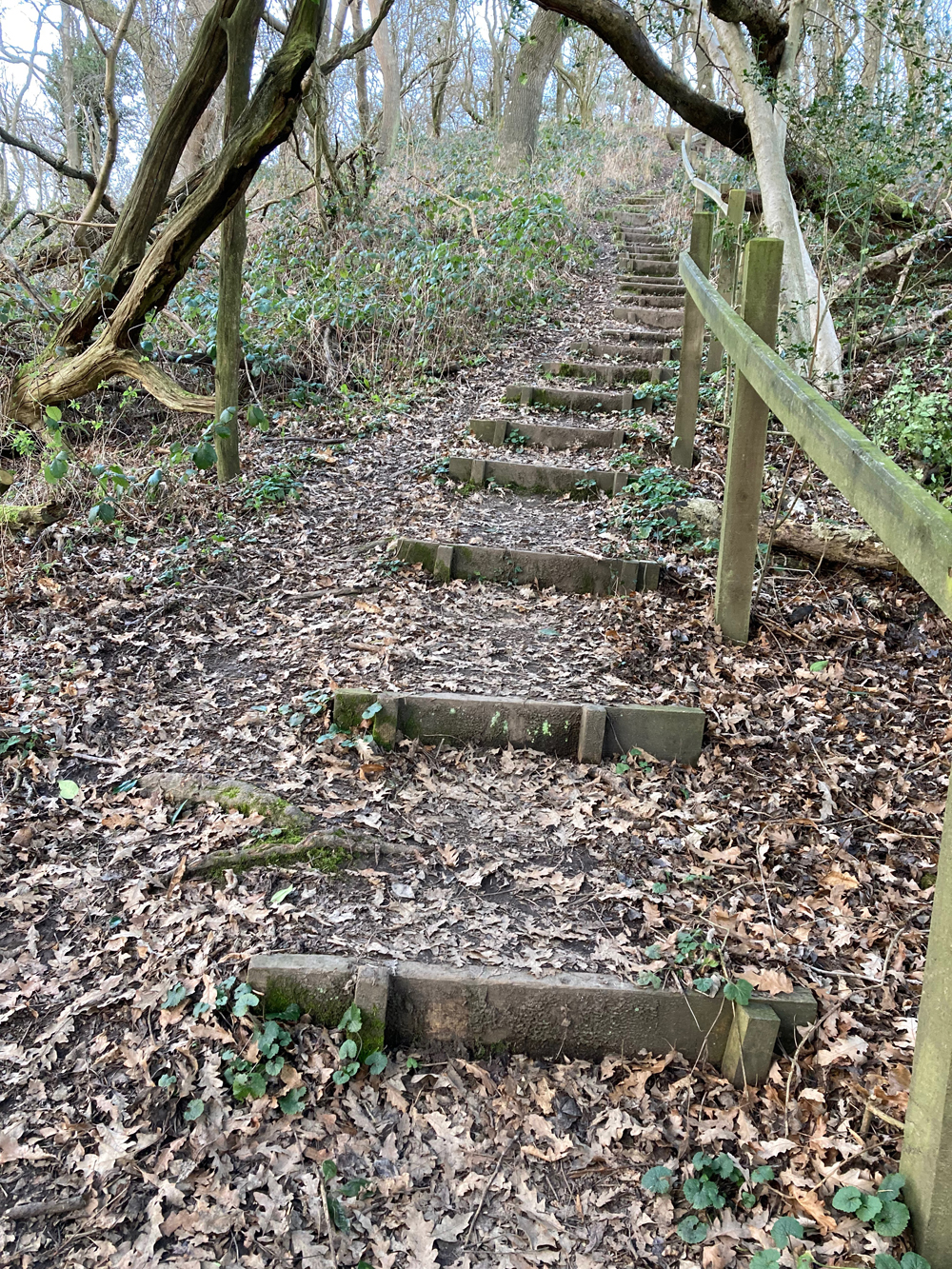
But it would be easier on four legs. The fact that it is a “knoll”, which means low hill or hillock, somehow adds insult to injury. It feels more like a smallish mountain, or at least a steep hill. What’s more, when you make it to the top you are ambushed by the fifty extra steps required once in the wood to get to the very top.

Two legs good

Bipedalism. It seems that thousands of years ago our pelvis shortened, the thighs became longer, the angle of the thigh bone changed to point inwards allowing the knees to come together under our centre of gravity, allowing us to stand for a long period without getting tired. The spine curved into an S-shape helping to support the head and creating balance. Oh, and we lost our body hair.

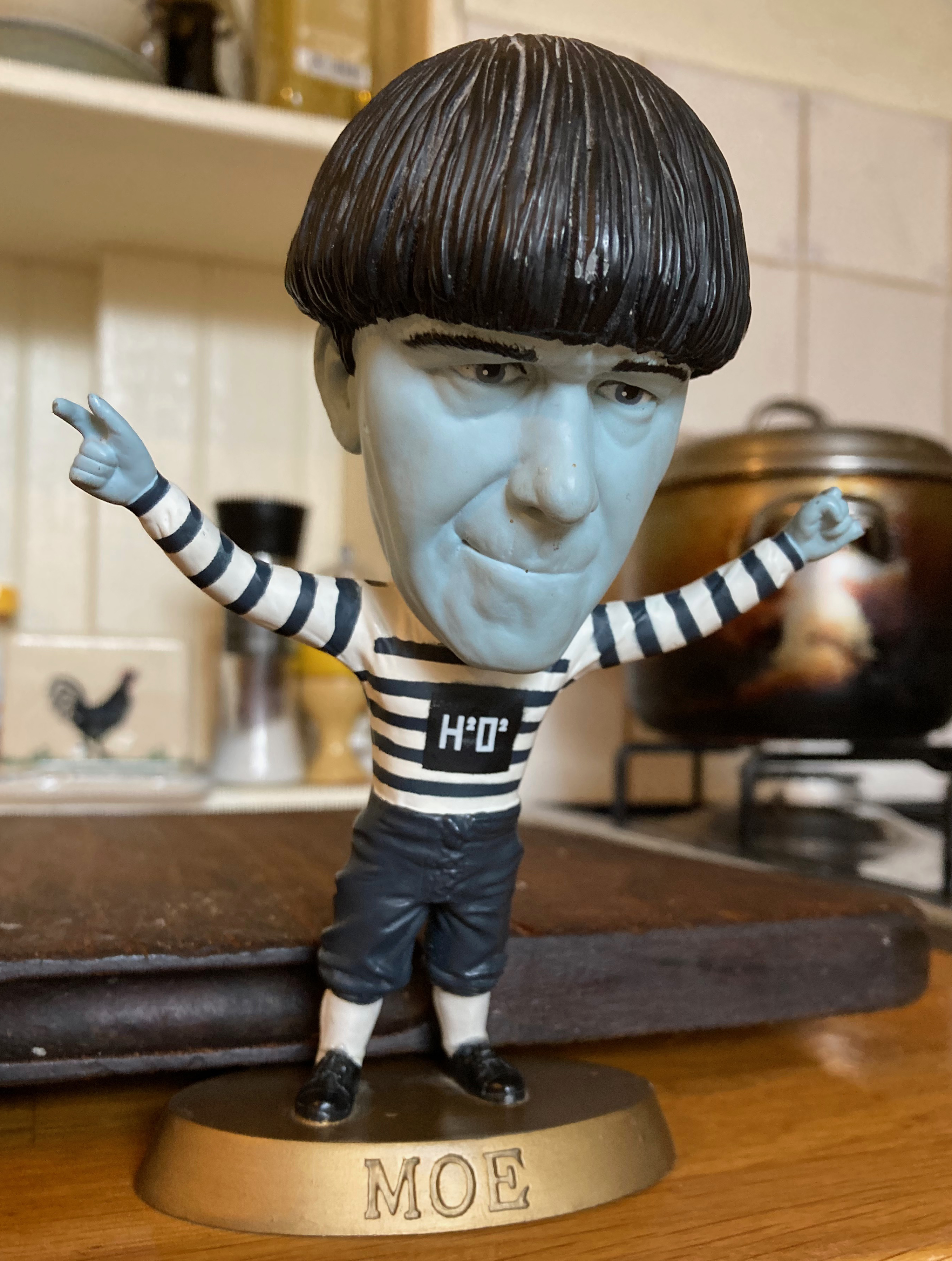
Moe

The disadvantages of standing on two legs?  More pressure put on our spine and on our knees. The vertical position of the spine makes it more prone to back injuries. It’s also much harder on the heart and its vessels to pump blood to the entire body. And the big heavy head our spine has to carry, no wonder we lose our balance and fall when we get older.

Bighead

In the case of Moe, my bedside table mascot, he can only stand upright if his feet are wedged at an angle behind the table, otherwise his head, being too heavy for the design, forces him to collapse. Who is Moe? Those of us of a certain generation may remember Larry, Moe and Curly Joe who had us laughing when we were six or seven. Not sure their vaudeville humour has survived with time, but there is a certain nostalgia seeing them poke each other’s eyes and indulge in slapstick. Click here for The Three Stooges .

Fingers – one of the benefits of bipedalism

On the other hand, walking upright frees the hands for carrying your important tools like your mobile phone, for social display and communication like when you feel the need to welcome or insult somebody, but, most importantly, for making pots out of clay – there’s no doubt that would be difficult on all fours. Having fingers also helps.

Eunice did it

The fragility of the human frame and what it has to put up with (stress, weight, temperatures, balance) leads me, of course, to ceramics. All this was uppermost on the day of the climb to the knoll. It was cold and windy but not yet a storm. That was to come a few days later in the guise of Storm Dudley, very much a milksop of a squall compared with his successor a few days later – Storm Eunice. Presumably the next one will be a male name starting with “F” – Fred, Finnegan, Fernando, Finbar? Well, while writing this, Storm Franklyn blew in and is at the moment playing havoc with the tree in the garden. The news says there’s another on the way, and it’s called Gladys. Dudley, Eunice, Franklyn and Gladys – sounds like a polite tea party at an old people’s home.

Large Block vase


Large Block vase stress fracture

It was Eunice who knocked over a big garden vase, but sometimes it is the potter who is the culprit, as in the case of the large block vase. By not allowing its thick stoneware time to dry slowly and completely, sections of it dried at different times creating stress fractures that only became visible after firing. It is now useless and will be relegated to garden duties.

Big Spring vase

Big Spring vase

Sometimes the fractures are made when the potter is manipulating the clay too much, as when adjusting a handle onto the body of a vase, which is what happened with this Big Spring vase.

Big Spring vase close-up

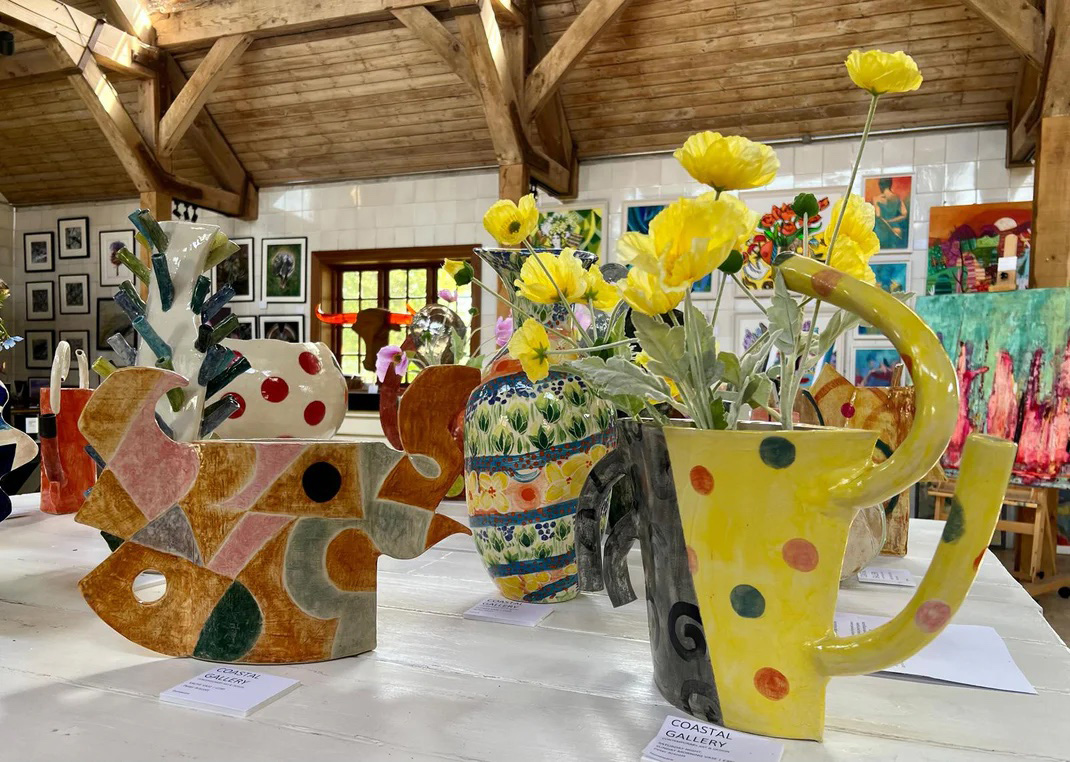
Still on the subject of bipedalism, cows have four legs, as is well known, but not feet. They have hooves – hard, good for long distances. Good in almost any environment except sharp rocks. Very little maintenance needed. I mention them because Arscott Ceramics will be exhibiting some work at the Palais des Vaches near Southampton opening on 18th March, in collaboration with the Coastal Gallery. More about that in the next blog, but if you are nearby on the day do pencil it in your diary.

Tendril vase at the Palais des Vaches

Why do cows have hooves? Because they lactose.

I wonder if at this rate we’ll get to Storm Zebedia this year? Anyway, keep well and don’t forget to pencil in the Equinox exhibition at the Palais, which is in Hampshire, and as everybody knows, in Hertford, Hereford and Hampshire, hurricanes hardly happen. So you’d be safe from the wind.