Posts

Nude slab-rolling?

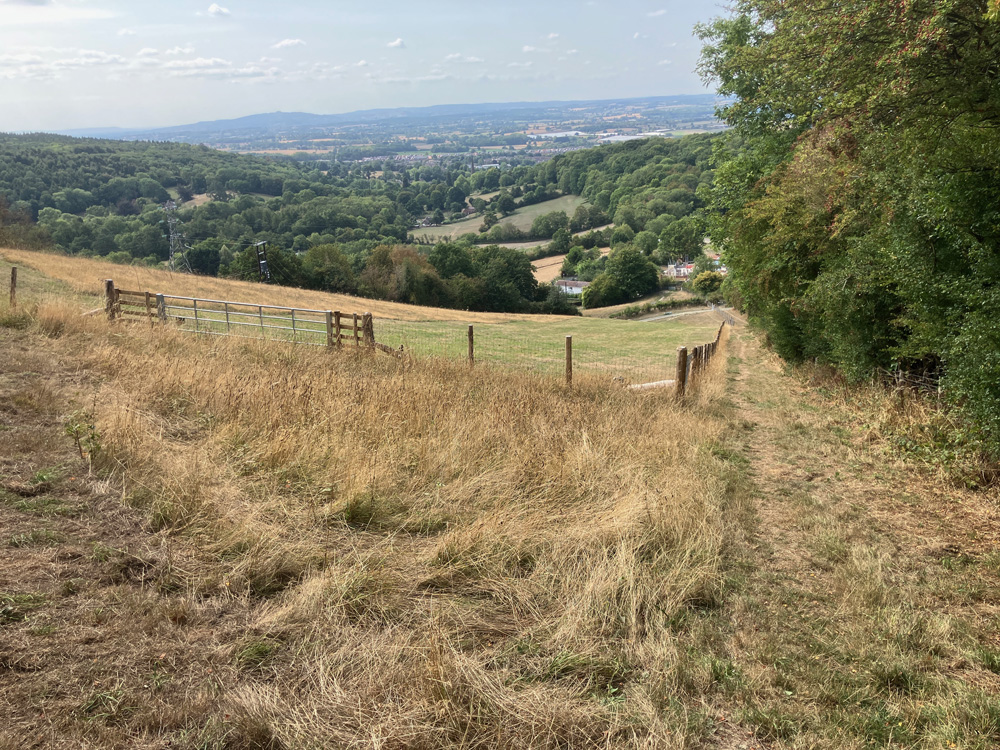
It is pouring with rain today. It’s pelting down, almost showing off, as if to make up for the incredibly dry months we’ve had. You can tell from the usual image of the view of Ledbury from Bradlow Knoll that it’s been a long dry summer here in the UK.  The consequences of the lack of rain this year include declared droughts in some areas, agriculture with poor crop quality and reduced grass growth and environmental stress on rivers with low flows. It’s also meant a hot studio and the need to wear as few articles of clothing as possible without getting arrested for indecency.
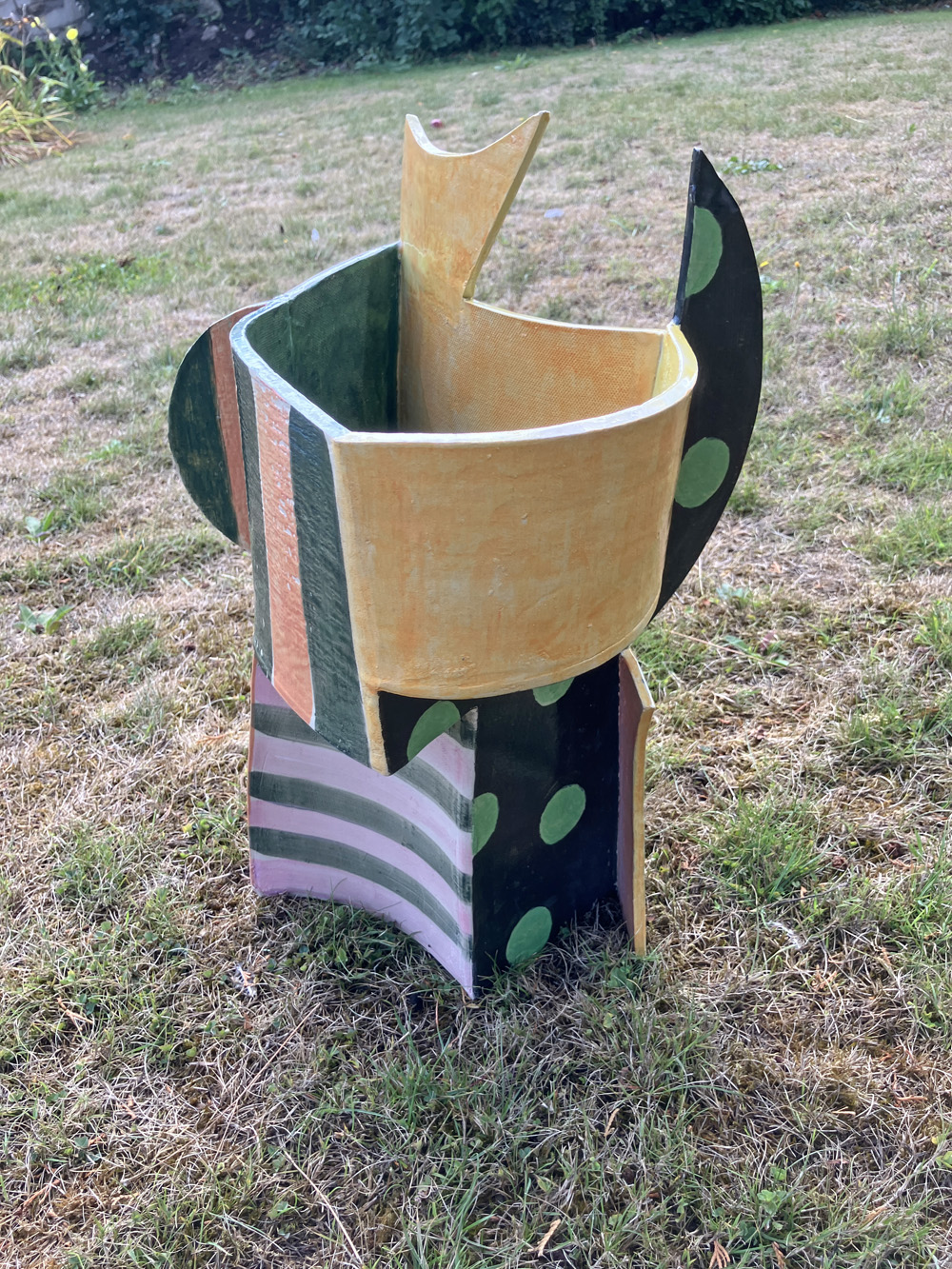
Rain-god vase summoning the clouds

This has led Peter Arscott Ceramics (PAC) to consider establishing the first, and possibly only, nudist ceramic workshops in the country. “Surely”, says Spiro, “there’s a market for it? You Brits, unlike us Greeks, like to expose as much of yourselves as possible the moment the sun makes an appearance. And think of the marketing opportunities…we could call ourselves The Naked Potter” However, after proper consideration it was deemed a Health & Safety issue. It’s OK for Spiro, he’s a figment of our imagination, but for us humans? Just think of the dangers to exposed parts anywhere near a red-hot kiln, or something getting stuck in the slab roller in a moment of forgetfulness or crouching too low near the pugmill. Anyway, there already is a Naked Potter who paints bottoms onto his dishes (butt plates).
After some research, Naked Pottery turns out to be a unique art form that utilises raw, earthy clay. The term “naked” refers to the artist’s openness and vulnerability as they create, connecting deeply with the material and their creative process. The finished pieces have a distinctive organic and often flawed appearance, as the clay is fired unglazed. Sadly, potters, both historical and contemporary, seem to have worn normal clothing while working with clay.
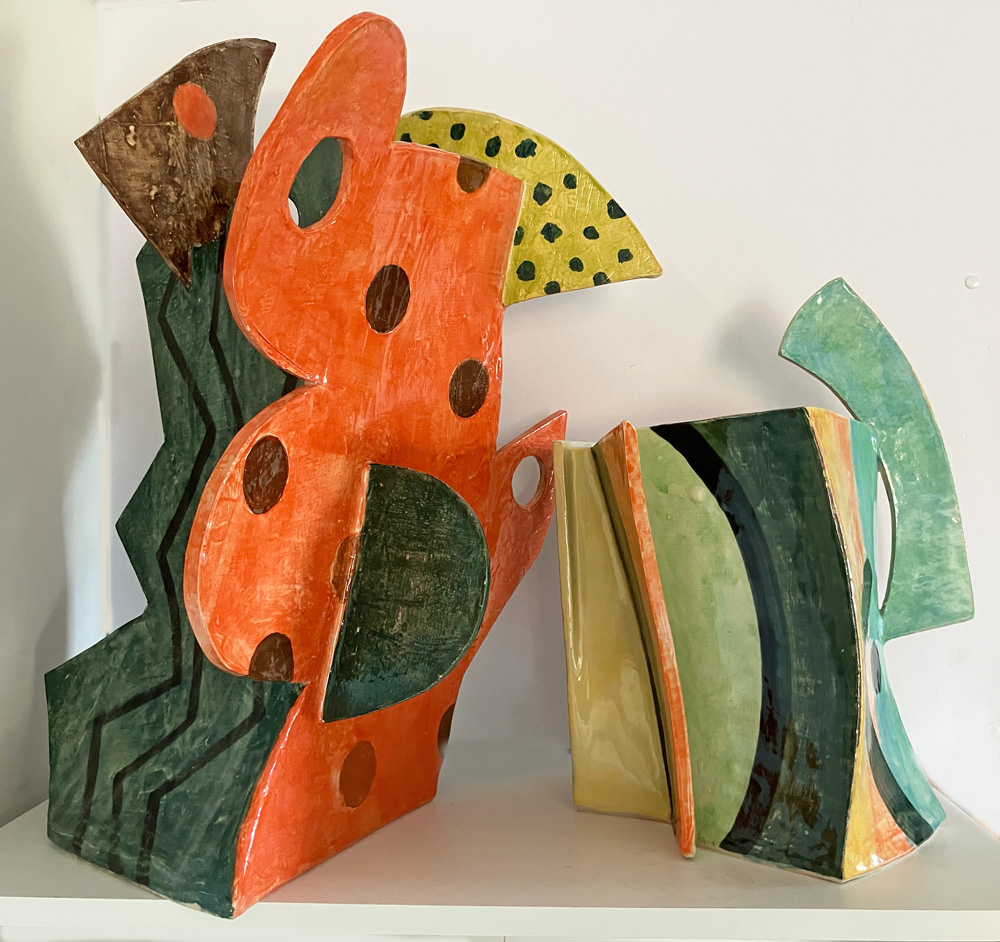
Dancing vases

But at PAC we too connect deeply with our creative process. And as has been mentioned in previous blogs, conveying a particular emotion in an abstract ceramic piece is possible, so long as there is not too much nuance intended. Anger, excitement, horror, joy, surprise, disgust – yes, both positive and negative emotions are conveyable. Given that most people buy ceramics to take home and enhance their domestic environment, the brighter and more joyful pieces are always going to be first in the queue. “Darling, I’ve just bought this vase for the living room. It conveys a sense of shame and repugnance which I find intriguing” is hardly a winner.
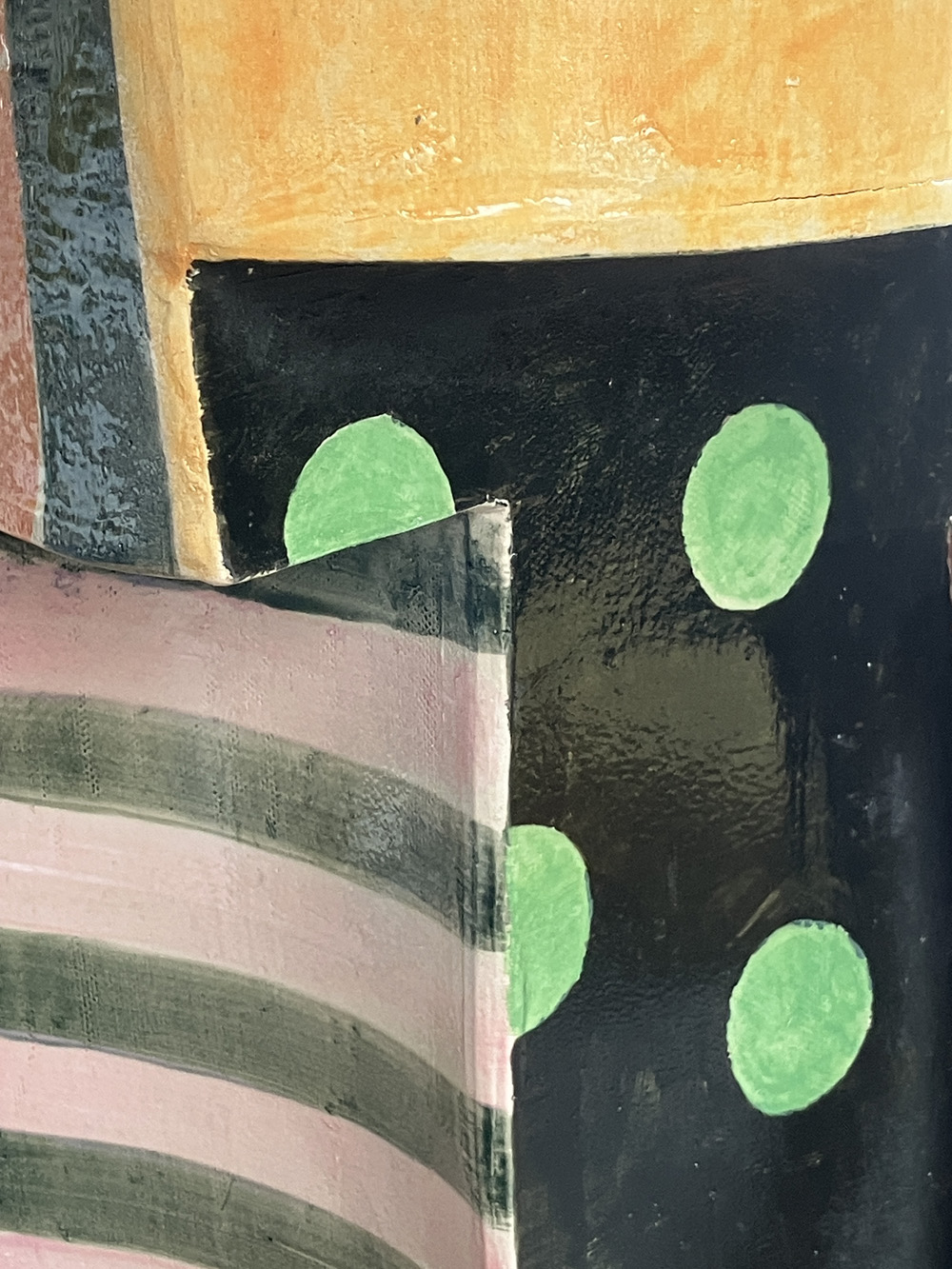
When a piece is made because the maker wants to get something across which he or she believes is more important that its actual practical use, then we are straying into the realms of art, of sculpture. PAC usually strives to achieve a fine balance between functionality (vase) and art (shape, colour, size).
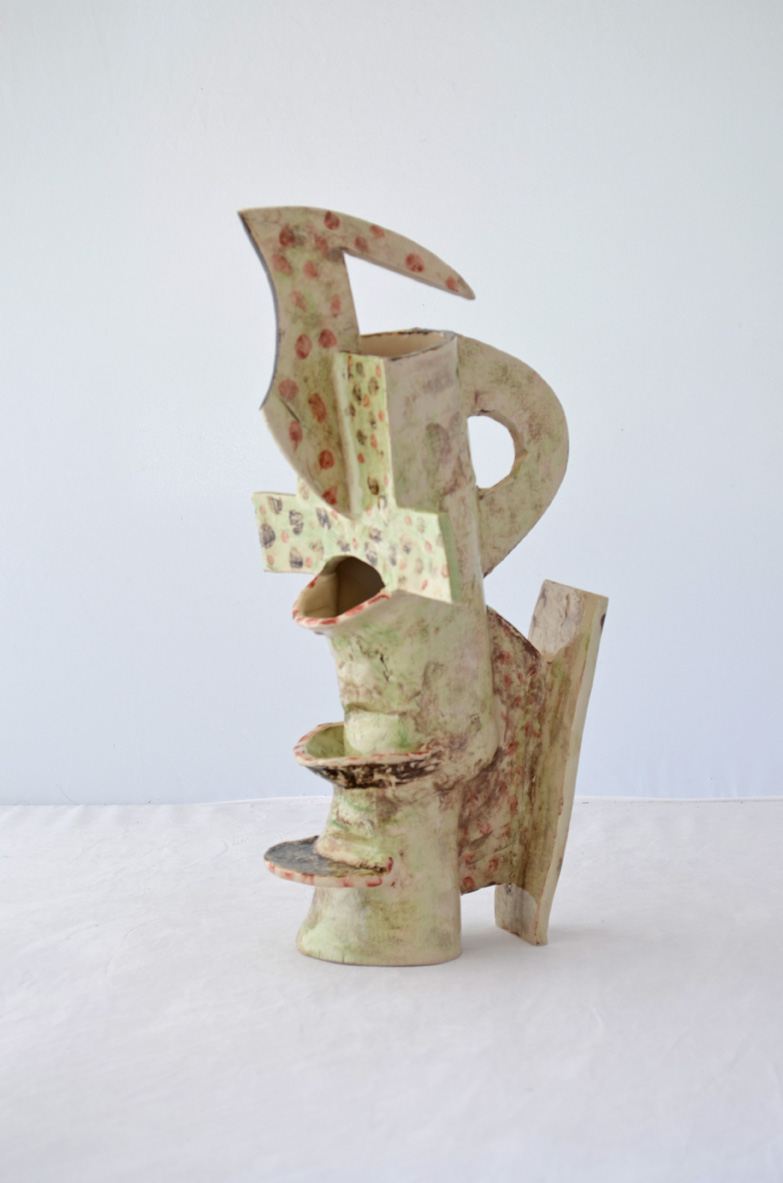
Supplicant piece

However, sometimes a prevailing mood can tug the hands in one direction only. In fact, the piece above (Supplicant piece) is not at all functional – unlike the Naked Potter’s pieces it has no bottom, so cannot be a vase. Isn’t it miserable? It’s begging for something, I think forgiveness, and is entirely lacking in joyfulness or delight. Only its Mum would love it.
It’s probably true that artisans know exactly what they want to do and know how they are going to do it.  At PAC we don’t know exactly what we are going to do. We know vaguely how to get there, but we don’t know which choices we are going to make. For example, we might decide to make a vase with raised arms, but until we cut the slabbed clay into the shapes, we have no idea exactly what those arms will look like. Too much pre-planning removes the element of surprise that keeps a piece fresh. Every piece is singular.
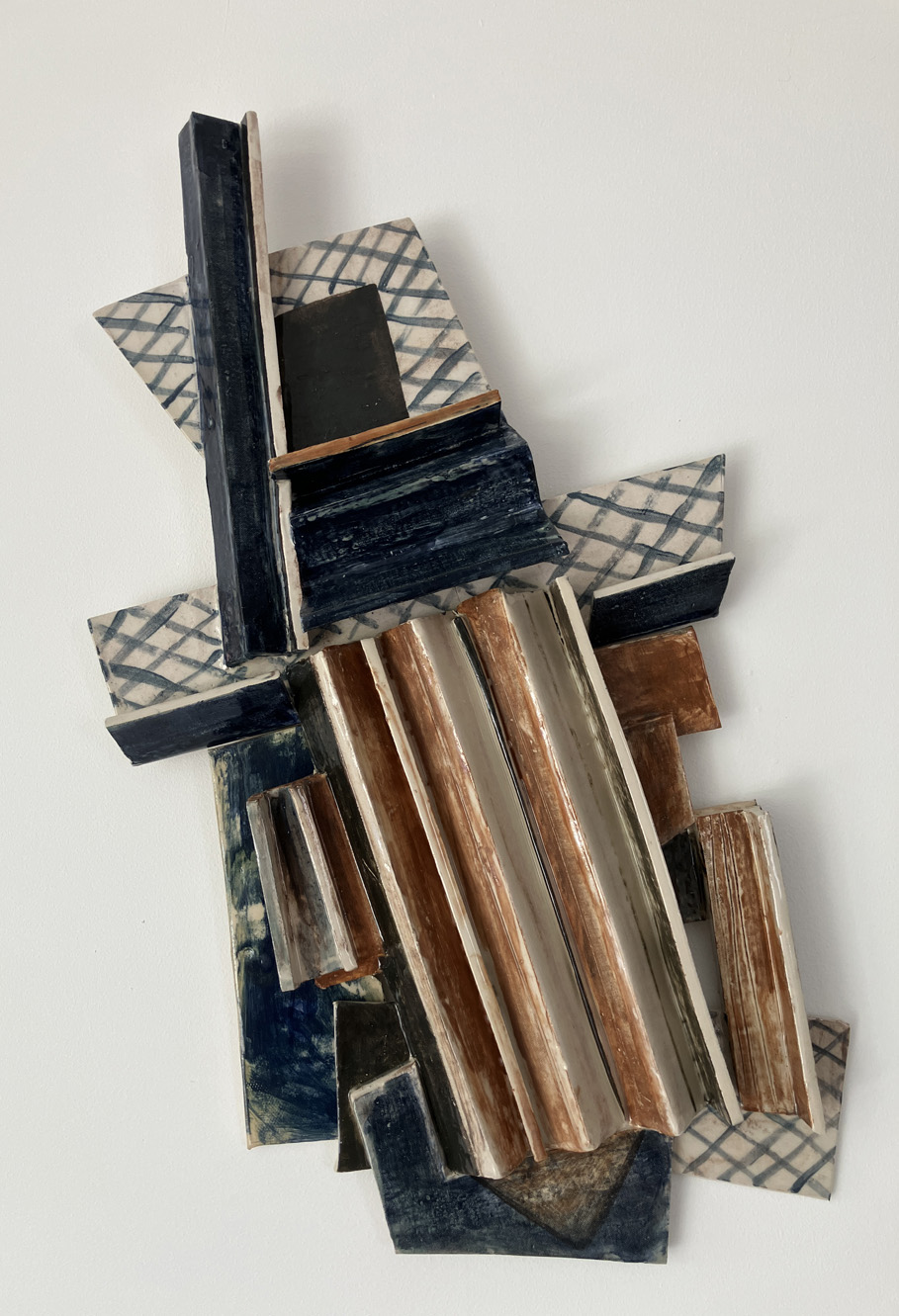
Ceramic version of Picasso’s violin

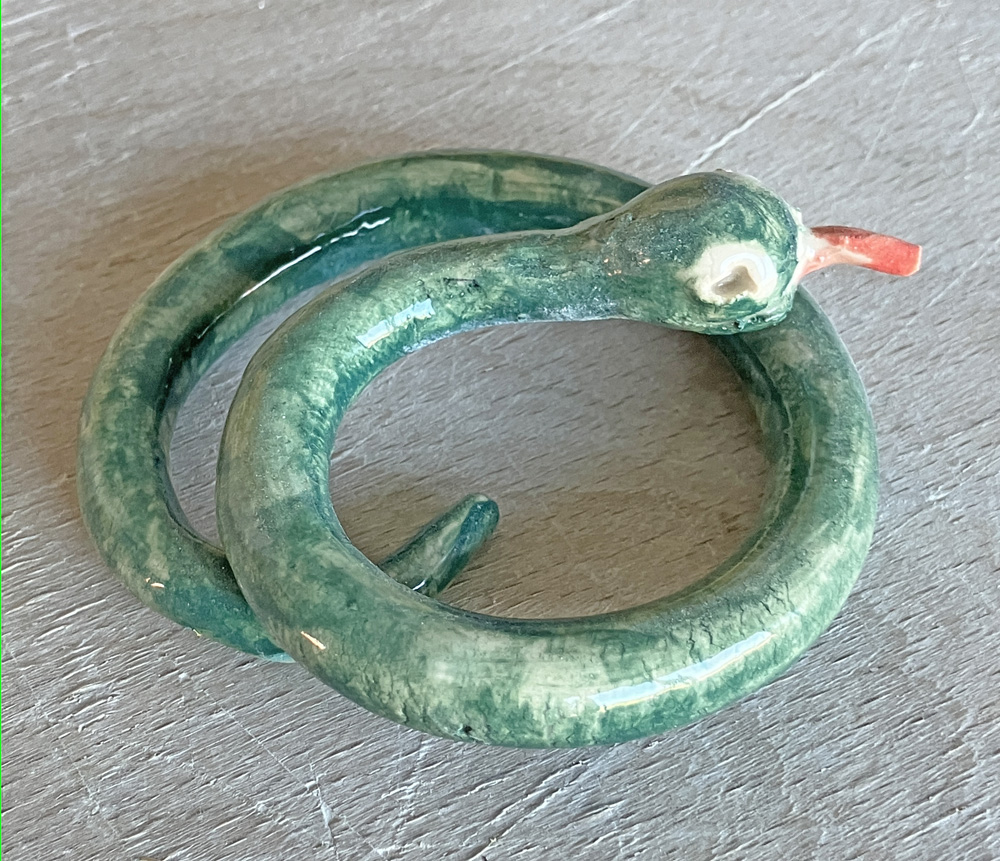
At other times, the desire to try something different takes over, when emotions are absent and all the hands want to do is to create something atypical: an architectural construct whose height and width will only just fit inside the kiln, a wall piece, a copy of Picasso’s violin, or a snake. This is the thing about clay: it’s a wondrous material which lends itself to so many interpretations that you can get carried away.
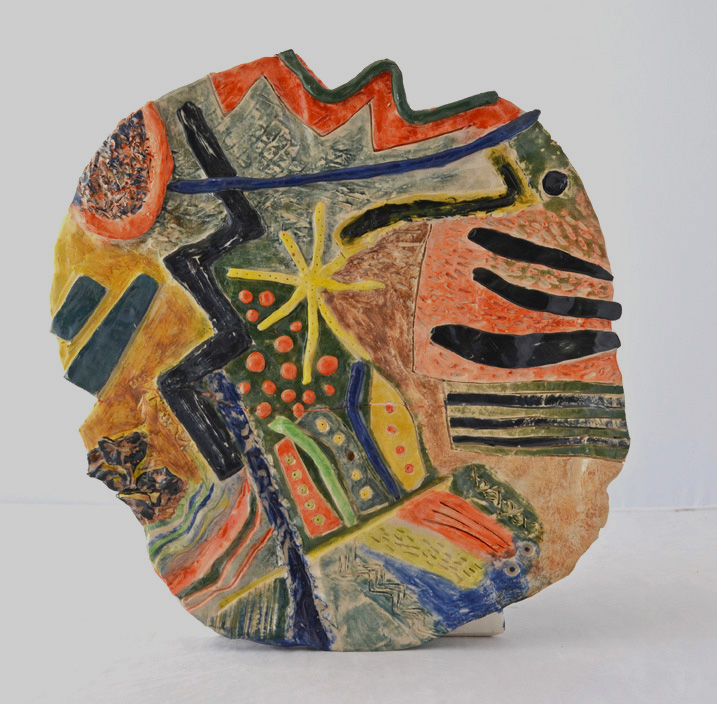
Wall piece

Carried away? Yes and no. For some time, the idea of making a twelve-foot-long ladder out of … wait for it … porcelain, yes, porcelain, has been brewing in our heads*. The Porcelain Ladder ©. A technical challenge without a doubt, but possible. And what a metaphor that would be. Imagine the resulting piece up against a wall in the Tate Gallery: functionality sabotaged by its own matter, the most sublime and delicate type of clay. Or how about a porcelain bridge over the Thames? Who would dare walk across it? Do you see where we can go with this concept? Porcelain sledgehammer? Stoneware flagpole? Fine china knuckle dusters? Ceramic combat helmets? (“Yes, that’s quite enough. The heat’s obviously got to you” says Spiro)
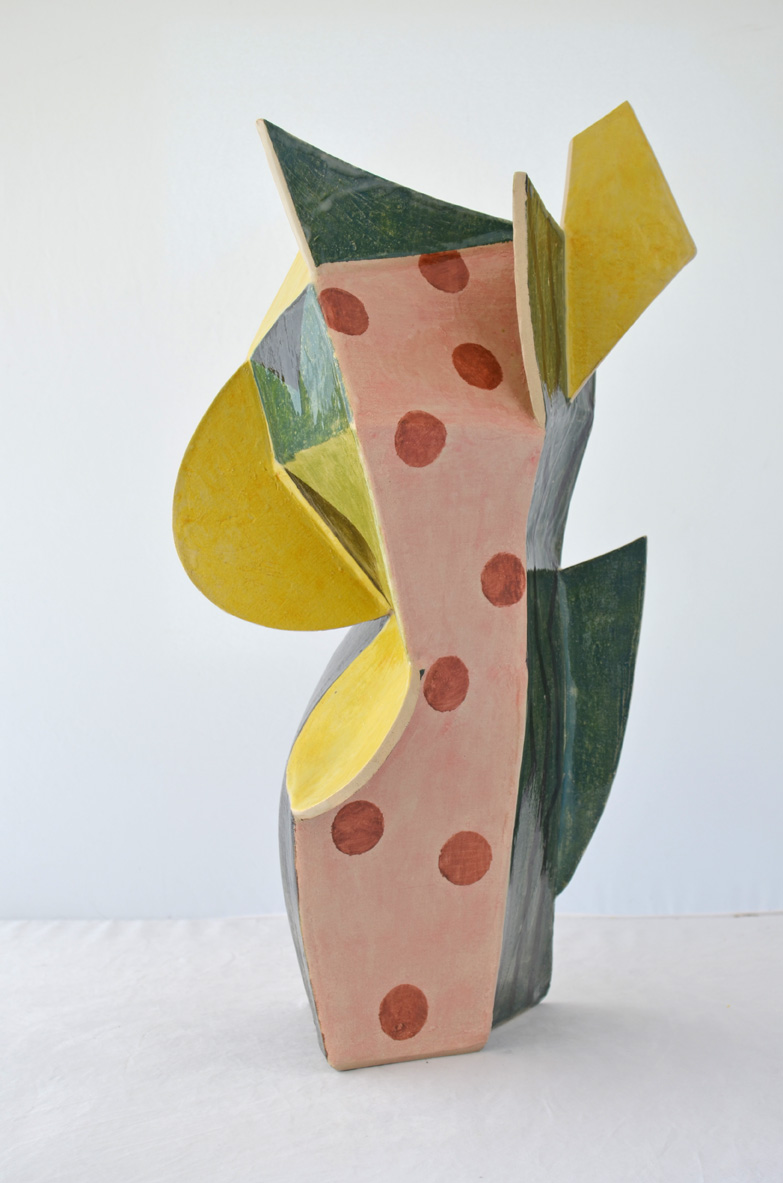
Large sentinel vase

It hasn’t stopped raining and the grass is already turning from dull brown to a hint of green. The various ceramic birdbaths in the garden are full and have all got a red sediment at the bottom. This, it turns out, is due to a red algae, Haematococcus pluvial, which thrives in sunlight and produces the red pigment called astaxanthin to protect itself from UV radiation. Who’d have thought – there I was blaming the dirty wood pigeons. Our wood pigeons, however unhygienic, are true art connoisseurs and prefer to scrub their armpits in the Joan Mirò bath, as pictured below with its sediment.
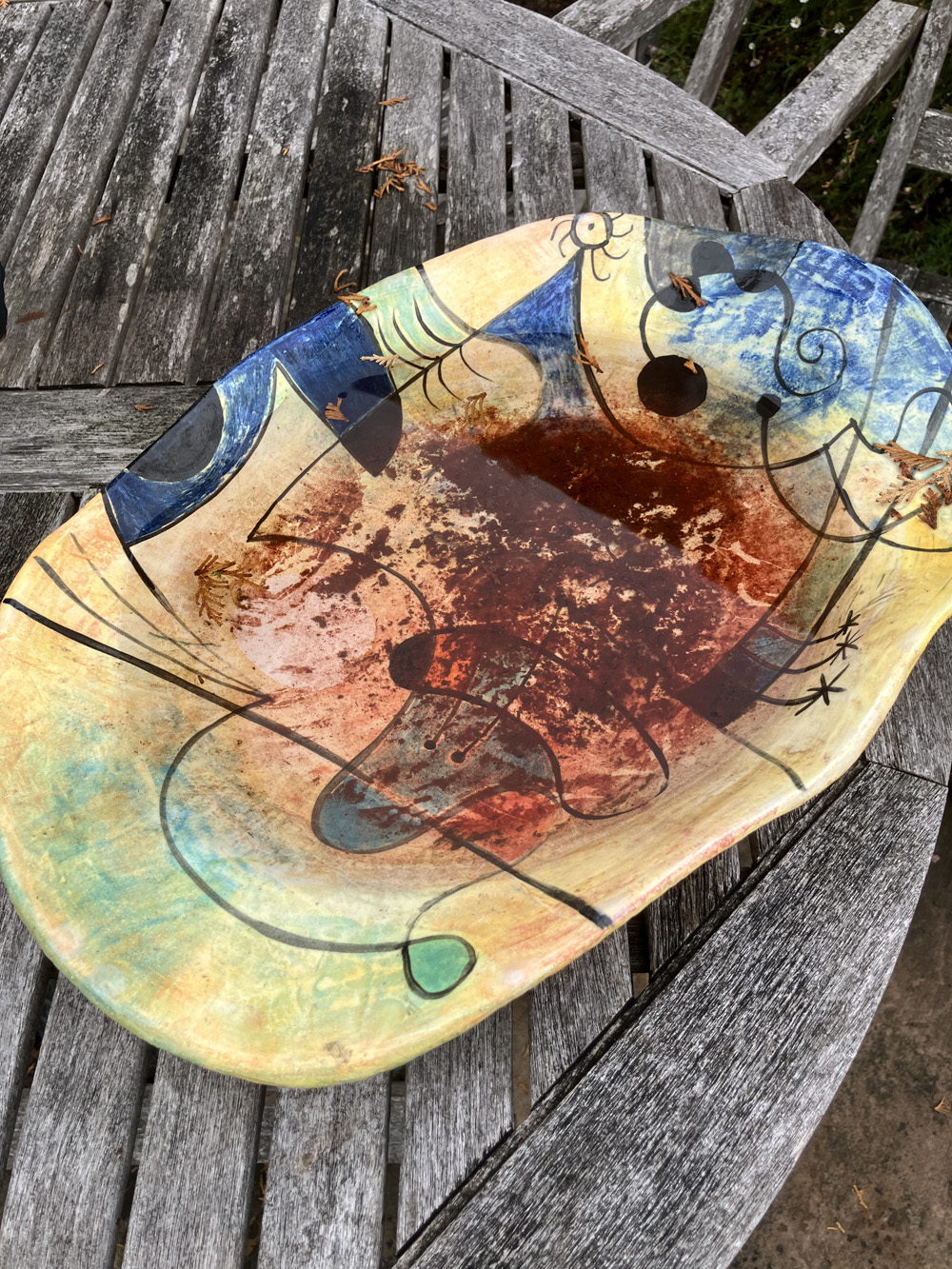
Ladder joke: Fred and Dave, two engineers, are puzzled and scratching their heads next to a flagpole. A girl on a bike stops and asks what’s wrong. “We have to work out the height of the flagpole, but we don’t have a ladder,” says Fred. The girl gets a wrench out of her bike saddlebag and loosens the bolts, then lays the pole flat on the ground. Next, she gets a measuring tape out. “15 metres,” she says, and rides away. “Typical woman”, says Dave. “we ask for the height and she gives us the length.”
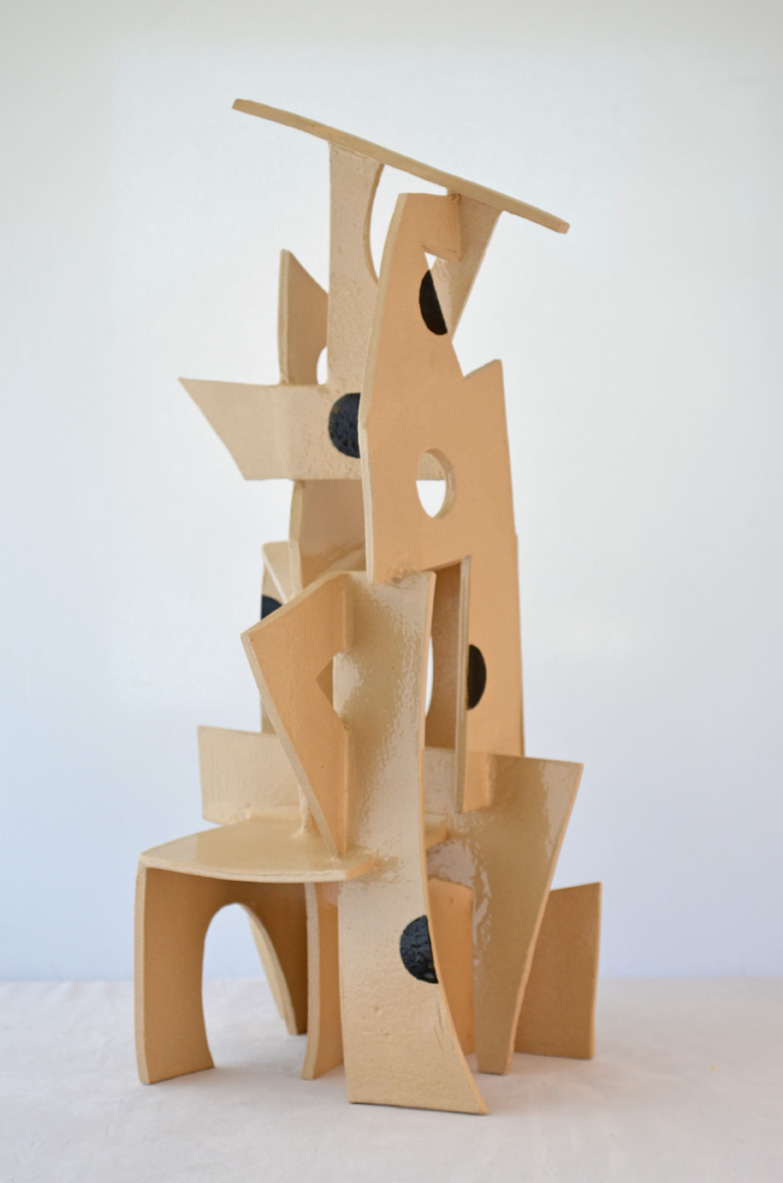
Large construct

  • We’re hoping one of you will challenge us and prove that it’s an idea long ago made into an art piece and exhibited at a gallery.

Swimming, eating, drinking.

Cala Aigua Xellida

Apologies to those of you expecting the usual image of Ledbury from Bradlow Hill. We’ve been away, you see. A gathering of the clan took place this month in the small town of Tamariu on the Costa Brava. The nearest anyone got to trudging up Bradlow Hill was getting down to Cala Xellida and back, which was done by car anyway – it was a holiday after all. It consisted of swimming early in the morning in this beautiful little bay, consorting with octopuses and watching cormorants diving alongside, or simply floating on your back (like a pale plump starfish on an azure sea) mindful of not brushing up against a sea urchin – one of their sharp needles in a vulnerable spot would spoil the day. I thought the sea urchin was a friend, but it was anemone.

Paracentrotus livides profil. Photo Frédéric Ducarme

The name Tamariu derives from the tamarisk trees along the promenade, which separates the beach from the narrow streets and whitewashed buildings of the town. It was, like most settlements along the Costa Brava, a small fishing village, and fishing boats are still to be seen up on the beach. Nowadays there are a few hotels, along with seafood restaurants, cafes and bars. It is set amongst rugged pine-covered cliffs flanking the sea.

View from the coastal path flanking Tamariu.

A few days beforehand, we had stayed with friends in a small village outside Vic, the ancient capital of the region of Osona. Set among lush green hills, from here you can see in the distance the highest peaks of the Pyrenees that border with France. The main square, where most of the town’s social and cultural life takes place, is a large square area surrounded on all sides by beautiful old buildings, some dating from the late 14th century.

Plaza Mayor, Vic.

Whilst there, a trip uphill to the hermitage of Sant Sebastiá, long abandoned. It stands as a reminder of Albion’s perfidy and of the ongoing struggle for Catalan independence because it was here that the decision was taken to send an emissary to the British, which led to an agreement of support in 1705 during the war of Spanish Succession. Alas, Britain let them down by signing the Treaty of Utrech in 1713. Long story, with little obvious link to ceramics, but complex and interesting. Great views of the valley below.

View of Vic valley from Sant Sebastiá.

Catalans and ceramics? Yes. The best-known source of pottery is La Bisbal which has been producing pots for centuries, and uses the typical blue, red and yellow tones associated with it in the numerous artisan studios along the town’s main drag. But pottery here is also associated with the great names of Catalan art: Gaudí, Miró, Dalí and, though born in Malaga, Picasso.

Ceramic seating in Parc Guell – Antoni Gaudí

Of the four, Gaudí did not actually make any ceramics, rather he smashed them up and incorporated it into his facades and rounded architecture, as can be seen on the benches in Parc Guell where one can sit and look down on the city of Barcelona.

Suite Catalan – Salvador Dalí

In 1976 Dali was seeking a buyer for a collection of tiles known as the Suite Catalan that he had produced in Spain two decades previously. From the original run of 100,000 tiles 60,000 remained. A German lawyer bought them all. The remaining tiles from the original run have sold in private sales and auctions over the years, fetching as much as $2,300 for a set of six, and over €500 for just one.

Earthenware dish with bird – Picasso

Picasso and Miró are better known than the other two for their ceramic work and made extraordinary pieces which nowadays are seen in museums around the world. Picasso moved to Barcelona with his family at 13, in 1895, when the city was full of political and artistic ferment. It was politics that turned his visits to Paris into permanent French exile, but before that, his artistic early artistic formation developed in Barcelona. His Blue Period is Catalan.

Oiseau (Solar) bird – Fundació Joan Miró

Peter Arscott Ceramics would like to emulate them one day and, in a fit of creativity, inspiration has nudged this piece out of the studio.

Doodle vase by PAC

These few days on the Mediterranean were not only about swimming, eating, and drinking. Oh no. There was a quick cultural visit to Gerona.  We wanted to see the cathedral’s interior, which includes the widest Gothic nave in the world, with a width of 23 metres (75 ft), and the second widest of any church after that of St Peter’s Basilica. When we finally made it, the huge West door was being shut to visitors by a stern-faced porter.

Closing time at Gerona cathedral

Defeated in our cultural pursuits, we could only drown our sorrows with more food and drink. Here is a picture of tapas: anchovies and olives.

Tapas

In deference to the octopus we met daily at Aigua Xellida (there may have been two, but if so, they were hard to tell apart; they were i-tentacle), we tried not to eat any cephalopods. But we did eat fish, and many sausages along with barbecued red peppers and aubergines, and a lot of cheese and ham eaten on local bread rubbed with tomato. And more sausages. They know their food, those Catalans.

Salchichón de Vic

Back home, and the call of the clay was loud and enticing, tempting hands into making new shapes and forms, and perhaps influenced by the happy use of colour in the pots and dishes seen in La Bisbal, an orange-red tone crept into one of the more devilish vases that popped out of the kiln today.

Imp vase

Enjoy the rest of Summer.

array of glazed fine art ceramic bowls by belatrova

Far from the Madding Crowd

photo of people swimming in Mallorca

far from the madding crowd

Heat has a strange effect on some humans. When temperatures hit a high, as they did this August in many parts of Europe and the Mediterranean, confusion and dizziness set in, common effects of too much exposure to extreme heat because of increased blood flow to dilated blood vessels and fluid loss through sweating. This sometimes happens to belatrova when the kiln is going full blast and ceramic production is in full flow as we try to feed the insatiable appetite for our products – on the other hand a cold Dry Martini often wards off any lasting effects.

dry landscape of Mallorca

Mallorca inland

This August was an excuse to go abroad for a break before moving into the new workshop in Ledbury (about which more in the next blog).

watercolour of Mallorca

towards the monastery of Sant Salvador

Mallorca is a beautiful island that has lured many foreigners over the years, from Chopin to Robert Graves, and, this year, belatrova. But mass tourism is affecting it much as it is elsewhere. Barcelona, Venice, Edinburgh, Lisbon, Dubrovnik, Skye are all examples of unmanageable jam-packed destinations filled with visitors on holiday. ” Tourist: your luxury trip / my daily misery“, says a placard in the Parque Guell (Barcelona). “Tourists go home. Refugees welcome” was the graffiti that greeted us as we drove to Felanitx for our week in Mallorca.

pool shadow

tourist

And who can blame residents when all anyone can do on the beautiful beaches and calas is to stand waist-deep in the water surrounded on all sides by others similarly engaged in staring at the horizon with arms folded and wondering how to escape – we did find a great spot though, as you can see from the first image.

drawing of tourist on mobile

tourist with mobile

Go inland and the atmosphere changes and the landscape is an engaging mixture of the agricultural and dramatic, from fertile farmland and Aleppo pine forests to the limestone mountains of the Serra de Tramuntana and the summer flowering of oleander, hibiscus, marigolds and orchids.


cacti

away from the tourists

If you really want to get away from any crowds, we recommend a visit to Botanicactus, a cactus sanctuary (though belatrova believes they are quite capable of defending themselves) where the cacti flourish in the dry and sunny climate and the landscape has been specifically designed to protect the plants, with the creation of the artificial lake and raised terraces protecting the plants from the wind. While everyone is at the beach you can wander about in perfect solitude surrounded by these giant prickly beings.


glazed bowl with painting

belatrova’s Miró bowl

Among the many artists associated with the island is Joan Miró, painter, sculptor and ceramicist born in Barcelona, but resident in the latter part of his long life in Palma where he bequeathed a collection that is the basis for his Fundació Joan Miró which we visited one morning.


retro 1950s style bowl

retro bowl (three legs)

It is a purpose-built exhibition space that uses thinly cut alabaster as a source of light into the rooms and has pools of water outside in the gardens that reflect their own light through low cut openings at floor level – and the whole complex stands on a hill overlooking the bay of Palma. We watched white sails racing each other in the distance, the ferry from Barcelona ploughing its way to the docks, and three giant cruise ships blocking part of the harbour architecture as they disgorged their passengers into the city for the day.


fundació Joan Miró

But back to Miró; tiny forms in huge empty spaces, deep blue cerulean sky-like canvases, crescent moons, birds, meandering shapes, his work is captivating and has inevitably inspired belatrova, back in Herefordshire, to make a few ceramics in his style.

array of bowls by belatrova

inspired bowls

If you’d like to see them come and pay us a visit at our old workshop at No9 Bankside Studios during hArt, which runs from Saturday 9th to Sunday 17th (open daily 10 – 5pm), just follow the red hArt signs in Ledbury, or use the postcode: HR8 2DR. You are most welcome. As the hArt website says: “Meet hundreds of individual artists, see an array of artwork across the county in the city and countryside, in fabulous locations such as manor houses, historic barns, farms, churches and beautiful gardens.”

 Finally, belatrova shed a tear on learning of the death of Walter Becker, guitarist and composer, who with Donald Fagen was one half of the unforgettable Steely Dan. We invite you to click here and listen to one of their middle period songs (skip the ad): subtle player that he was, technically dexterous, meticulous master of the instrumental gesture and never a grand-stander, “some of his most intriguing work is embedded in the background – the architectural arpeggios of “Aja,” or the wry, blues-tinged asides that dot the margins of “Hey Nineteen.” (Tom Moon / NPR Music)

Many a bowl was made listening to Walter on his guitar.

When all the dime dancing is through,                                                                                                                              I run to you..