
Scorcher

The mystery of splitting or cracking flat circular pieces emerging from the kiln continues, despite much consultation with experts. This last attempt was with highly-grogged stoneware, which is designed to strengthen any handmade slab-rolled piece. It dried slowly over a month before it was put in for a bisque firing (very slowly) to 1000 ℃. It came out with a hairline fracture, then glaze-fired to 1200 ℃, during which it split in two.
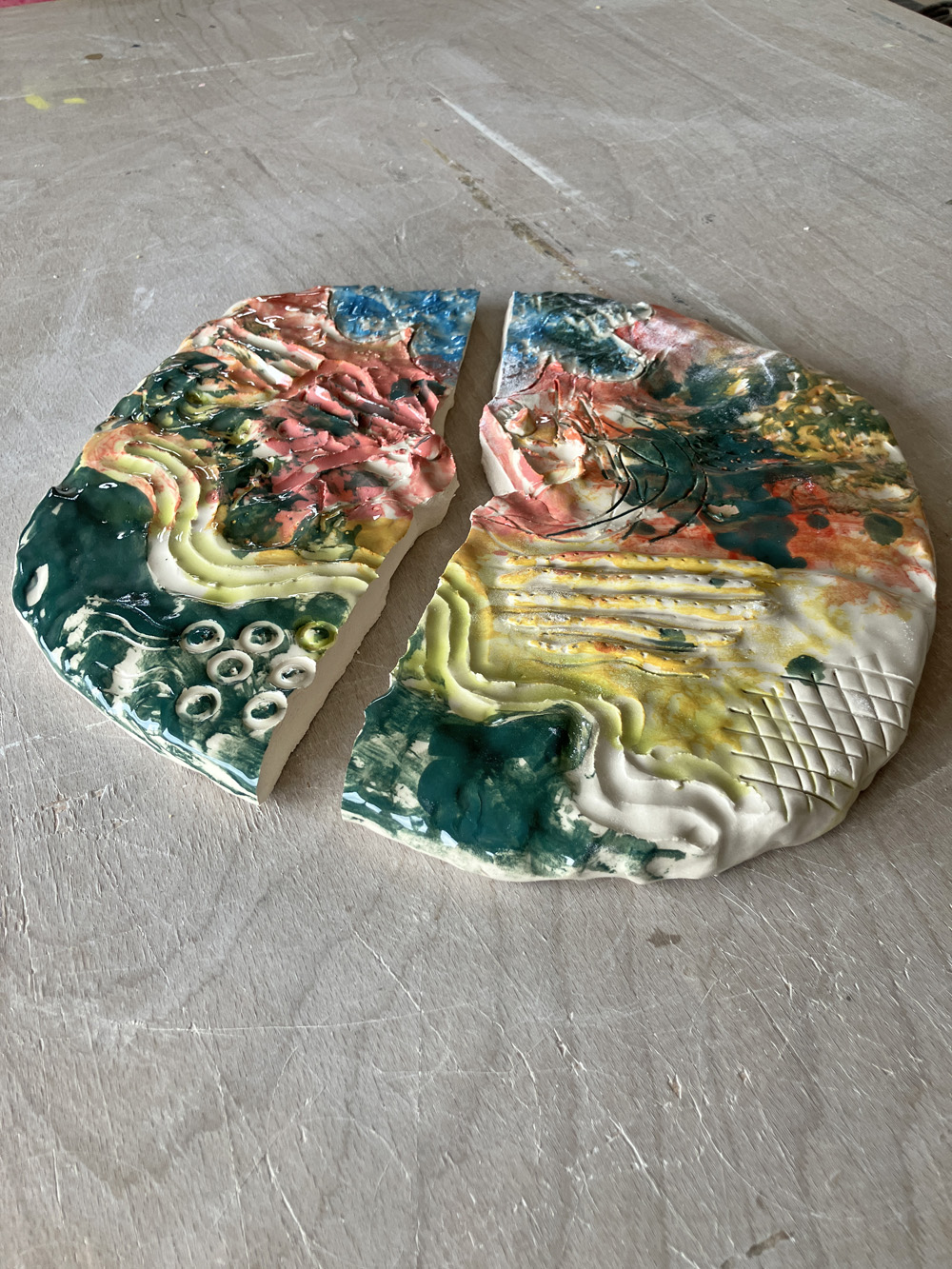
If anybody has an idea to solve this problem please get in touch. Very annoying. Spyro and I took out our frustration by chasing Ziggy with a fly swat but he managed to squeeze through a crack in the wall and got away. In need of clarity and tranquillity, I decided to walk up to Bradlow Knoll.

Common blue
On my way up the hill I came across these butterflies – they are relaxing to watch and gladden the heart so I took a photo of the little cold-blooded critters as they happily thermoregulated. It has been suggested that people in the middle ages believed that butterflies stole milk and butter – thus the name. Or they could be named for the colour of their poo, since Old Dutch used the term “boterschijte”. In Russia, they are called babochka, which translates as “little soul”, and in France, they are known as papillon, in Spanish, mariposa, in Portuguese, borboleta, and in German, Schmetterling, “little cream thing”.

Painted Lady
It’s been a year for the ox-eye daisies, which have sprung up all over the place this Spring. There’s a cluster right next to CJ’s bench. I did know that the name “daisy” comes from the Old English word dægeseage, which translates as “day’s eye”, a name given to the flower because of its habit of opening its petals at dawn and closing them at dusk, but I did not know that, as a popular choice for pulling its petals apart by the lovelorn, the world’s largest game of “he loves me, he loves me not” took place in Milan in 2009 when a total of 331 people participated.

Ox-eye daisies
It is also a nickname for Margaret, going back centuries when English speakers used the nickname because Marguerite (the French version of Margaret) is also the French word for the ox-eye daisy. Its’s also known as dog daisy, field daisy, moon daisy, moon-penny, poor-land penny, poverty daisy and white daisy. The unopened flower buds can be marinated and used in a similar way to capers. The most famous Daisy I can think of is Daisy Buchanan, the beautiful and alluring socialite from F. Scott Fitzgerald’s 1925 novel The Great Gatsby, played by Carey Mulligan, Mira Sorvino and Mia Farrow, among others.

Palais des Vaches
And what about Daisy the Cow? Surely one of the most frequently used names for lady bovines, a familiar British cultural stereotype and often present in nursery rhymes. I will bet my bottom dollar that the old milking parlour on the Exbury estate once had a “Daisy” using its facilities, facilities now enjoyed by gallery-goers visiting the Palais des Vaches gallery in the New Forest, near the Beaulieu River and a stone’s throw from the Solent coast and the famous Exbury Gardens. A great place to go and see Peter Arscott ceramics, now on display at the gallery, along with painting, sculpture and jewellery by other artists.
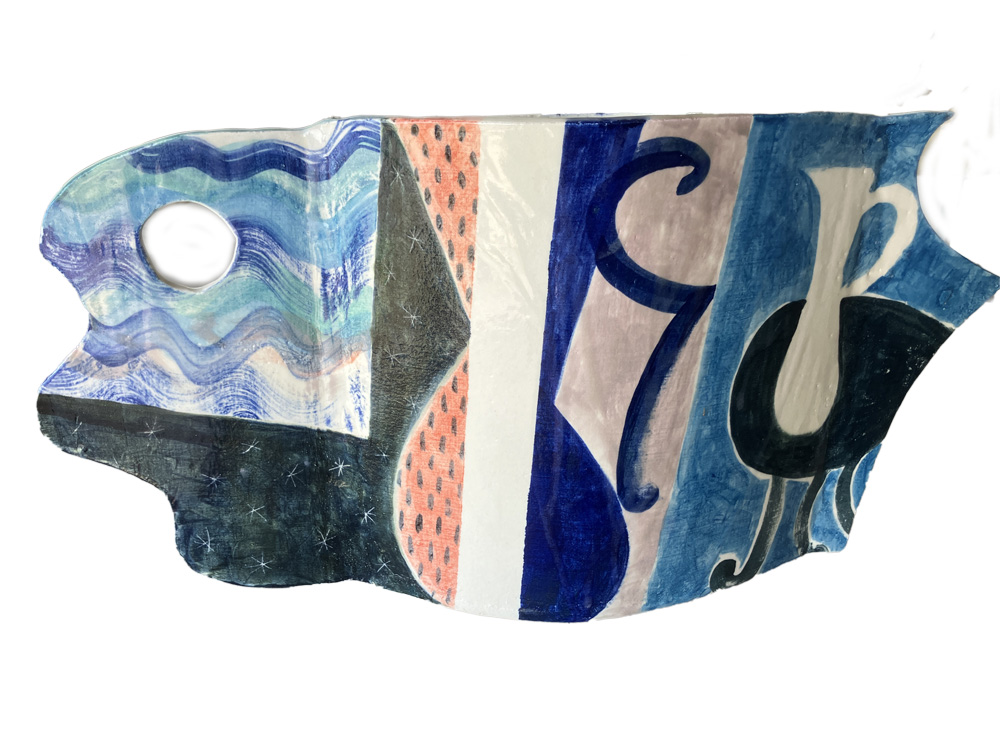
Still life vase at the Palais des caches
Luckily, I walked up Bradlow Knoll just before the four-day amber weather warning for extreme heat, with forecasts suggesting temperatures could reach 38C (100F) in parts of England this week. The warning means population-wide impacts are likely. It’s worse in Paris because their roofs are all made of zinc so they’re all making crepe suzettes on them. At the Peter Arscott Ceramics (PAC) workshop, conditions will be hot so I shall be wearing an apron only, and Spyro will only have on his bishop’s mitre. At the football World Cup they’re having quarterly hydration breaks during the games, elsewhere, drinking alcohol has been banned in public, large gatherings for football screenings cancelled and sales of electric fans have gone through the roof.
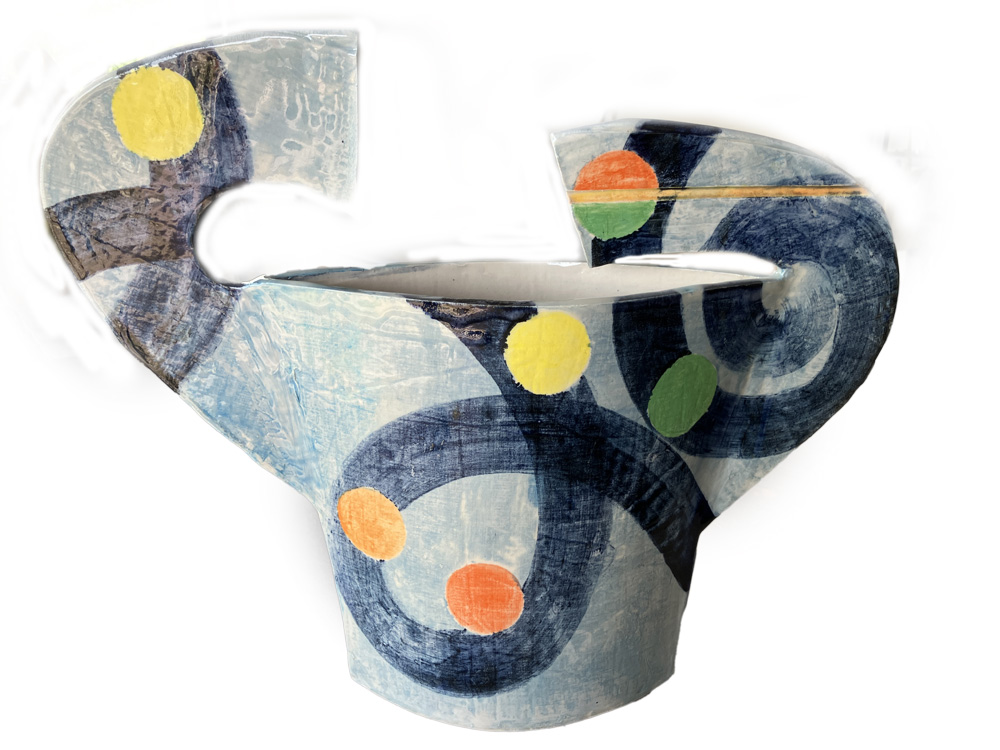
Blue juggler vase at the Palais Des Vaches
Yes, making ceramics is dangerous: bisque firing, as some of you know, is at 1000 degrees centigrade. At this point many common metals melt. Aluminium liquefies around 660°C and silver at 961.8°C. Structural steel loses about 90% of its structural strength at 1000°C, though it doesn’t fully melt until about 1500°C. But it is the baseline heat required for heating kilns for refining glass and, of course, ceramics.
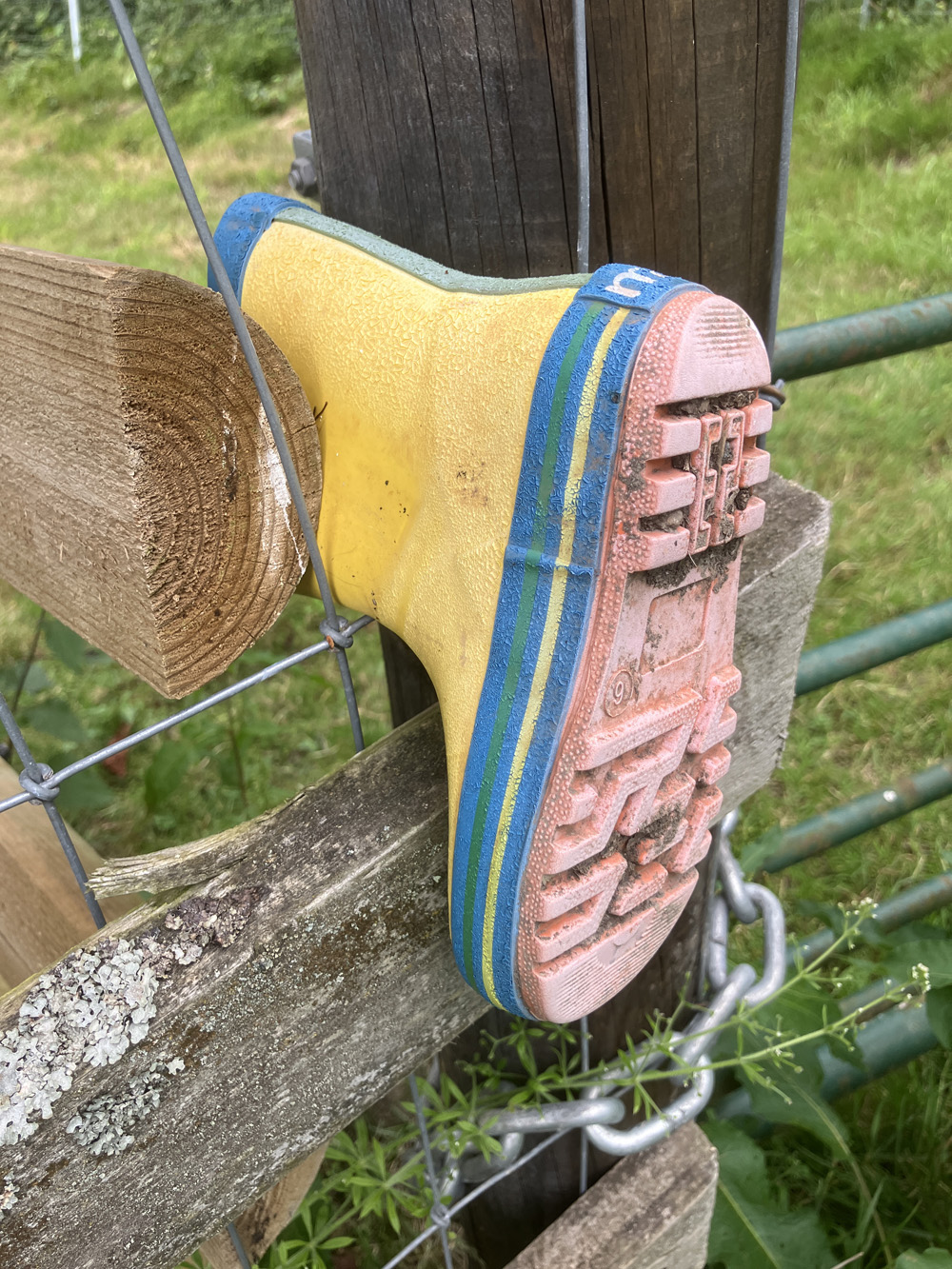
Small person’s boot waiting for its owner near CJ’s bench on Bradlow Knoll
In the meantime, stay cool yourselves. In Paris the authorities have opened up a stretch of the Seine for bathing, over here the Wye river would be fine except that it’s full of pollution due to the chicken farms that work along the banks. The next best thing is to dip a t-shirt in water , rinse it out and wear it. Or you can do the same with a sheet and hang it over your open door – it will cool the air as it wafts into the house. Drink lots of water, avoid alcohol. Draw all curtains. Stop all the clocks, cut off the telephone, prevent the dog from barking with a juicy bone, silence the pianos … er, sorry, we went all “Audenesque” there, but then there is the Ledbury Poetry Festival about to start.