Posts

Smile if you’re not wearing knickers.
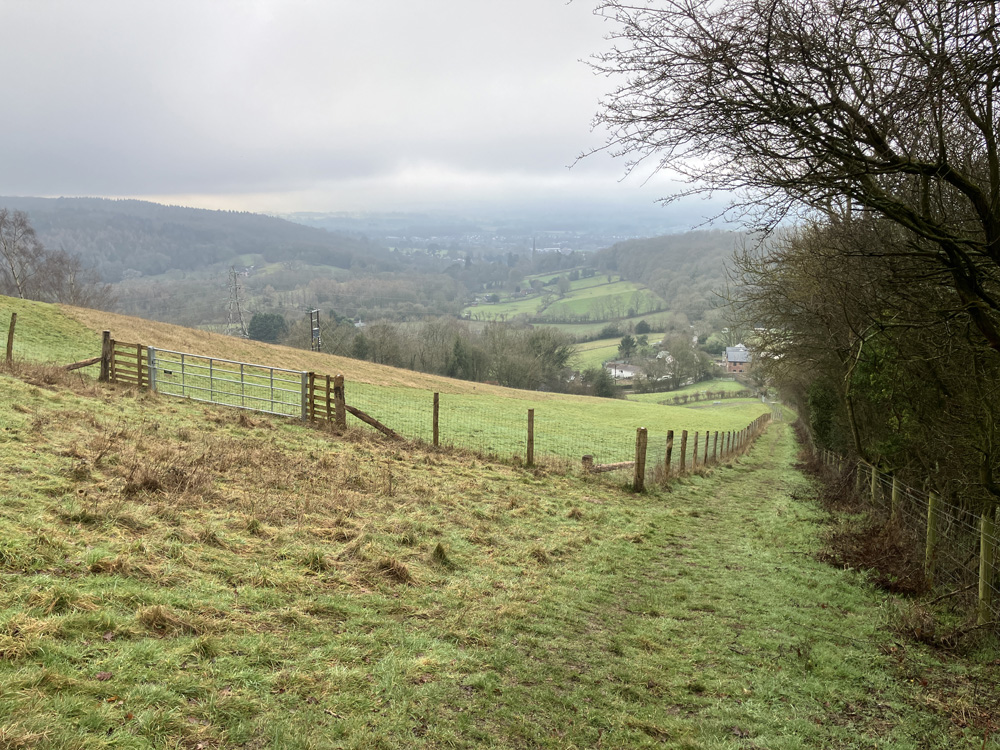
Mud. I hate walking on it but love handling it.  Followers of this blog will know that I have had encounters and slippages with the substance in the past. Nowadays I am much more prudent when while on it, and have even developed a technique for walking downhill on mud which is half penguinesque and half Chaplinesque.  Bradlow Knoll was very muddy.
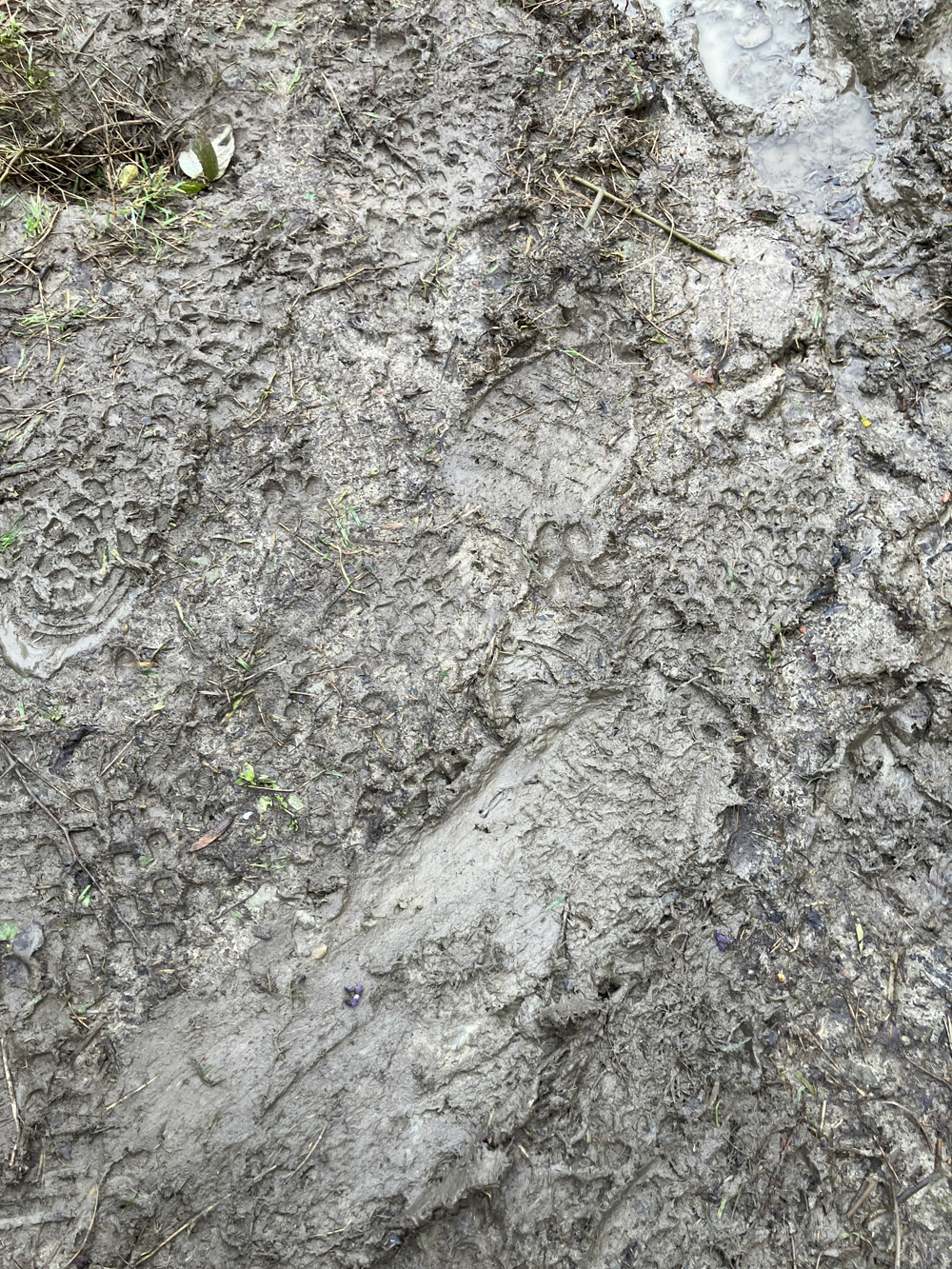
The treacherous mud of Bradlow Knoll

Apologies for the attention-grabbing title. It is only barely relevant to the subject of mud, which is what I want to talk about, but it will nevertheless justify itself at a later stage.
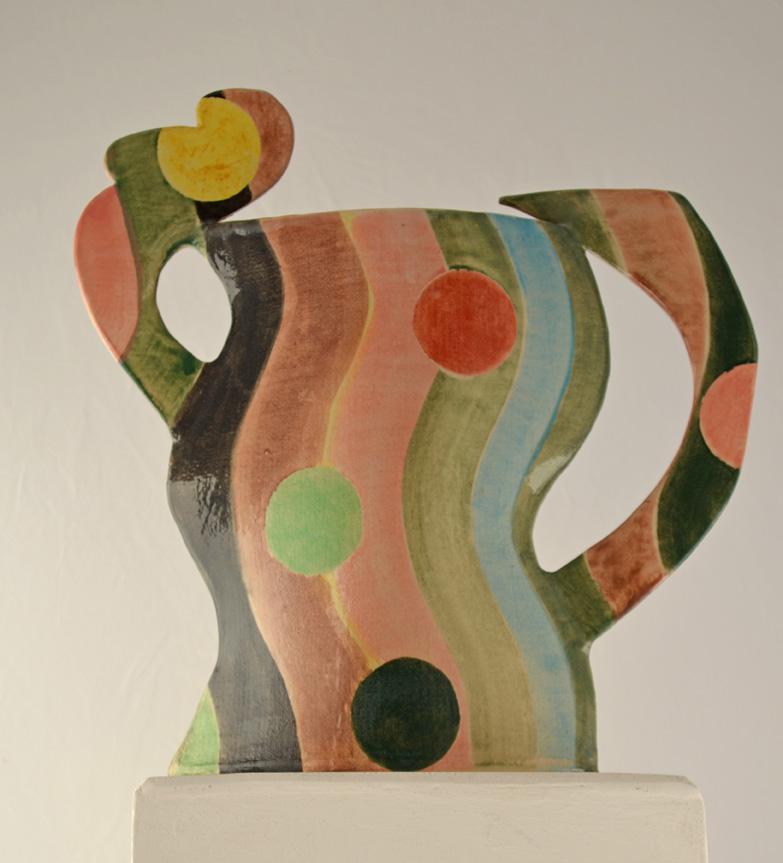
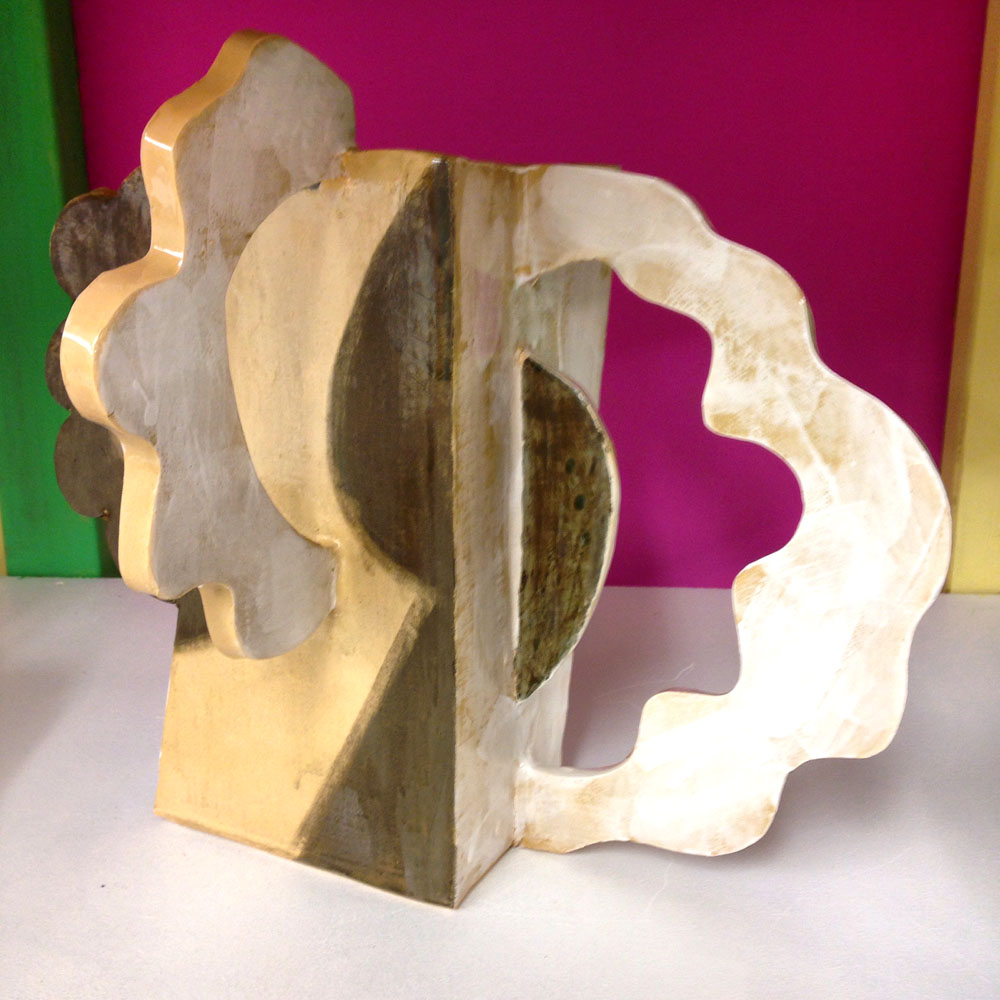
Yoohoo vase

Ceramicists make mud look good, I was thinking to myself, and what is the difference between mud and clay anyway? I was driving along a wet, muddy and slimy track in search of a tarmacked road and civilization. The Satnav was telling me it was the best route, but satnavs are not to be trusted. The sun was setting and it was drizzling. The car was beginning to slide on the gradients and long bends – there was nobody to be seen, only the pale chalky mud of what turned out to be The Ridgeway, ancient Britain’s equivalent of the M4 motorway, which was what I was actually looking for before getting into this mess.
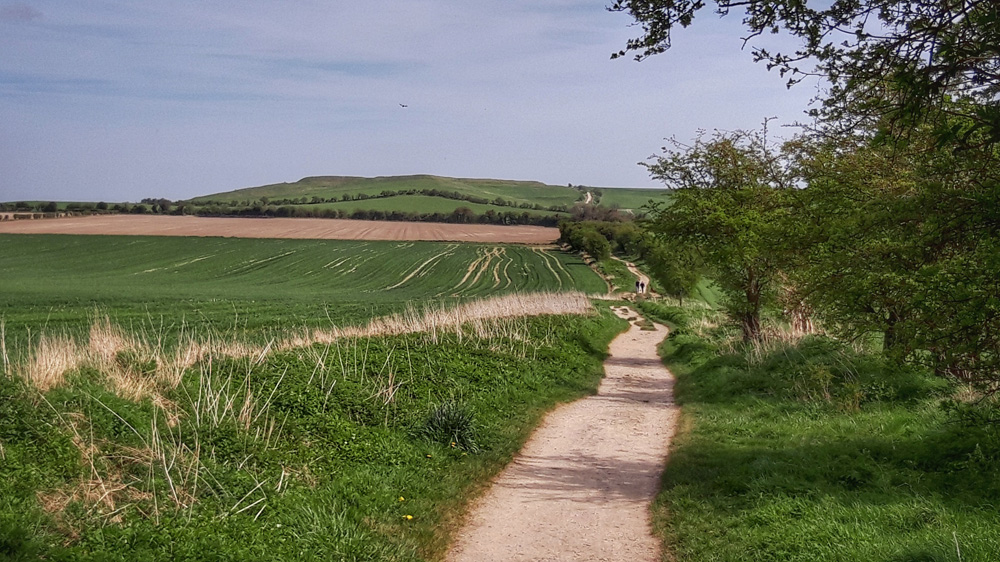
The Ridgeway – photo Jim Champion – CC BY 4.0

The track’s surface varies from chalk-rutted farm paths and green lanes (which become extremely muddy and pot-holed after rain) to small sections of drivable roads covered in gravel and crushed stone. It is the oldest trackway in UK. It is 87 miles long. For at least 5,000 years travellers have used it as a reliable trading route from the Dorset to the Norfolk coast.The high dry ground made travel easy and provided a measure of protection by giving traders a commanding view, warning against potential attacks. I, on the other hand, was only trying to get to London to visit an exhibition or two before the satnav led me into this quagmire.
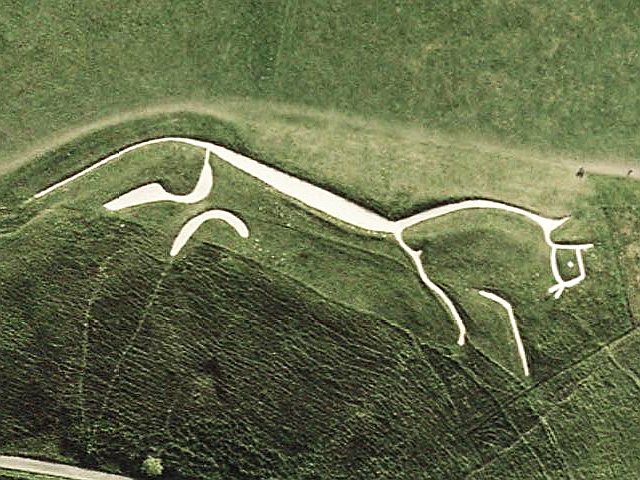
The White Horse of Uffington

Despite wondering if I was breaking the law, I had just previously enjoyed driving past the White Horse of Uffington up on its hill. This is prehistoric landscape – silt deposits show the figure was made in the period between 1380 BC and 550 BC, confirming it as Britain’s oldest chalk figure – and still conveys a timeless quality with its sloping open contours and scattered dwellings.

Before getting back to mud vs clay, I can confirm that the track is a designated bridleway (shared with horses and bicycles), but also includes parts designated as byway, which permits the use of motorised vehicles – though not between October and April, which is when I was on it. Never trust Satnavs. I did get to London.

As you probably all know by now, clay is a specific type of mud, defined by its fine particle size and mineral composition, giving it a stickiness and ability to hold shape, while mud is really soil mixed with water, but can also be used in pottery. If you dig up some mud and manage to roll it into a tubular shape and then coil it without cracking, that’s mud good enough for pottery – though ideally you would add sand and other particles to strengthen it when firing.
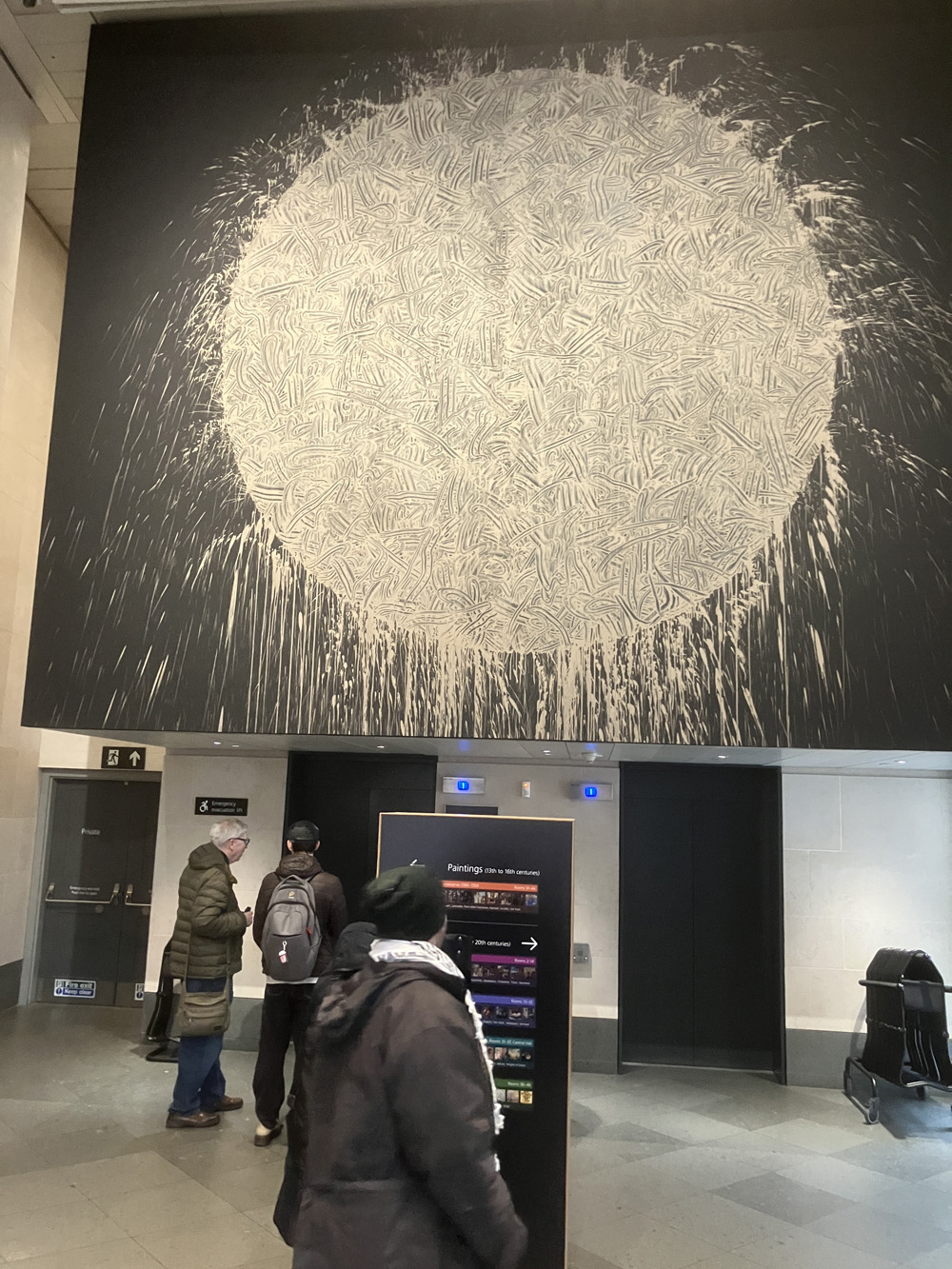
Mud Sun by Richard Long – National Gallery

Once in London, at the National Gallery, I came across Richard Long’s Mud Sun. This is made entirely of mud from the River Avon applied by hand onto a black background. The hand marks highlight the physical process of making art, and it works as a flat sculpture and at the same time reveals how it was made. It’s a very direct form of human creativity, and took me back to the ancient Ridgeway, though I’m not claiming that the marks left on the car show any creativity.
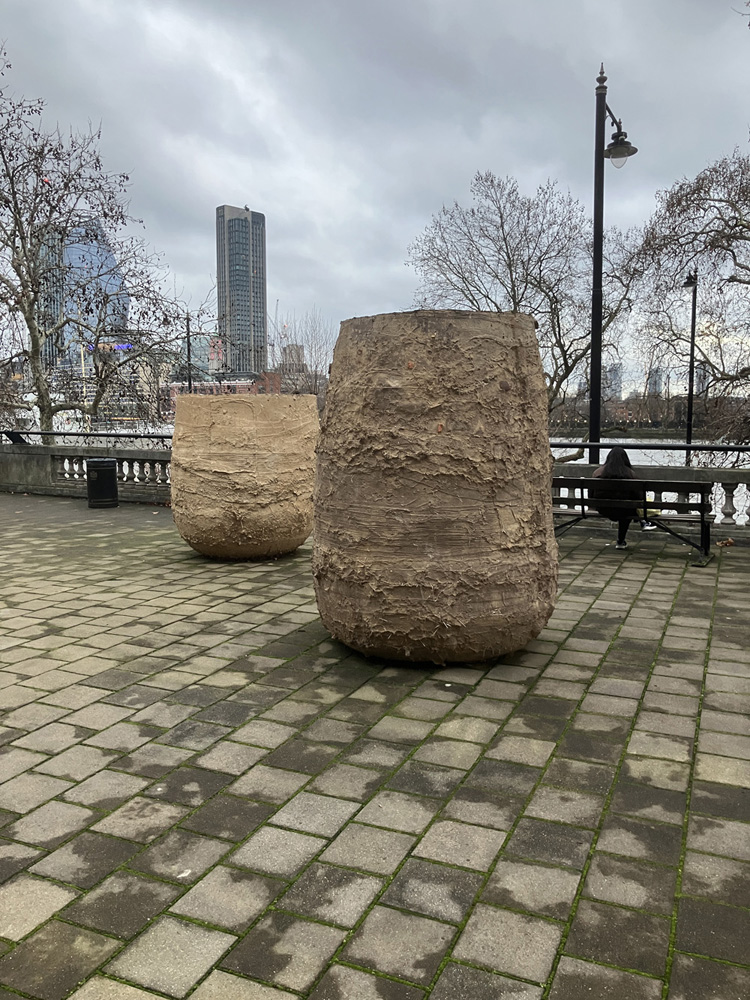
Earthen by Jodie Carey

One of the exhibitions was held on the roof of the entrance to Temple Station by the Thames. Jodie Carey’s Earthen are two enormous vessels made entirely outdoors on a hilltop using the earth of East Sussex, each piece cast in the ground and then wrapped in hand-stitched cloth and buried. Bits of soil, stone and plant roots are all part of the shaping process. It draws on the symbol of the simple pot used across the world and across time – but these are towering and imposing. If you click on the blue link above, it will take you to a very good video that explains the process.
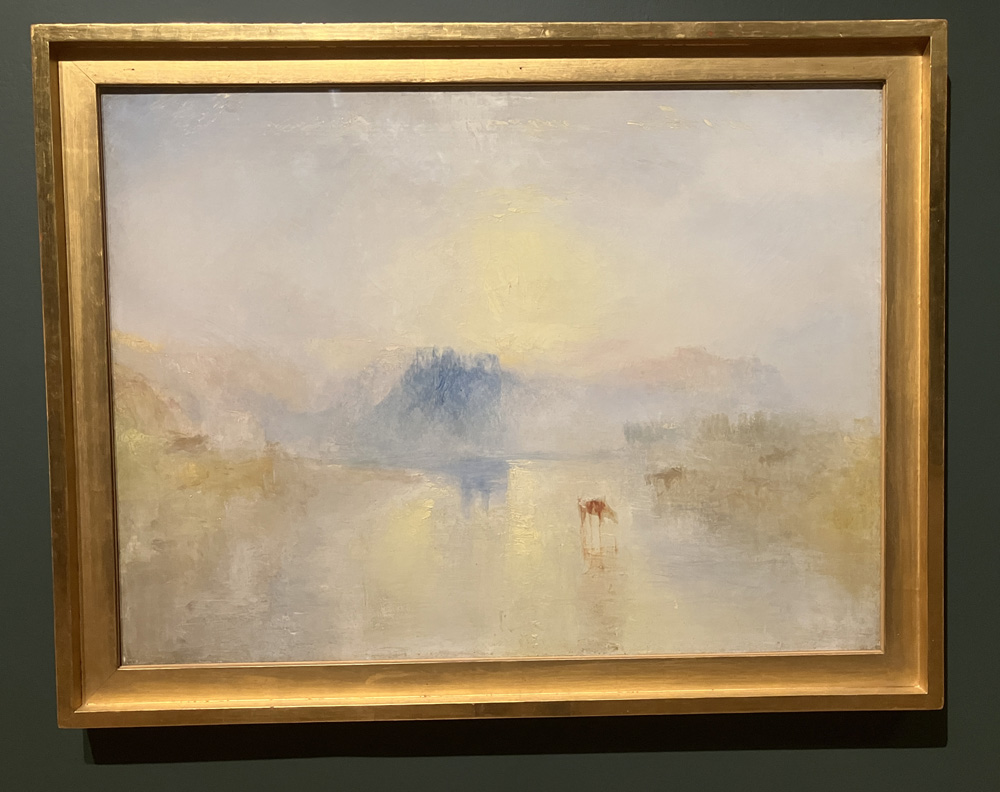
Petworth gardens by J M W Turner

The (non-mud) exhibition at Tate Britain was dedicated to John Constable and J M W Turner. They are different from each other; Constable very earthbound, a great observer of land, trees and people at work, and probably better at mud that Turner, whereas Turner tries to capture air and light, so that some of his paintings are almost abstract. His painting of the gardens at Petworth would float away were it not for the deer in the foreground pinning it down like an anchor. He is a tonalist painter, using muted colours, often a limited palette, and often wet-on-wet or glazed layers to achieve a harmonious and unified scene. He is fabulous.
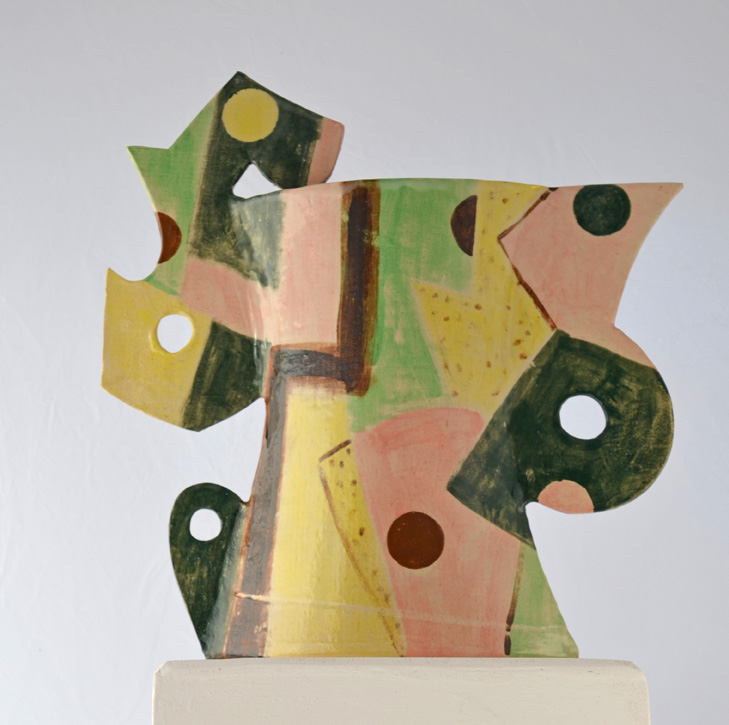
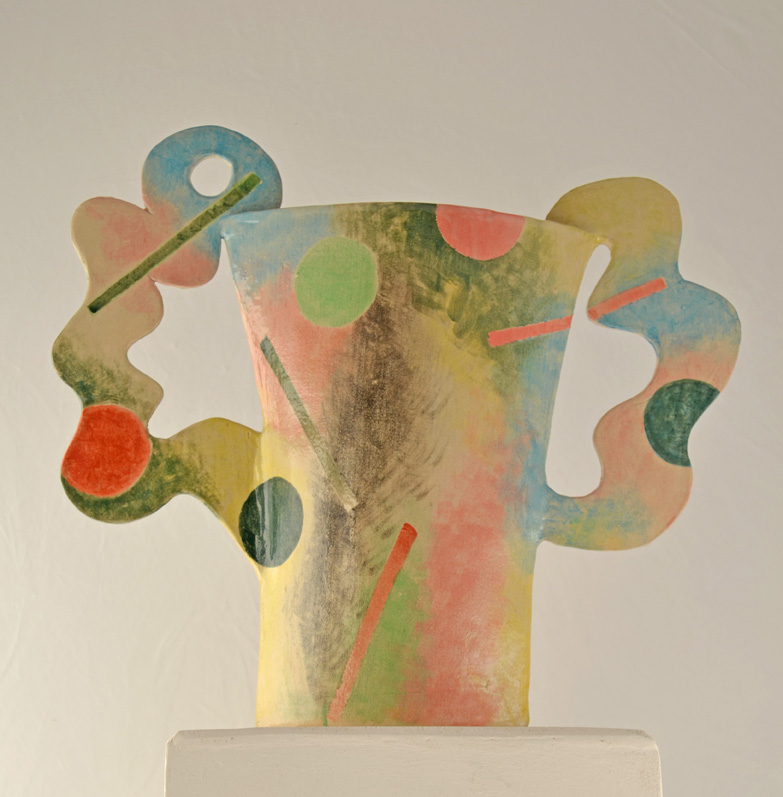
Cubist vase

At PCA we tend to go the other way and paint the pieces with contrasting tones – red with green, white and blue or brown, black dots on a lighter background, etc – not that we claim the same stature as Mr Turner; we are quite modest (more confident marketing required here, please – Spiro). We are going through a “spot” phase right now, as you can tell from the images scattered around this blog.
Juggler vase

The reason for this blog’s title is to lure you into reading a short story published online by Literally Stories. It’s only 990 words long, so won’t take up your time. Like a vase that isn’t filled with flowers, or a painting that’s never seen, or a sonata that’s never heard, my story will not exist unless somebody reads it. As the poet Samuel Menashe says:

A pot poured out

Fulfills its spout

You can read “Smile if you’re not wearing knickers” by clicking here.
Mud facts: playing in mud makes you happier. Pigs wallow in mud to keep cool because they do not have sweat glands. Mud packs owe their popularity to vitamin E in mud which revitalises the skin. The band Mud had 14 UK Top 20 hits between 1973 and 1976, including three number ones. Other English words for mud include clabber, clauber, clart, cloom, glaur, groot, grummel, lutulence, slather, sleck, slike, slutch, sposh, stabble.
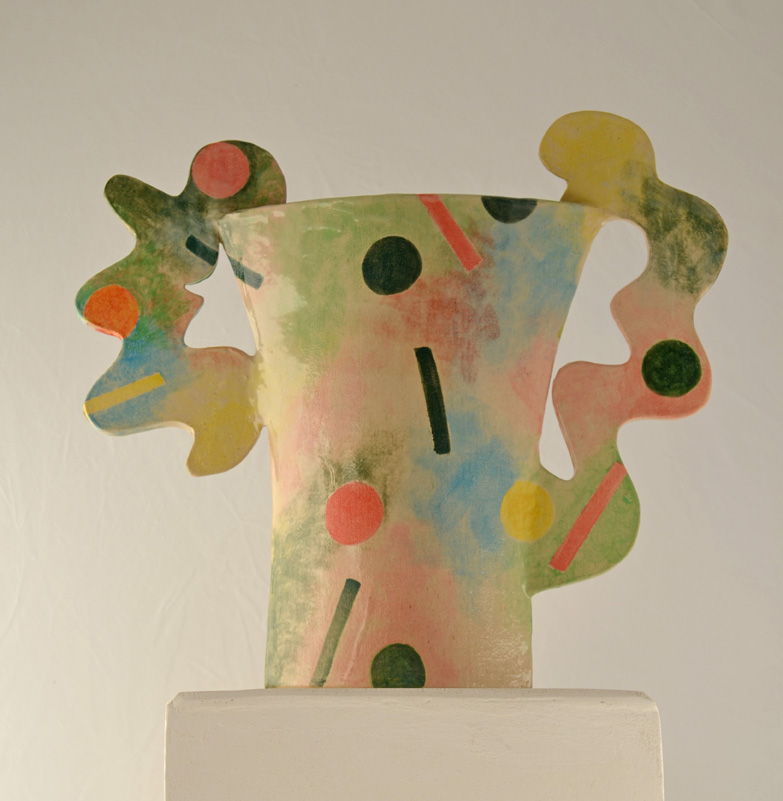
Juggler vase 2

Bad mud joke:

Paul and Vince were digging a ditch when Paul made a careless swipe with his spade and cut off the Vince’s ear.
“Help me find it in all this mud,” cried Vince. “Then they can sew it back on.”
After a couple of minutes, Paul shouted, “Here it is”, and handed Vince the ear.
“That’s not it,” said Vince, and threw it back in the muddy ditch. “Mine had a pencil behind it.”
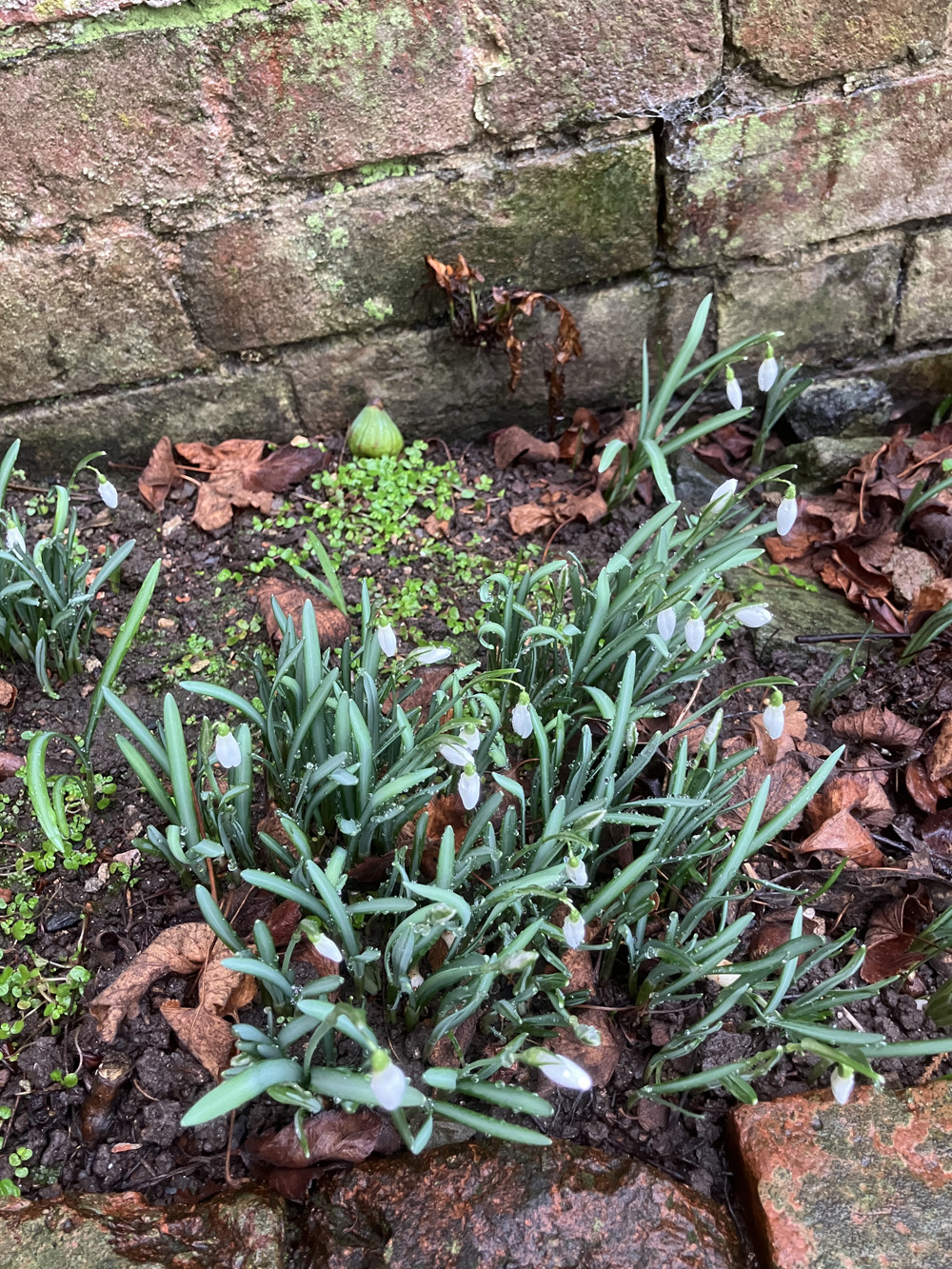
It’s OK folks – Spring is around the corner

My conversation with Eric

Vell Mill meadow near Dymock

This is the time of the wild daffodils, and one of the best surviving wild daffodil meadows in the UK is the Vell Mill meadow, where thousands of people used to visit during the spring – traveling up from London on the train to pick the flowers to take back and sell. They’d load them on the train known as the Daffodil Express.

from Bradlow Knoll

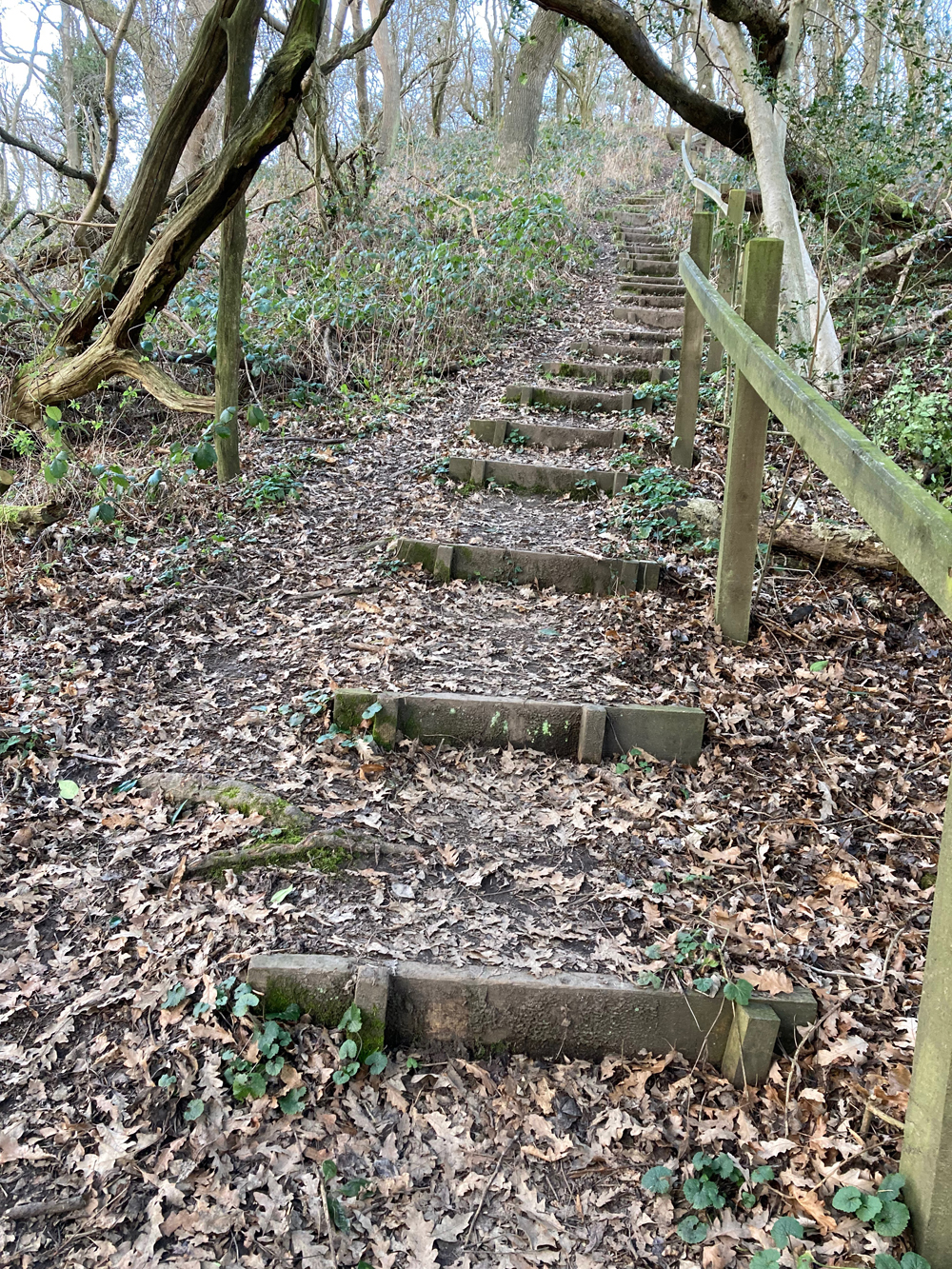
It is an easy and unchallenging walk along the Poets Path – a reminder of the area’s connections with Robert Frost, Edward Thomas and others poets, who used to walk “ankle-deep in daffodils”. And it’s not as challenging as climbing up to Bradlow Knoll, which was achieved for your benefit, and despite the treacherous mud, the strange ominous gunshots and creaking joints. As you can see from the photo, it’s still looking wintry.

Interior vase at the Palais des Vaches gallery, Exbury, Nr Southampton

This blog exists primarily to promote Peter Arscott Ceramics, but regular readers are well aware of my tendency to talk with spiders (Ziggy), with pug mills (Thelonious) and with a long-dead Bishop of Trimythous and Patron Saint of potters, Saint Spyridon (known as Spiro), who is in charge of marketing.  So you won’t be surprised about my conversation with Eric, a rat.

Eric

As I looked out of the studio window last week, I caught sight of a tail disappearing behind the compost. Some of you have already been introduced to Eric (see blog of Spring last year), and he has been a constant affront and aggravation since. His life was saved by a poet then, but by now I had had enough. I borrowed a humane rat trap and smeared a biscuit with peanut butter. Next day I had him at last in my power, though he seemed quite self-possessed given the situation.

Yoohoo vase at Palais des Vaches, Exbury, nr Southampton

‘So, what are you going to do? Shoot me? Drown me?”

“No, no drowning. You rats can hold your breath underwater for three minutes – so it would be prolonged and cruel. Did you know there are other species of rat that can swim for over a mile? So those stories about rats popping up in the toilet are not urban myths – you lot will easily make your way up a drainpipe and bite people’s bums for a laugh.”

“Drainpipes are cleaner than swimming in your rivers. You won’t see me anywhere near the River Wye – it’s like doing the breast stroke in treacle. Disgusting.  And I”m a rat!”, he said rather affectedly.

Good time vase at the Palais des Vaches, Exbury, nr Southampton

Touché. Anyway, I’m taking you over two miles away and releasing you.”

“Oh? May I draw your attention to the Universities Federation for Animal Welfare document whose guiding principles in the humane control of rats and mice cover the welfare of trapped rodents and points out the relevance of the Animal Welfare Act 2006. If you will permit me to quote from the document, (and here he cleared his throat): Release of an animal elsewhere is not necessarily a humane thing to do – translocated animals may fail to adapt to or integrate into new territory and may suffer and die as a result (Mason and Littin, 2003)”.

“What are my alternatives? If I leave you at home, you just breed like…rats. Apparently, just one of your lady rats produces six litters a year consisting of up to 12 ratlets. And you reach sexual maturity after 4-5 weeks, meaning that a population can swell from two rats to around 1,250 in one year, with the potential to grow exponentially. I daren’t think how many of you there are living by the compost.”

“So what difference will getting rid of yours truly make? I’m just one little rat.”

“Yes, but I’ve been after you for a long time. You are the one who flaunts himself in front of the kitchen window, metaphorically cocking a snoop at me, provoking me. And now I’ve got you, thanks to peanut butter.”

Eric’s downfall – crunchy peanut butter on a Hovis biscuit

“Yes, that was delicious, I admit. Will you let me take some when you “release” me? It’ll tide me over until I settle down and get used to eating whatever it is that’s available in the countryside. What do you suggest?”

“ Nuts, berries, wild vegetables, snails, birds’ eggs. It’s a very healthy diet. You have to work hard – it’s not the easy living of feeding off my compost and garbage. And you’ll have to watch out for traffic and cows.”

a cow

“What are cows?”

“Oh dear. You are going to have a hard time, aren’t you. They are large, domesticated, cloven-hooved herbivores. “Vache” is French for cow, you know, and it so happens that I am exhibiting some of my stoneware vases at the Palais des Vaches, a fine gallery in Exbury, near Southampton.”

Here I will stop talking to Eric and tell readers that included in the pieces on show is a new piece which refers to Betty Woodman, one of the great ceramicists whose approach to making pots was always an inspiration to someone who enjoys painting as much as shaping clay. Click here to visit her site.

Betty vase. Palais des Vaches, Exbury, Nr Southampton

To get back to Eric – I did take him 2 miles away in the car and released him in a very inviting meadow with lots of hedgerows and trees. He took with him some peanut butter on a Hovis biscuit, and, as an extra measure and gesture of goodwill, I gave him 50p. I have not seen him since but if any of you see him hitchhiking in the Ledbury area, you are NOT to give him a lift.

River Wye. Photo by Claire Ward

On a less whimsical note, concerned as Eric by the state our main river and its slow poisoning, the whole PAC team has joined the Save the Wye campaign. The Environment Agency says the main excess nutrient that is causing concern is phosphate and that more than 60 per cent of the phosphate in the Wye catchment, which causes harmful “blooms” of algae, comes from poultry and other livestock manure washing into the river during rainfall. This accounts for approximately 72-74% of phosphates entering rivers, turning them into pea soup.

Peggy Sue, pooping polluter

The situation is compounded by discharges from sewage treatment works, which are regulated through Environmental Permits, accounting for approximately 21-23% of phosphates entering rivers. #SaveTheWye is an umbrella campaign to support and build the network of organisations and individuals working to protect and restore the health of the River Wye and its tributaries, for the benefit of both wildlife and people: https://linktr.ee/savethewye

The display at the Palais

Goodbye from Eric

September meander

Exbury Gardens

There is a hint of autumn in the air, but only a hint. Looking down on Ledbury from Bradlow Knoll, the view still offers the usual subtle variation of greens with only a tinge of autumnal orange, though large spiders have started to move into the house and studio, always an indication of colder days ahead, and much to the annoyance of Ziggy, whose insecurities make him prey to anxiety and aggression at the sight of anything he sees as competition in his role as the studio’s “Flycatcher-in-chief”.

Autumn leaf zephyr vase @ Palais des Vaches

Flies are also on the move come autumn. They choose to fly high before the weather gets too cold and enter attics and lofts for the winter. No matter how well the space is sealed, they somehow manage to get in, so that when you visit the loft in spring the whole place is buzzing with blowflies trying to find a way out, presumably having bred throughout Winter. So, all power to the spider, and to anything else that eats them, like fish. Yes, fish, specially trout, are partial to fly, as is the chub – all this came to mind after a walk along the River Leadon.

River Leadon – Chub don’t mind mud

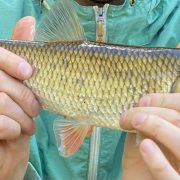
The sad state of the river was highlighted in a blog last September (click here), so it merited another visit. It is good to report an obvious improvement, not least because fish are back, including chub, which can sometimes be seen swimming near the surface of rivers and streams, often in large shoals. One was caught, and then returned – a good indication of better water quality, though there are two outlets pouring into the river that seem to contain some oily substance.  As they grow, chub become aggressive predators, eating fish, frogs and even small mammals. Hard to believe when you look at the little chap in the photo.

the predatory chub

He or she must be one of the 90,000 roach, chub, and dace fish that have been added to replace those killed by pollution in 2016, when 100 tonnes of digestate were pumped onto a field and flowed into the Preston Brook, which in turn flows into the river Leadon, and more than 15,200 fish were killed in what was described as “one of the worst watercourse pollution incidents in Herefordshire in recent memory”. The new fish were all hatched and reared at the Environment Agency’s national fish farm at Calverton in Nottinghamshire, which is funded by the proceeds of fishing rod licence sales.

Autumn swirl charger @ Palais des Vaches

There are almost 1500 river systems, comprising over 200,000 km of watercourses in the UK but, in a global context, our rivers are mere streams – being characteristically short, shallow and subject to considerable man-made disturbance, as we know from recent news about water companies releasing sewage and other waste whenever the system is deluged after rainfall (Rain? In the UK? Get away and stap me vitals!).

Autumn vase @ Palais des Vaches

One of these rivers is the Beaulieu River in the New Forest, which rises near Lyndhurst and flows into the Solent, passing through the beautiful gardens at Exbury. More than 100 years in the making, these gardens, designed and curated by the Rothschild family, have a spectacular collection of landscaped woodland, herbaceous, contemporary, formal and wildflower gardens.

Autumn Reds vase

Now, dear reader, as you probably know, a “meander” is a small winding river or stream, and, as a verb, can be used to describe a winding or intricate course suggestive of aimless wandering. Which is what I have done in order to get to this point. The Exbury estate, through which the river passes, also has the Palais des Vaches gallery, a former milking shed now transformed into a strikingly handsome gallery and show area. No thumb-twiddlers, the Rothschilds planned and rebuilt it during the Covid lockdown, and it now has had a further extension added.

interior of the Palais

Autumn Glory is the title of the show opening on Saturday 24th September, and Peter Arscott Ceramics is exhibiting there along with painters, sculptors and textile artists.

Peter Arscott ceramics on show

Possibly as a result of the long hot summer we have had, the apple harvest is early this year in Herefordshire. This means friends and neighbours will be desperately going round offering large bags to anybody they meet, in the hope that this will help with the glut. Other than freezing them, drying them, turning them into puree, or using them to throw at squirrels, any interesting and creative ideas that deal with large supplies of apples will be welcome.  Even leaving them on the garden wall for commuters to take before getting to the station makes few inroads.

In keeping with the tenor of this blog, here is a verse from Rupert Brooke’s “Heaven”:

Fish (fly-replete, in depth of June,
Dawdling away their wat’ry noon)
Ponder deep wisdom, dark or clear,
Each secret fishy hope or fear.
Fish say, they have their Stream and Pond;
But is there anything Beyond?….

You can read the rest by clicking here.


song of the nightingale, buzz of the fly

May view of Ledbury

A celebratory walk was needed after a successful glaze firing. The view from Bradlow Knoll down towards Ledbury this May afternoon was grey and cloudy. You can see in the distance the white shapes of the plastic used in the speeded-up cultivation of strawberries for the voracious soft fruit market, and, nearer, the sheep  which will end up on our dinner plates. Land maintained and exploited for the consumer’s benefit, which has made our landscape what it is today. This applies to Frith Wood as well, where dead trees are removed or left on the ground to encourage wildlife. This tree was 57 years old – I counted the rings.

A well-maintained wood.

It clouded over very quickly and started to rain, so it was dark walking in the wood, and there was little birdsong. However, it was not as dark as a few weeks ago when my daughter and I found ourselves with thirty others tiptoeing through Highnam Woods near Gloucester at midnight.
A walk through the woods at night vase

 It was pitch black. Not a sound could we make, no squeaky shoes allowed, or noisy clothing, no flashlights to be used, only the vague shape of the person in front to guide each of us in single file until we came to a small clearing and very carefully sat down. We had previously gathered around a campfire to eat, drink and listen to the environmentalist Sam Lee, who was leading us into the trees with one purpose only: to listen to a nightingale sing.

Nightingale. Photo: Carlos Delgado

Unlike the continent, the UK is seeing the slow disappearance of the bird, due to farming and land management activity, but primarily to the lack of thoughtfully maintained woods like Highnam, which is owned by the Royal Society for the Protection of Birds, and is a jewel, a remnant of ancient woodland that is carefully managed in order to keep a balance between mature trees and traditional coppice.

Doodle vase just out of the kiln.

Our nightingale sang his heart out, though not for us. Only male birds sing at night, in order to woo the females – if you hear one still singing at the end of Spring, that means he didn’t get the girl and he’ll be a Summer bachelor. Ours was a Pavarotti, with the most amazing technique, and the sound was clean and clear and strangely affecting. Click here to listen, and if you are interested in going on a Nightingale Walk next Spring, have a look at the Nest Collective website here.

Posture vase

From beautiful sounds to irritating ones: is it me, or are the flies out early this year?

They keep zooming into the studio uninvited, hurling themselves against the windowpanes again and again, and buzzing at a particular pitch that keeps you from concentrating. Eventually you spend too much time trying to swat them, unsuccessfully, and getting more and more frenzied and unfocused.

Fl-eye view

Like most people, I know flies have those compound eyes which allow them to see what’s coming towards them no matter at what angle or speed, so that by the time they’ve swerved the blow of a rolled-up newspaper, they’ve had time to read the print. Ok, so flies are important pollinators, second only to the bees, but house flies, commensal with humans all over the world, spread food-borne illnesses. And they are an annoyance especially in some parts of the world where they can occur in large numbers, buzzing and settling on the skin or eyes. Did you know, and I’ve looked this up, that the fly’s taste receptors are in the labium, pharynx, feet, wing margins and female genitalia, thus enabling it to taste your food by walking on it?

Research on your behalf also uncovered this: the Sardinian cheese casu martzu is exposed to flies so that the digestive activities of the fly larvae soften the cheese and modify the aroma as part of the process of maturation. Banned by the European Union, the cheese was hard to find, but the ban has been lifted on the grounds that the cheese is a traditional local product made by traditional methods.  And why not? The sustainable food of the future is the insect.

Swat vase

Do flies, do insects, have much to do with the history and development of ceramics? Not as far as I know, this is just another long and rambling lead-in to my latest batch of vases out of the kiln. I think you’ll agree that the piece above has been influenced by fly-swatting.

Hello vase

From bird song to buzzing to mooing: more PCA ceramics at the Palais des Vaches in Exbury, where you can also see a unique coffee table made with tapering beech legs, the top being sealed, and hand painted with acrylics. Three layers of heat-resistant varnish ensure that hot mugs of coffee will not mark the surface, though coasters are recommended. The surface is easy to clean.  It could be described as a horizontal painting on four legs, and certainly you get a lot of pleasure from simply looking down on it and enjoying the colours

Unique PAC hand-painted table at the Palais des Vaches

Other work at the Palais includes this large sculptural piece:

Porthole vase

And to finish, a poem from childhood:

“Will you walk into my parlour?” said the Spider to the Fly,
“‘Tis the prettiest little parlour that ever you did spy;
The way into my parlour is up a winding stair,
And I have many curious things to show when you are there.”
“Oh no, no,” said the little Fly, “to ask me is in vain,
For who goes up your winding stair can ne’er come down again.” (Mary Howitt)

Ruby my Dear vase at the Coastal Gallery

Well, I couldn’t resist finishing off with John Keats:

“Darkling I listen; and, for many a time
I have been half in love with easeful Death,
Call’d him soft names in many a musèd rhyme,
To take into the air my quiet breath;
Now more than ever seems it rich to die,
To cease upon the midnight with no pain,
While thou art pouring forth thy soul abroad
In such an ecstasy!”

Spring ceramics

This blog usually begins with a view from Bradlow Knoll looking down towards Ledbury, accompanied by text complaining about the effort required to get to the top. This time, for a change, behold the view looking up towards the Knoll – disappointingly, the hill does not look so challenging  in the photo, but it is a slog. Honest.

Spring vase

This is meant to be a ceramics blog, but I sometimes find myself meandering away from the subject and end up finding out about things I had little or no idea about. Then I feel I have to share it all with you, dear reader. This time I delved into the world of rats because they are so evident outside and inside the house, but before I deal with them, if the following comes across as a Latin lesson, please forgive me:

image Wikipedia

Equinox, the time or date (twice each year) at which the sun crosses the equator, when day and night are of approximately equal length (22 September and 20 March). Either of the two occasions in the year when the centre of the sun is directly above the equator, and day and night are equal in length, thus “equi” (from Latin “aequuus”, meaning equal, and “nox” meaning night). In case you are asking, the solstice is the longest and shortest day of the year.

Persephone – Greek goddess of Spring (photo Wikipedia)

In the northern hemisphere, the vernal equinox marks the first day of spring and occurs when the sun moves north across the equator – “vernal” comes from the Latin word ver, meaning “spring.” Here endeth the lesson. Why am I telling you all this?

Spring vase at Palais des Vaches

Because the Coastal Gallery in Lymington  is collaborating with the Palais des Vaches in Exbury (Hampshire) and putting on a show of paintings, sculptures and ceramics to celebrate the Spring Equinox. The private view is on Friday 18th March, 5 – 8.30pm, and the exhibition continues Saturday 19th – Sunday 20th March, 11am – 4pm. Otherwise it is by appointment only.

Close-up of Spring animals on vase

The pieces commissioned are meant to reflect abundance, green shoots, and Spring in general (thus the images of bunnies, hedgehogs and birds in parts of the vases, don’t know what the teapot is doing there). Do have a look if you live nearby.

Thicket vase at the Palais des Vaches

Ah, Spring. When air temperatures rise, life is primed and ready to go. Sap is rising, supplying the energy needed to grow new shoots and leaves. Animals become active — arising from winter sleep, migrating, breeding.

Tendril vase at the Palais des Vaches

However, rats do not have a real breeding season.  if they are all warm and tucked up in your cellar or attic, that is the perfect setting for continuous breeding. My research shows that a female rat can be ready to re-conceive immediately after giving birth. At home they can be seen running between the yew tree and the cellar, lurking behind raised beds and sometimes climbing up and having a go at the bird food. They can often be heard scratching behind the skirting boards in the sitting room. I say “they” now, because in my naivety I first thought it was just one rat called Eric.

Eric – enormouse

I have an air rifle and I admit I took a shot at Eric, and thought I’d got him, but he soon reappeared, mocking me with his tubby gait and air of nonchalance. Shocked that I could even think of taking a life, even a rat’s, my colleague, the poet Brenda Read-Brown, wrote a poem, as a result of which I have pledged not to shoot Eric:

Making a living (by Brenda Read-Brown)

The shotgun’s missing from its mount.
It’s by his side, he says, ready
to kill the rat. It’s a big one, he says.
And in the basement, a sleek intelligence
plans a raid, sets the alarm
for its nightshift, behaves
like early man, who had to hunt
to live; does what it can
to keep its fur from red spatter,
its guts intact and full,
its family fed.
It only wants the things that matter:
cast-off crumbs of bread;
a roof over its head.
It’s willing to work, to creep,
to hide and run.

The man leaves his post today;
buys his food, takes his car through a wash
crewed by thin-faced strangers
who won’t meet his gaze;
men willing to work, to beg,
to hide and run.
Men who know the meaning
of a gun.

And now a complete change of subject. Scribble is an online venue for flash (very short) and short fiction. This eclectic journal is open to literary fiction and all fiction genres with a literary approach, and has published a short story called Last Outing by yours truly – if you’d like to read it, click here. It’s about an old aunt being taken out for lunch.

Any further developments regarding Eric will be reported. For now, he is just a fortunate rodent unaware of the power of poetry to change lives, even small furry ones.


Eunice done me wrong

Storm brewing over Ledbury

The consequences of humans evolving bipedalism from a body designed to walk on four, not two, legs, include the effort required to climb a hill without running out of puff. This is what walking up to Bradlow Knoll entails – back pain, breathlessness, and aching thighs, but the reward awaits, no matter what the weather: the view down to Ledbury and beyond, though it looked ominous and buffeted by winds.

Final hurdle

But it would be easier on four legs. The fact that it is a “knoll”, which means low hill or hillock, somehow adds insult to injury. It feels more like a smallish mountain, or at least a steep hill. What’s more, when you make it to the top you are ambushed by the fifty extra steps required once in the wood to get to the very top.

Two legs good

Bipedalism. It seems that thousands of years ago our pelvis shortened, the thighs became longer, the angle of the thigh bone changed to point inwards allowing the knees to come together under our centre of gravity, allowing us to stand for a long period without getting tired. The spine curved into an S-shape helping to support the head and creating balance. Oh, and we lost our body hair.

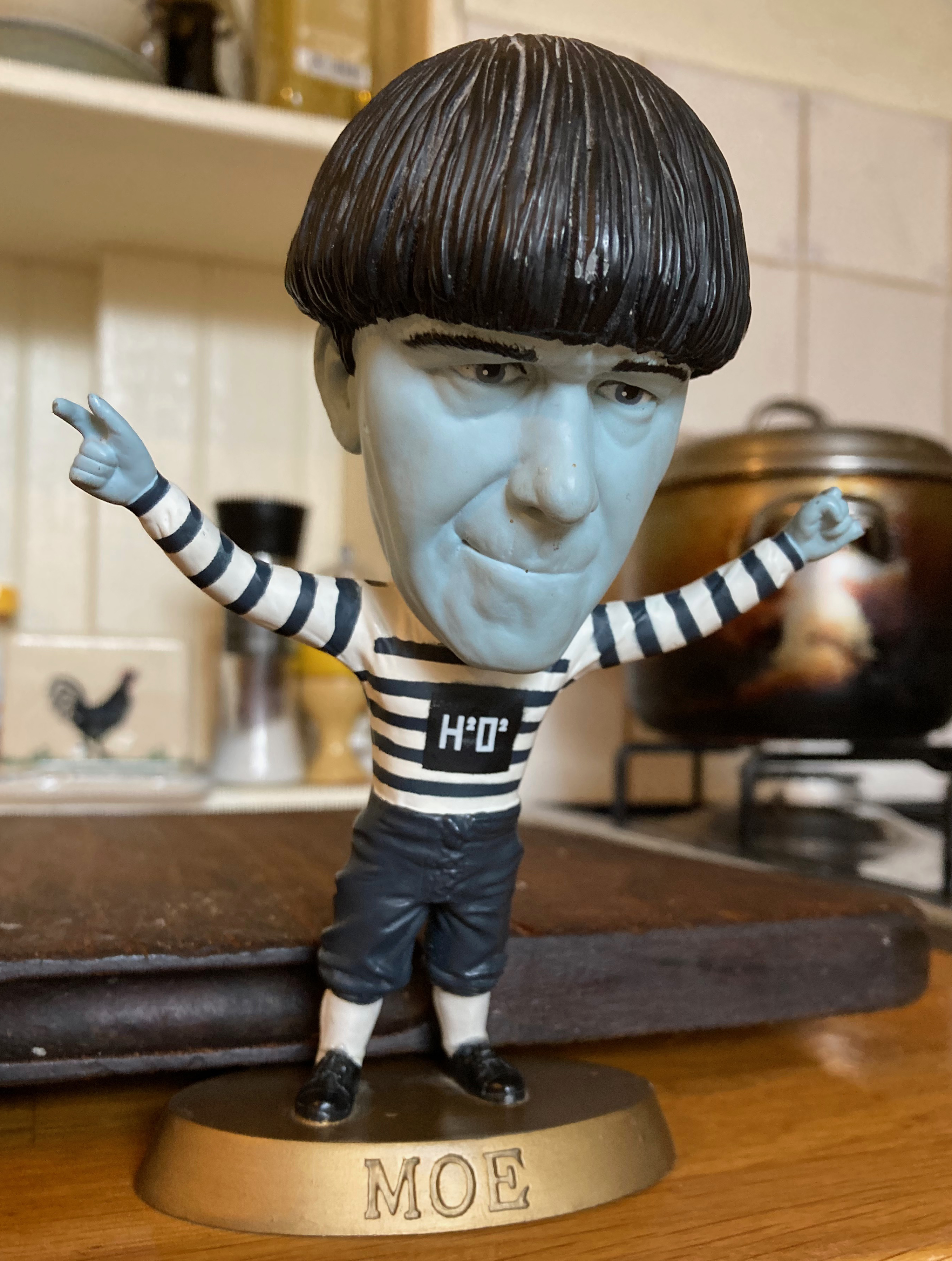
Moe

The disadvantages of standing on two legs?  More pressure put on our spine and on our knees. The vertical position of the spine makes it more prone to back injuries. It’s also much harder on the heart and its vessels to pump blood to the entire body. And the big heavy head our spine has to carry, no wonder we lose our balance and fall when we get older.

Bighead

In the case of Moe, my bedside table mascot, he can only stand upright if his feet are wedged at an angle behind the table, otherwise his head, being too heavy for the design, forces him to collapse. Who is Moe? Those of us of a certain generation may remember Larry, Moe and Curly Joe who had us laughing when we were six or seven. Not sure their vaudeville humour has survived with time, but there is a certain nostalgia seeing them poke each other’s eyes and indulge in slapstick. Click here for The Three Stooges .

Fingers – one of the benefits of bipedalism

On the other hand, walking upright frees the hands for carrying your important tools like your mobile phone, for social display and communication like when you feel the need to welcome or insult somebody, but, most importantly, for making pots out of clay – there’s no doubt that would be difficult on all fours. Having fingers also helps.

Eunice did it

The fragility of the human frame and what it has to put up with (stress, weight, temperatures, balance) leads me, of course, to ceramics. All this was uppermost on the day of the climb to the knoll. It was cold and windy but not yet a storm. That was to come a few days later in the guise of Storm Dudley, very much a milksop of a squall compared with his successor a few days later – Storm Eunice. Presumably the next one will be a male name starting with “F” – Fred, Finnegan, Fernando, Finbar? Well, while writing this, Storm Franklyn blew in and is at the moment playing havoc with the tree in the garden. The news says there’s another on the way, and it’s called Gladys. Dudley, Eunice, Franklyn and Gladys – sounds like a polite tea party at an old people’s home.

Large Block vase


Large Block vase stress fracture

It was Eunice who knocked over a big garden vase, but sometimes it is the potter who is the culprit, as in the case of the large block vase. By not allowing its thick stoneware time to dry slowly and completely, sections of it dried at different times creating stress fractures that only became visible after firing. It is now useless and will be relegated to garden duties.

Big Spring vase

Big Spring vase

Sometimes the fractures are made when the potter is manipulating the clay too much, as when adjusting a handle onto the body of a vase, which is what happened with this Big Spring vase.

Big Spring vase close-up

Still on the subject of bipedalism, cows have four legs, as is well known, but not feet. They have hooves – hard, good for long distances. Good in almost any environment except sharp rocks. Very little maintenance needed. I mention them because Arscott Ceramics will be exhibiting some work at the Palais des Vaches near Southampton opening on 18th March, in collaboration with the Coastal Gallery. More about that in the next blog, but if you are nearby on the day do pencil it in your diary.

Tendril vase at the Palais des Vaches

Why do cows have hooves? Because they lactose.

I wonder if at this rate we’ll get to Storm Zebedia this year? Anyway, keep well and don’t forget to pencil in the Equinox exhibition at the Palais, which is in Hampshire, and as everybody knows, in Hertford, Hereford and Hampshire, hurricanes hardly happen. So you’d be safe from the wind.


December, happy outcomes

wintry

Strange things have been happening at the studio lately. Unexplained disappearances of ceramics, unfamiliar sounds coming from the ceiling, doors being left wide open at night and the kiln not firing on all cylinders. I decided to go for a walk up the hill to Frith Wood to blow away the cobwebs.

Storm Arwen

It was the usual steep climb up to Bradlow Knoll. The view was bathed in a wintry half-light but there was no wind as there had been these last few days with Storms Arwen and Barra which managed to blow a few trees down along the path deep in the wood. Barra (fair-headed) is named by Irish weather forecaster Met Éireann. Arwen is Welsh Celtic for “good”. The next one will be named Corrie, then Dudley, Eunice, Franklin, Gladys, and so on, according to a “name a storm’ project open to the public. What they all have in common is an ability to blow down trees and embarrass the big energy companies.

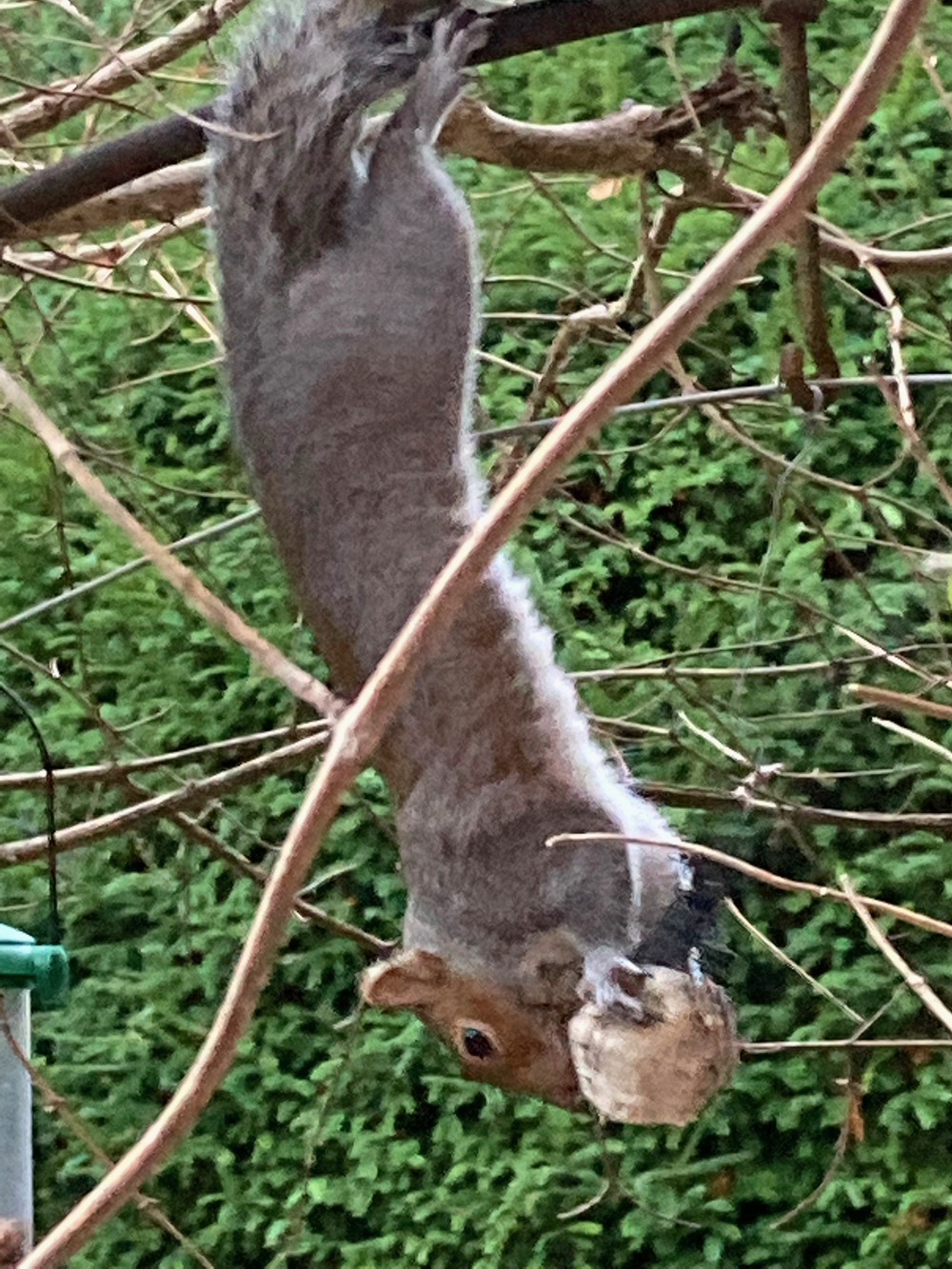
Fatball Slim

The only noticeable activity in the woods were the squirrels chasing each other up and down trees. One of their cousins lives in our garden and has been caught eating the fatball left out for the bluetits, but here in the Frith they seem to feed mainly on chestnuts. But I was too concerned with the studio to take in the flora and fauna.

I believe that I was so burdened by these thoughts that I went to bed that night and muttered the magical words that all potters do when they seek help; “hydrous aluminium phyllosilicates.” I fell into a deep sleep but awoke when I felt the presence of someone else in the room. It was, of course, St Spyridon, patron saint of potters, former shepherd and Bishop of Trymithous (c. 270 – 348), responsible for marketing at Peter Arscott Ceramics, who you may remember from a previous blog (passim December 2020).

Marketing strategy meeting

I knew it was him from the strange shepherd’s woven straw hat and the smell of sheep.

“This better be good”, he said, “you do realize I’m only for emergencies, don’t you?’

I nodded and told him about my worries. He rolled his eyes in a “seen it all before” way and took a cigarette out of a pouch and lit it, inhaling deeply.

“You don’t mind, do you? I really needed one after what I’ve just been through – a game of poker with Freud, Mohamed Ali and Mother Teresa, and they were fleecing me. Lucky you summoned me.”

Cecilia Colman, London

He blew the smoke up towards the ceiling, and continued:

“All your problems will be sorted by tomorrow. They are of little consequence compared with your pathetic marketing strategy however, which, despite my best advice, I see you have ignored.”

“The blog is still a little text-heavy,” I admitted.

“The more images, the lighter the blog. Vision trumps all senses; the human brain can process entire images in as little as 13 milliseconds.”

Taken aback as ever by the modern approach of this two thousand year-old holy man, I could only shrug and ask:

“So, how are things up in… Heaven, or wherever it you dead go to?”

“Fine, thank you. I’ve joined a club since I last saw you. It’s one for patron saints only, quite exclusive. We meet and swap stories. Why, last time St Blaise was telling us how he became patron saint of those with throat troubles after he cured a child who was choking on a fish bone.”

“Interesting. Anyway, you say the kiln will fire OK tomorrow?”

“Well, you might have to get an electrician for that.”

“Oh, I hoped you’d just snap your fingers and fix it.”

“I’m not a magician, you know, I’m a patron saint.”

“I’m disappointed.”

“I can get St Eligius to recommend one.”

“Who’s he then?”

“St Eligius? He’s the patron saint of electricians.’

“OK. Thank you. By the way, are you coming to the company Christmas party?”

“Er, no, I can’t. I’d be breaking the rules.”

“Covid?”

“No. We can only appear directly to one earthling at a time.’

“Ah,” I said, “but the other two guests will be Thelonious, who is the pottery pugmill, and Ziggy, who is the studio spider in charge of security, so strictly speaking …”

“Sorry, a spider is still an earthling.’

“OK.”

“I must go now. We’re putting on a Christmas panto and there’s a rehearsal.  Socrates will be surprisingly good as Aladdin, you know, and James Dean is playing Wishee Washee and John Wayne is Widow Twankey.”

Before I could ask him what part he was playing, he disappeared.

In the morning I had to face the inevitable accusations from my wife of smoking in bed and allowing sheep into the house, but as I entered the studio, I saw that the squirrel was running along its roof, which explained the unfamiliar sounds coming from the ceiling, and when I turned the handle of the door, I saw the latch was stuck, which explained the door always being open.

lost but now found vase

I went to the shed to get a screwdriver and saw in the shadowy depths along the bottom shelf all the “missing” ceramics that I had stored away and then forgotten during the Covid stockpiling. And when I opened the kiln to see the result of a glaze firing, I saw that everything was back to normal, the clock on my digital radio flashing away telling me that there had been a power cut which had gone unnoticed by me, which is why that previous firing had been a disaster. Good old Spyro – always right, in the end.

Happily just out of the kiln

One of the vases that came out of the kiln has some cheery colours that chime with the seasonal good wishes. By now in a celebratory mood, and in honour of St Spyro, I decided to do some serious research into a cocktail that might do the same.

a St Spyros – save the olive till last

To start with you need a bottle of Mastic Tears, a liqueur made from mastiha trees near Olympoi village, one of the mastic villages, on the island of Chios. It was given to me by my niece’s Greek partner, and I accept that not everyone has a bottle in their cellar. A generous slug in a tumbler, a smaller slug of sugar syrup, ice, some soda, a dash of orange bitters, a sprig of thyme and a black olive. I’m calling it a St Spyros. It’s quite interesting. The olive is particularly good at the end.


Peter Arscott Ceramics wish you all a happy Christmas. And If you live in or near Worcester, London, Chichester, Hove, Lymington or Cambridge and you are looking for that original gift, then why not drop in at the galleries whose names caption the ceramic images scattered throughout this blog?

Thelonious the Pugmill

Ziggy, Head of Security

Cheers. Here’s looking forward to 2022, and hoping it surprises us by bringing pleasure, gladness and delight. After all, the number 22 indicates that your angels have your back and are ready to help you in whatever way they can (apparently it is an “Angel Number”).

kalá Christoúgenna


November news

Potter Pete’s foggy day

Sitting on CJ’s bench and looking down at Ledbury from Bradlow Knoll was an autumnal experience in that it was misty, mellow and mushroomy, and there were no sheep bleating and no birds singing – everything was wrapped in a dull light that seemed to smother any sound, as well as the view. It is pleasing to see how a well-worn path has established itself and forked off the main path towards the bench – obviously it is well used, and the many backsides will add a patina of polish to the wood as time goes by.

fly agaric

November is a little late for mushrooms but there are still a few hanging around in the woods daring you to pick them, and there is that strange damp, rotten-wood mushroom whiff that appears at this time of the year. The one that stood out was a Fly Agaric that had had its edges nibbled by something – strangely, since they are somewhat poisonous, specially to insects. In northern European countries it was used to keep flies off the milk, thus the name, and it can induce psychedelic episodes in those shamans and hippies who ingest it.

Old Man’s Beard

Lots of ‘Old Man’s Beard’ along the path, named after the fluffy seed heads that can be found in the autumn and early winter, it’s a wild clematis that produces a mass of scented, white flowers in late summer and is pollinated by bees and hoverflies. Owing to the fact that the dry stems draw well and do not burst into flame, cigar lengths were smoked and hence it is also called Smoking Cane. But it is best known as Traveller’s Joy.

The main gallery at the Oxmarket, Chichester

And thus, dear reader, this seamlessly leads us on to the joy of travelling along the south coast on the A27 delivering my ceramics to some wonderful galleries, two of which we have visited before in this blog. However, Chichester provides a new outlet in the wonderful Oxmarket Gallery, a medieval deconsecrated church which has existed since the 13th century and was used as a church continuously until the mid-20th century, when wartime damage forced its closure.

Kilter vase at the Oxmarket

It was restored and converted into an arts centre opening as Chichester Centre of Arts, later renamed Oxmarket Centre of Arts. It’s right in the middle of Chichester, with a large car park conveniently next door, and an exhibition space that is airy and light.

Flower vase at the Oxmarket

Yes, Chichester, medieval town of narrow streets and birthplace of Tim Peake, British astronaut, and of William Huskinsson MP, whose statue stands by the river Thames in Pimlico Gardens, London, opposite the old Battersea power station – a nineteenth century politician and statesman, an eminent financier, Corn Law reformist and parliamentary reformer.

William Huskinsson, National Portrait Gallery

He was struck by George Stephenson’s Rocket at the opening of the Liverpool and Manchester line, and thus one of the first casualties of the railway age. It turns out he was born a few miles from the studio, in Birtsmorton Court at the foot of the Malvern hills.

Klee vase at the Coastal Gallery

On my way to the Coastal Gallery in Lymington, I stopped off at Arundel for the first time and had a close look at the castle and Catholic cathedral which are so striking when seen from the main coastal road. The Coastal gallery now have a partnership with the Palais des Vaches gallery in Exbury, Hampshire, and are showing work there too.

The stuff one learns on one’s travels. Did you know that Arundel’s river Arun is full of mullet, which is why its residents are known locally as mullets? I am referring to the fish, of course, and not the hair style so popular in the 1970s – those of you old enough will remember that finest of all mullets, which sat on the head of footballer Kevin Keegan and no doubt added some aerodynamism to his famously speedy runs up the pitches of the UK and Europe.

Garden vase at Cameron Contemporary

Back along the A27 and to the tranquil, upmarket town of Hove to deliver ceramics to the Cameron Contemporary gallery meant driving through a crowd protesting outside a secondary school at Covid vaccinations being given to children. Many banners, much shouting and a leaflet was handed through the car window. Still thinking of my visit to Arundel, I said I’d mullet over.

Chinese willow pattern protest vase 2

Back in the studio in Ledbury, and with protests in mind, I decided to make a bigger Willow Pattern Protest Vase with the conventional images on one side and the subversive ones on the other (I made an earlier version, see March blog). The firing went well and there was hardly any warping in the arms of the vase, those thinner more exposed parts tend to be affected by the heat than the main body of a work, so it was pleasing when it came out unscathed.

Willow pattern protest vase 2 – detail

You might want to see pearl mullet swimming upstream to spawn, Admirable little creatures, bless ’em – they don’t deserve having a bad hair style named after them.

Clay is good for you

view of ledbury from Bradlow Knoll
May Hill on the horizon

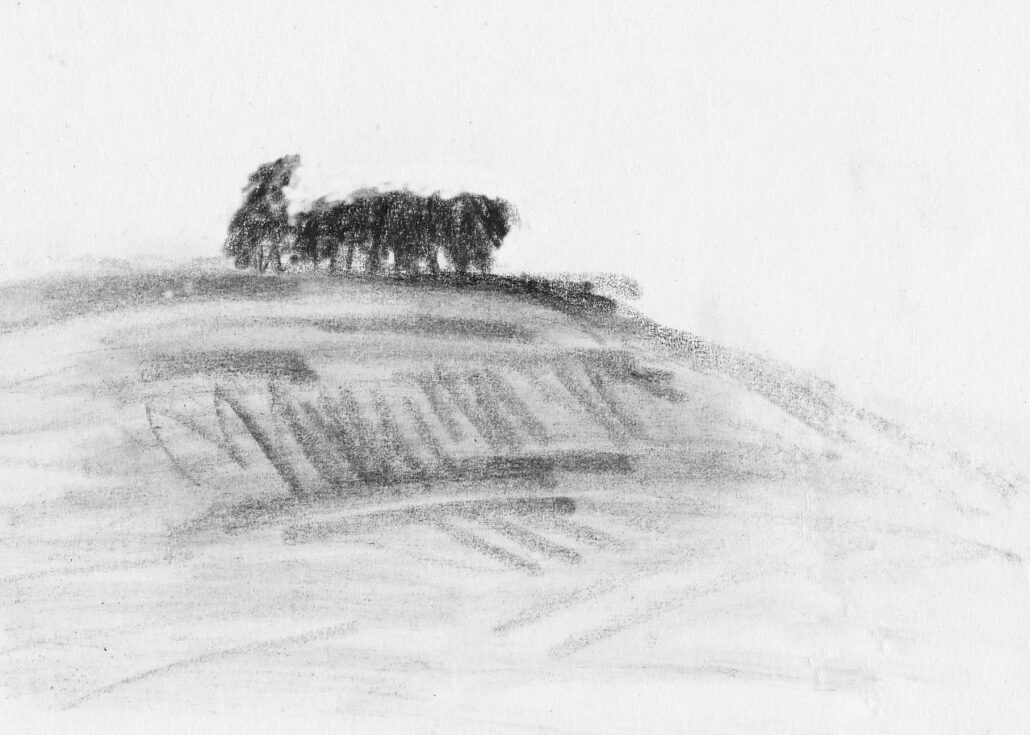
You can see May Hill on the horizon when you stand on Bradlow Knoll and look down towards Ledbury and the Cotswolds beyond. In the image you can see it slightly to the left of centre, with its distinctive clump of pines standing out from this distance like a pimple, It is where Edward Thomas wrote his poem Words, not long before Ledbury-born John Masefield referred to the outline of the pines in his Everlasting Mercy:

I’ve marked the May Hill ploughman stay

Here on his hill, day after day

Driving his team against the sky

charcoal drawing of Mayhill in Glouycestershire
Mayhill ploughman (imagined)

I don’t know about Masefield, but Thomas was certainly a great walker and I often wonder if he ever took this path. If he did, I’m sure he took it in his stride.  I am not a hypochondriac but every time I climb the hill to Bradlow Knoll to reward myself with the view of Ledbury I seem to need a longer break to recover my breath and my heart thumps away even more in protest at what I am making it do. A few days ago I sat by the top gate gasping away and thinking of how complex the machinery of our body is, and how all our bits and pieces are connected, rather like an engine – you know, the lungs draw in air and deliver oxygen to our blood, the blood circulates thanks to the heart pumping away, the kidneys clean the blood of toxins, and so on. I thought that if my body were an engine then it would be a second hand and slightly rusty ford escort given to early morning ignition problems and always needing an oil change.

image of small toy car
ol’ engine

And sometimes I feel like some ol’ engine, gone and lost my driving wheel, as Tom Rush sang all those years ago, but really it is an excuse to give you a link to the great song if you click here.

cool, dank and very quiet

And where is this going, and where is the connection to ceramics? I do not know yet, but nevertheless, and in the meantime, let me continue with our bodies, their complex needs and some of the problems to which they give rise: ulcers, sore throats, haemorrhoids, high blood pressure, allergies, for example. Well, having got my breath back, I turned away from the panorama at my feet and entered Frith Wood – cool, dank and very quiet – and came across a lot of these small mauve plants growing low to the ground. Self-heal, heal-all, slough-heal and woundwort are all common names for prunella vulgaris, and it is said to help cure all the above, as well as burns, insect bites and herpes.

prunella vulgaris

It is mainly used for sore throats, even severe ones like quinsy, which is an abscess of the tonsils. It is good as a hot tea at the beginning stages of a cold with sore throat. Apparently, self-heal tastes slightly bitter and slightly sweet with a hint of rosemary.

Are ceramics as good for you as prunella vulgaris? Well, potters are the only people, other than children, who play with mud, a base material that is malleable, sensuous and expressive, and, as a result, I reckon the feel-good factor plays a part in reducing stress. Making a clay pot and drinking a self-heal tea is a perfect combination that will lead to improving your quality of life.

dish with knife and fork with lump of clay in middle to illustrate geophagia
geophagia

Now, do not get confused and start putting clay in your mouth instead of the tea. Pregnant women sometimes crave dirt, clay or charcoal if their bodies are deficient in key minerals but geophagia, as it is called, is best avoided.

Ruby my dear – irrelevant, but I wanted some colour

Clay comes in many varieties for the potter. The type one uses depends on the firing temperature, and mine is high so I use stoneware, and because I am a slab potter, I need a certain robust quality which grog provides, tiny pieces of malachite or firesand or chamotte, which has a high percentage of alumina. Anyway, it may taste OK  but I do not even take furtive licks. Quartz, feldspar, mica and kaolinite are other minerals you may find in stoneware. Since I fire my pieces at 1275°, they are vitrified and entirely food safe once glazed, and you can then lick them without harm.

meandering tree design / Coastal Gallery

All this walking in the wood seems to have somehow crept into the vases, a fusion of Paul Klee and a meandering rambling design. This one above can be seen at the Coastal Gallery in Lymington. Click here.

do not lick

By way of contrast, there is ragwort. I came across this clump in a clearing near the edge of the wood. Ragwort is a tall erect plant bearing large flat-topped clusters of yellow daisy-like flowers. Do not lick them! Cattle and horses are particularly susceptible to its poisoning.

A type of ragwort was introduced into the UK from the slopes of Mount Etna around 1690 via the Oxford Botanic Garden where, following many years of cultivation, it  ‘escaped’ and could be found growing in the masonry of Oxford colleges and walls. During the Industrial Revolution, Oxford became a thriving railway centre and Oxford ragwort found a new habitat in the clinker beds of the railway lines that fanned out of Oxford to all parts of the country. The clinker providing the plant with a replica of the lava-soils of its native home in Sicily and, to be fair, it should not be confused with the common ragwort. I do not know which type the Frith Wood ragwort is. Perhaps Bridget of Malvern or another of you botanical savants could tell me.

stinking Bob

Please forgive my botanical meanderings. I just love the names. Herb-Robert is a quick growing plant with explosive seed pods which if allowed to flower, will spread rapidly over a wide area. Also known as red robin, death come quickly, storksbill, fox geranium, stinking Bob, squinter-pip, crow’s foot. Fabulous names.

Autumn cocktail

There was a lot of bramble about, just beginning to flower, so the blackberries will be out by September. To look forward to this I suggest a Bramble cocktail, to be made when the hedgerows are groaning with ripe fruit.  Start by squashing six  blackberries in a sturdy glass. Add 50ml of good gin, 25ml lemon juice, 25ml sugar syrup (you can just dissolve some sugar in water) and fill the glass two thirds with crushed ice. Mix with a long-handled spoon. Top with more crushed ice, a blackberry and a paper straw.

three legged bowl at Bevere Gallery. Click here

I always try to say no to gin – but it’s 42.5% stronger than me.

landscape vase

Free ceramic pieces

Hello all. Those of you who live near the studio can help yourselves to a ceramic piece if you are passing by the house. As you can see from the view from The Homend, all you have to do is climb four steps and take a vase or bowl. They are all rejects – some have hairline cracks, others are wonky , some cannot stand up straight and some are plug ugly. They are all frost proof and can be used in the garden.

Address: Oakland House, The Homend, Ledbury HR8 1AP. There will be a donation yoghurt pot – all proceeds will go to CUP Ceramic Community in Hereford

help yourself

The winner of the three legged bowl (see previous blog) identified three birds correctly: great tit, blue tit, cock pheasant. The fourth was a black cap. The winner is a Mr A.Lloyd of London. Well done.