Posts

Smile if you’re not wearing knickers.
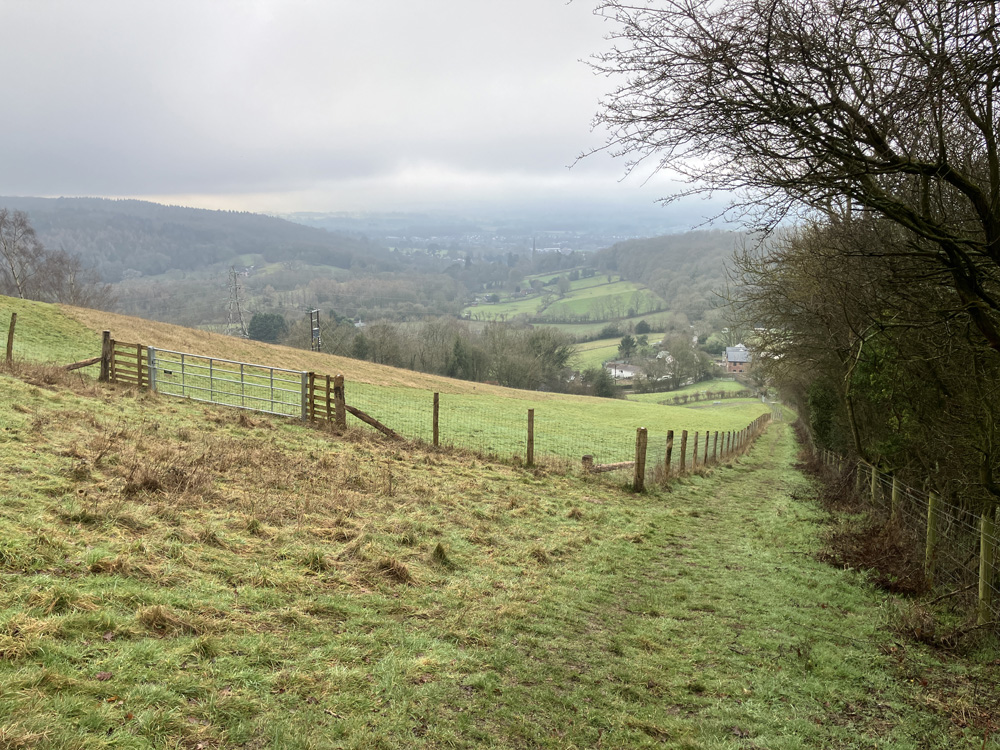
Mud. I hate walking on it but love handling it.  Followers of this blog will know that I have had encounters and slippages with the substance in the past. Nowadays I am much more prudent when while on it, and have even developed a technique for walking downhill on mud which is half penguinesque and half Chaplinesque.  Bradlow Knoll was very muddy.
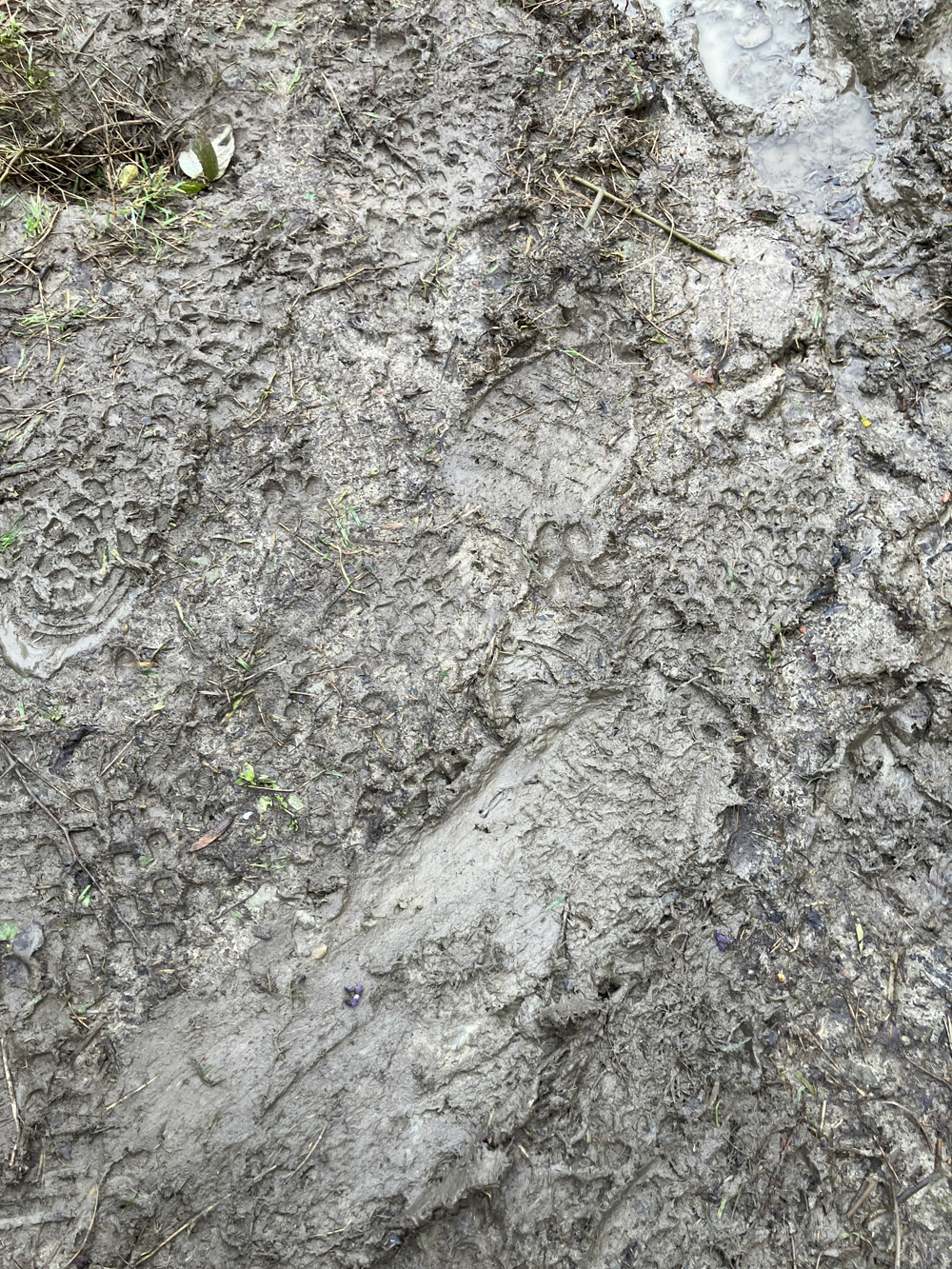
The treacherous mud of Bradlow Knoll

Apologies for the attention-grabbing title. It is only barely relevant to the subject of mud, which is what I want to talk about, but it will nevertheless justify itself at a later stage.
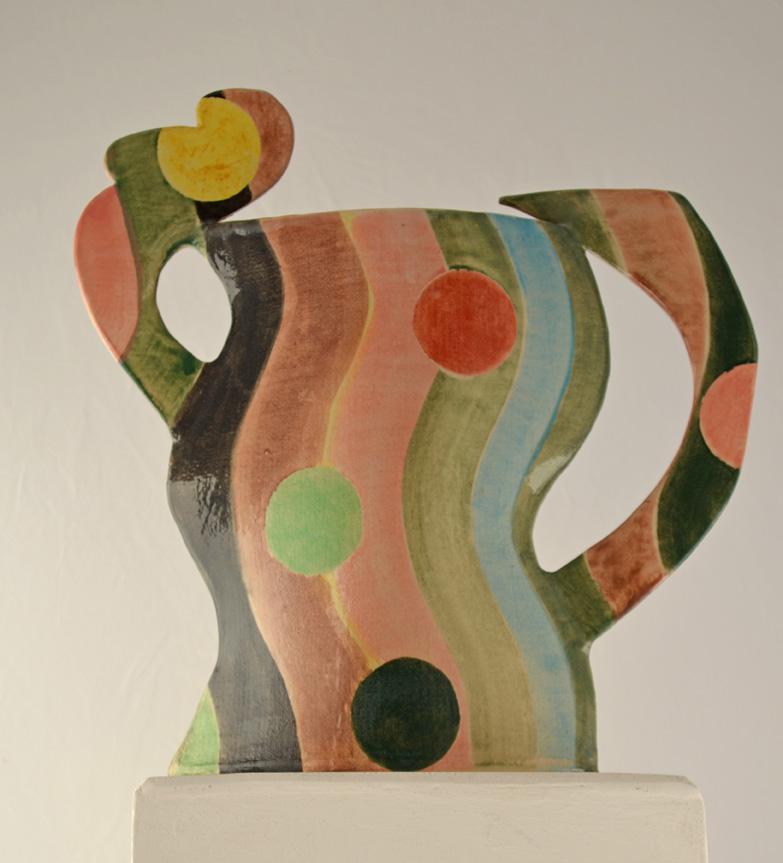
Yoohoo vase

Ceramicists make mud look good, I was thinking to myself, and what is the difference between mud and clay anyway? I was driving along a wet, muddy and slimy track in search of a tarmacked road and civilization. The Satnav was telling me it was the best route, but satnavs are not to be trusted. The sun was setting and it was drizzling. The car was beginning to slide on the gradients and long bends – there was nobody to be seen, only the pale chalky mud of what turned out to be The Ridgeway, ancient Britain’s equivalent of the M4 motorway, which was what I was actually looking for before getting into this mess.
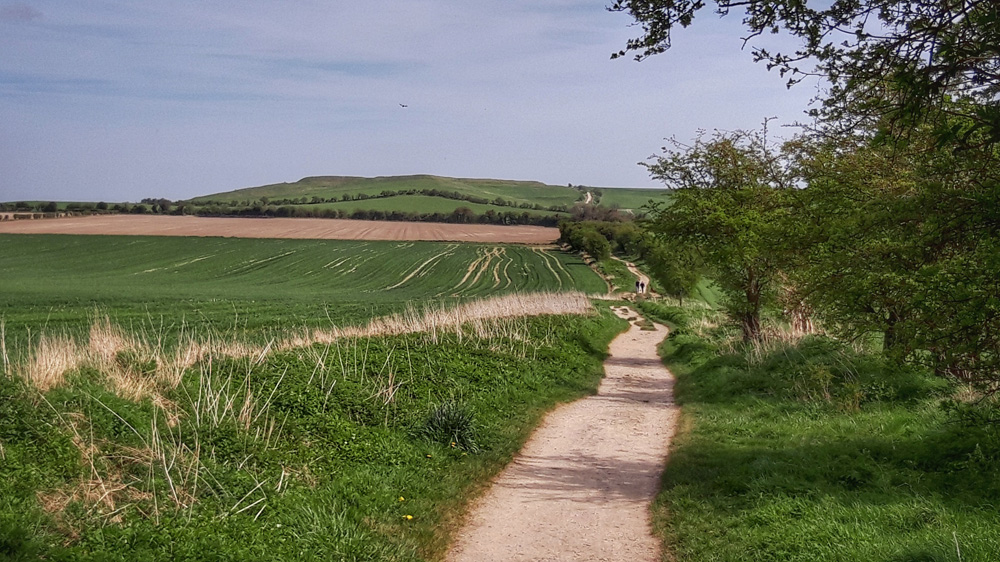
The Ridgeway – photo Jim Champion – CC BY 4.0

The track’s surface varies from chalk-rutted farm paths and green lanes (which become extremely muddy and pot-holed after rain) to small sections of drivable roads covered in gravel and crushed stone. It is the oldest trackway in UK. It is 87 miles long. For at least 5,000 years travellers have used it as a reliable trading route from the Dorset to the Norfolk coast.The high dry ground made travel easy and provided a measure of protection by giving traders a commanding view, warning against potential attacks. I, on the other hand, was only trying to get to London to visit an exhibition or two before the satnav led me into this quagmire.
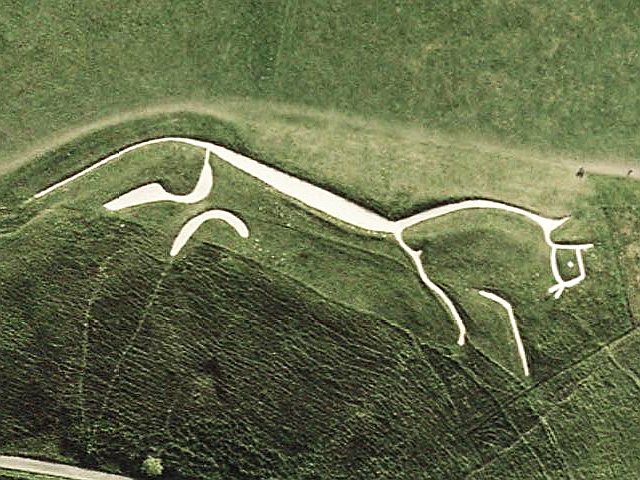
The White Horse of Uffington

Despite wondering if I was breaking the law, I had just previously enjoyed driving past the White Horse of Uffington up on its hill. This is prehistoric landscape – silt deposits show the figure was made in the period between 1380 BC and 550 BC, confirming it as Britain’s oldest chalk figure – and still conveys a timeless quality with its sloping open contours and scattered dwellings.

Before getting back to mud vs clay, I can confirm that the track is a designated bridleway (shared with horses and bicycles), but also includes parts designated as byway, which permits the use of motorised vehicles – though not between October and April, which is when I was on it. Never trust Satnavs. I did get to London.

As you probably all know by now, clay is a specific type of mud, defined by its fine particle size and mineral composition, giving it a stickiness and ability to hold shape, while mud is really soil mixed with water, but can also be used in pottery. If you dig up some mud and manage to roll it into a tubular shape and then coil it without cracking, that’s mud good enough for pottery – though ideally you would add sand and other particles to strengthen it when firing.
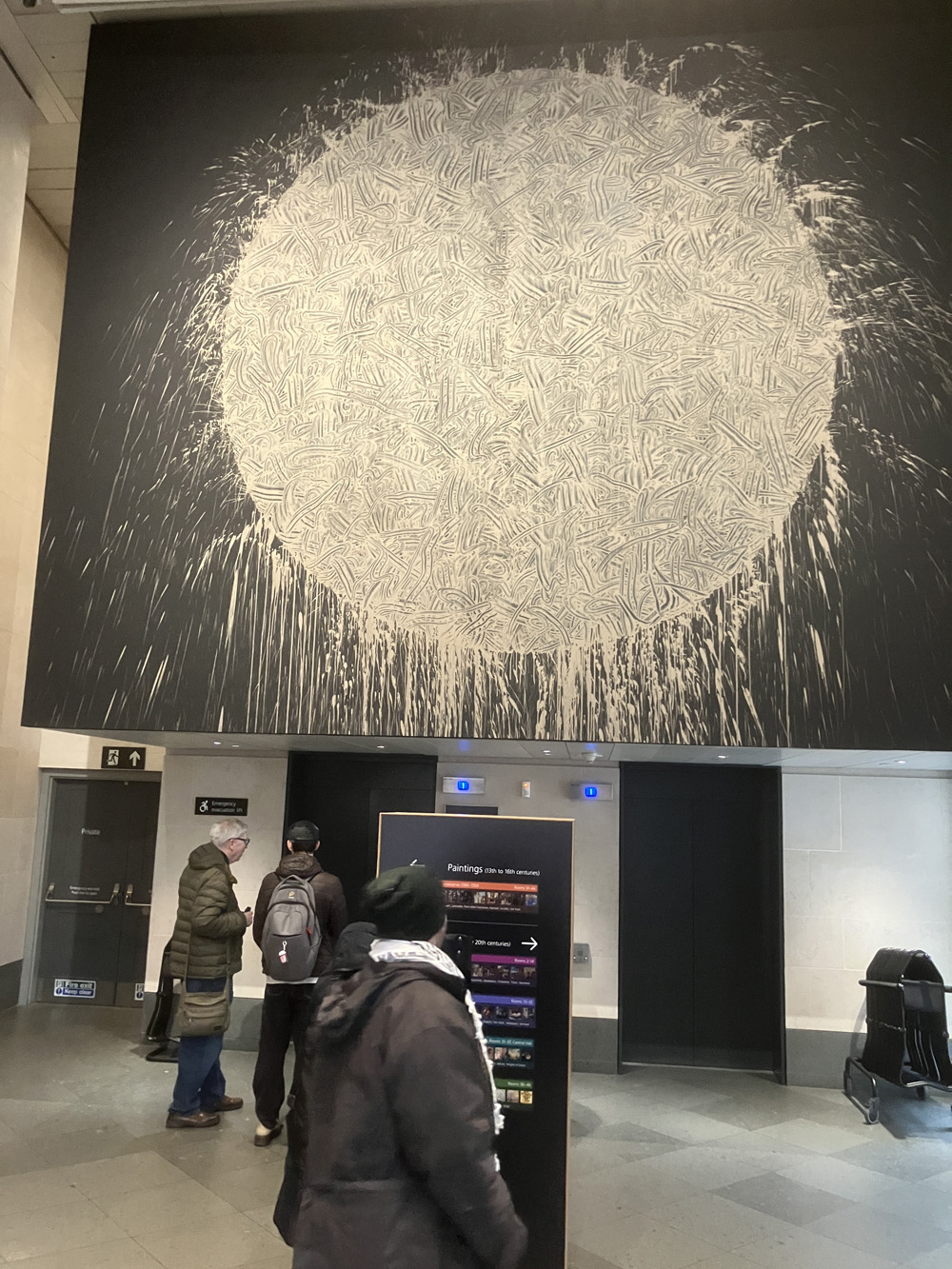
Mud Sun by Richard Long – National Gallery

Once in London, at the National Gallery, I came across Richard Long’s Mud Sun. This is made entirely of mud from the River Avon applied by hand onto a black background. The hand marks highlight the physical process of making art, and it works as a flat sculpture and at the same time reveals how it was made. It’s a very direct form of human creativity, and took me back to the ancient Ridgeway, though I’m not claiming that the marks left on the car show any creativity.
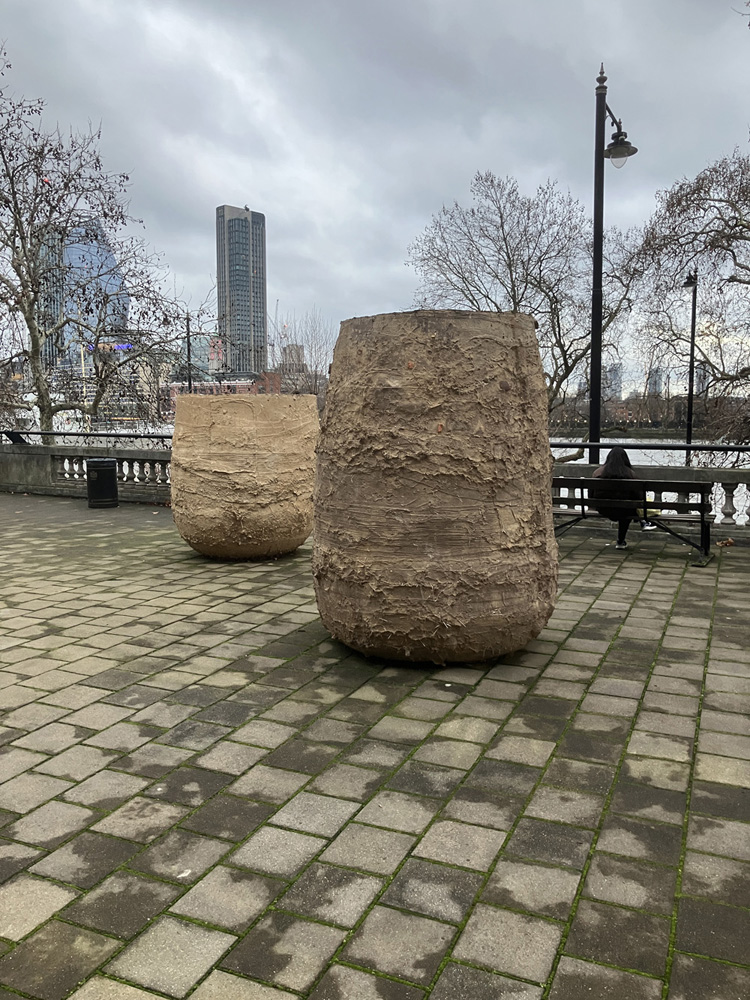
Earthen by Jodie Carey

One of the exhibitions was held on the roof of the entrance to Temple Station by the Thames. Jodie Carey’s Earthen are two enormous vessels made entirely outdoors on a hilltop using the earth of East Sussex, each piece cast in the ground and then wrapped in hand-stitched cloth and buried. Bits of soil, stone and plant roots are all part of the shaping process. It draws on the symbol of the simple pot used across the world and across time – but these are towering and imposing. If you click on the blue link above, it will take you to a very good video that explains the process.
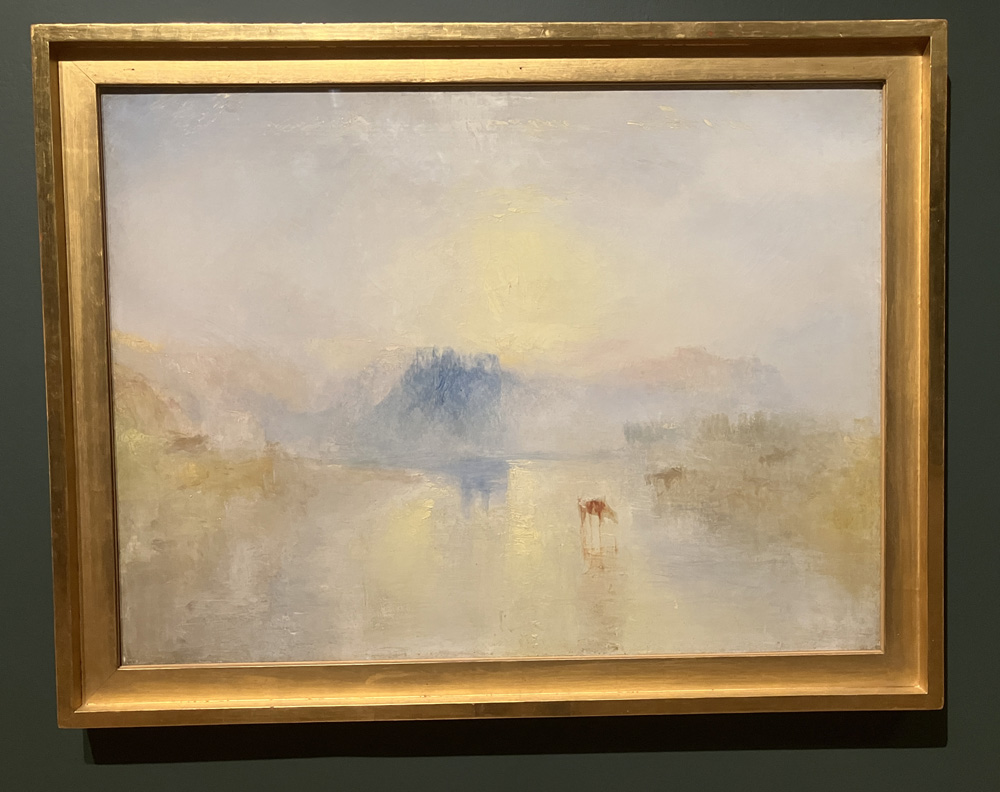
Petworth gardens by J M W Turner

The (non-mud) exhibition at Tate Britain was dedicated to John Constable and J M W Turner. They are different from each other; Constable very earthbound, a great observer of land, trees and people at work, and probably better at mud that Turner, whereas Turner tries to capture air and light, so that some of his paintings are almost abstract. His painting of the gardens at Petworth would float away were it not for the deer in the foreground pinning it down like an anchor. He is a tonalist painter, using muted colours, often a limited palette, and often wet-on-wet or glazed layers to achieve a harmonious and unified scene. He is fabulous.
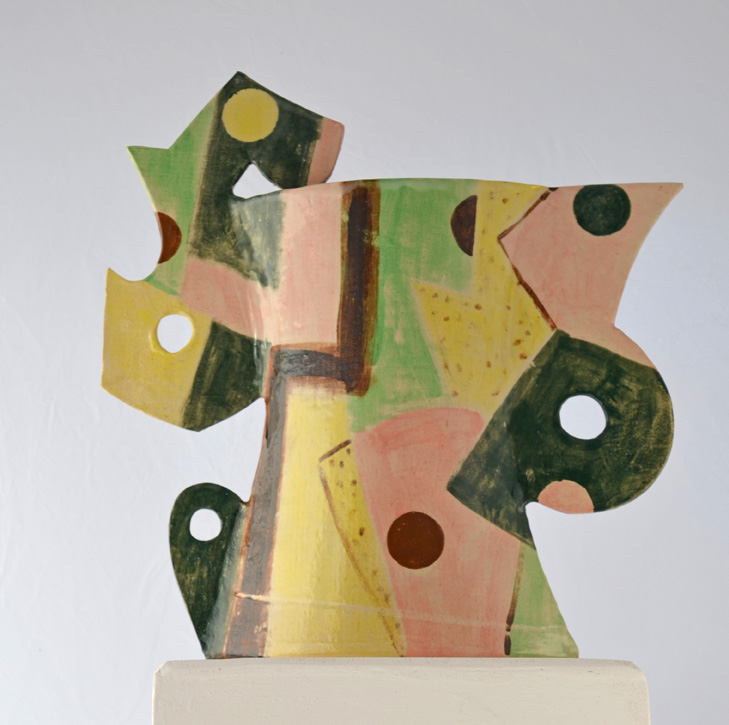
Cubist vase

At PCA we tend to go the other way and paint the pieces with contrasting tones – red with green, white and blue or brown, black dots on a lighter background, etc – not that we claim the same stature as Mr Turner; we are quite modest (more confident marketing required here, please – Spiro). We are going through a “spot” phase right now, as you can tell from the images scattered around this blog.
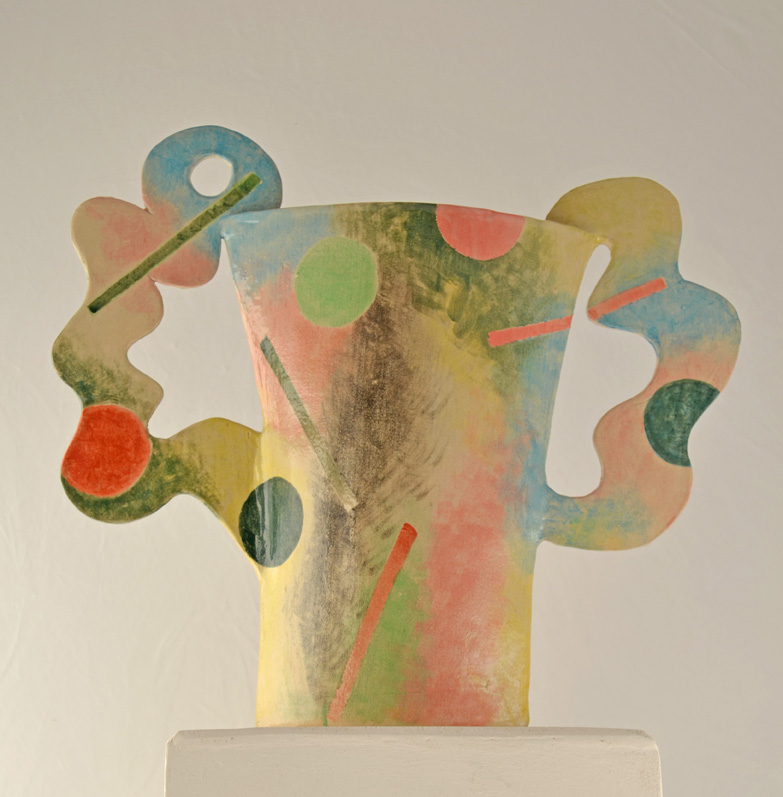
Juggler vase

The reason for this blog’s title is to lure you into reading a short story published online by Literally Stories. It’s only 990 words long, so won’t take up your time. Like a vase that isn’t filled with flowers, or a painting that’s never seen, or a sonata that’s never heard, my story will not exist unless somebody reads it. As the poet Samuel Menashe says:

A pot poured out

Fulfills its spout

You can read “Smile if you’re not wearing knickers” by clicking here.
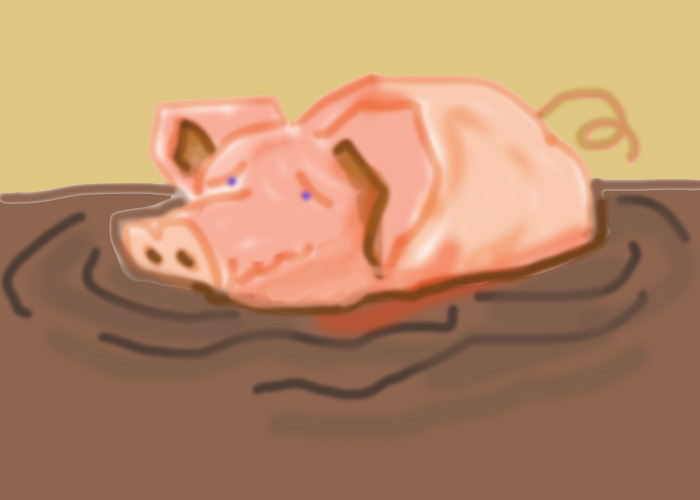
Mud facts: playing in mud makes you happier. Pigs wallow in mud to keep cool because they do not have sweat glands. Mud packs owe their popularity to vitamin E in mud which revitalises the skin. The band Mud had 14 UK Top 20 hits between 1973 and 1976, including three number ones. Other English words for mud include clabber, clauber, clart, cloom, glaur, groot, grummel, lutulence, slather, sleck, slike, slutch, sposh, stabble.
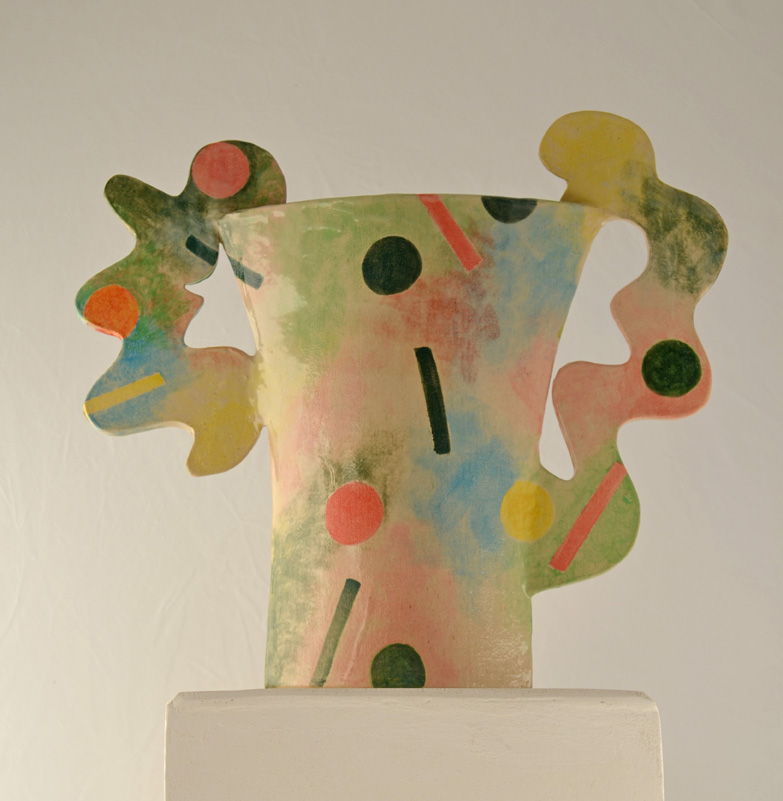
Juggler vase 2

Bad mud joke:

Paul and Vince were digging a ditch when Paul made a careless swipe with his spade and cut off the Vince’s ear.
“Help me find it in all this mud,” cried Vince. “Then they can sew it back on.”
After a couple of minutes, Paul shouted, “Here it is”, and handed Vince the ear.
“That’s not it,” said Vince, and threw it back in the muddy ditch. “Mine had a pencil behind it.”
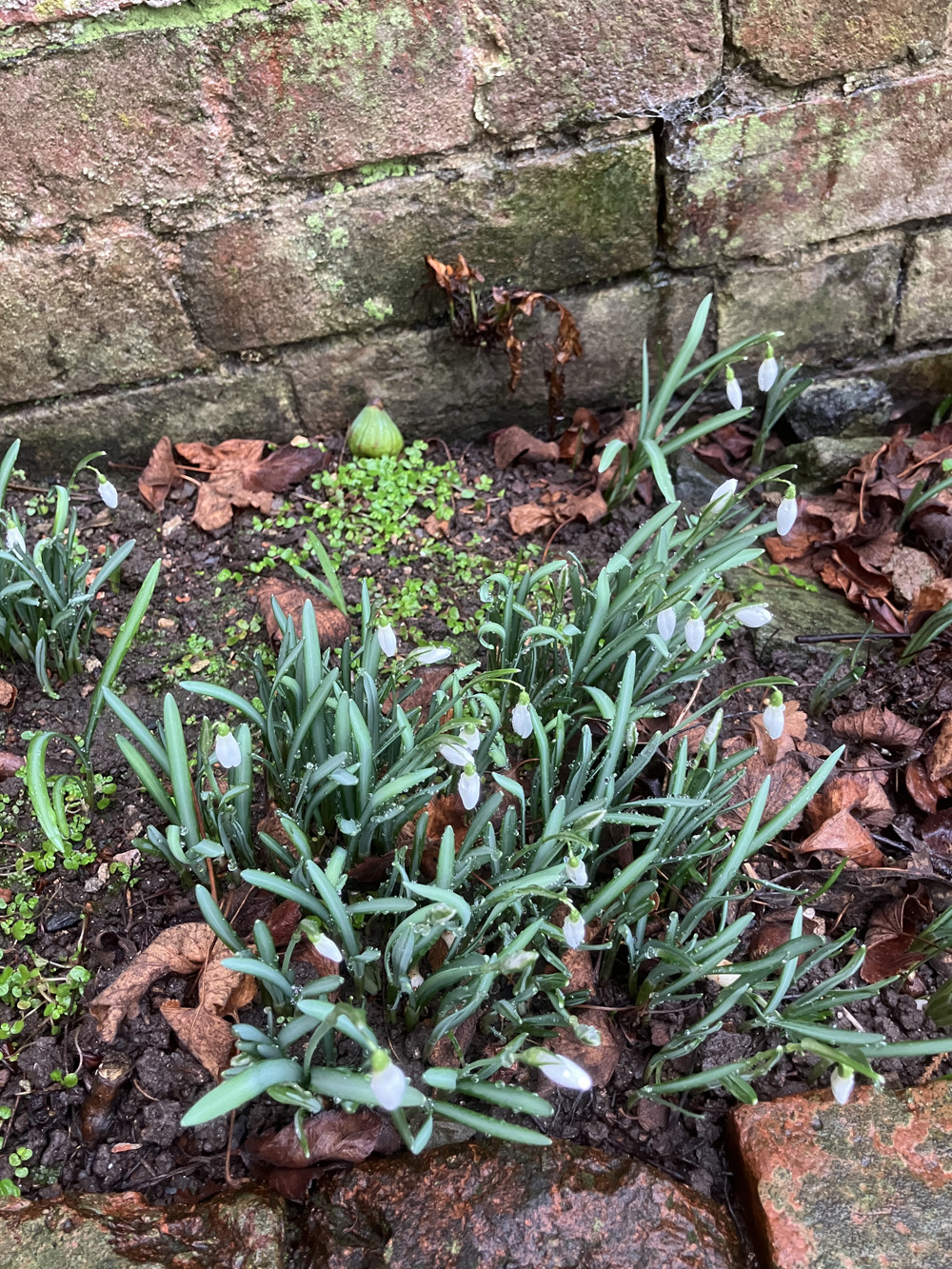
It’s OK folks – Spring is around the corner

In praise of brick

Bradlow Hill was a cold and finger-numbing walk on Sunday morning – and foggy too; you can hardly see the steeple of St Michael’s in the distance. It was quiet, except for the sound of St Michael’s bells tolling in the background. Click and you’ll get a short video, I’d stopped panting by then – you know you’re getting old when you’re told to slow down by your doctor and not the police. Too early for snowdrops or any plant to show itself, so I thought I’d include images of vases with daffodils in them – to remind you that Spring is always around the corner.

Turning a corner without looking, I stubbed my toe on a brick the other day. Instead of throwing it away in anger I picked it up and studied its surface texture and subtle colouring, its weight and the simplicity of its shape. “The humble brick is worthy of respect,” said Spiro (marketing director of Peter Arscott Ceramics), “but in Cyprus in my day (3rd Century BC) stone was deemed the nobler for building places of worship.” I was about to say something, but he raised his hand in that weird ecclesiastical way that Bishops have, and continued: “I hope you’re not thinking of comparing it to the pieces that come out of our kiln here at PAC?  I accept that they are made by hand, but they are hardly unique or one-off. The purpose of this website is to promote beautiful and interesting works of ceramic art – harping on about bricks would be like dancing en pointe in hobnail boots”.

Well, Spiro can sometimes get it wrong – after all, he is man who believes that goat’s yoghurt is the ambrosia of the gods. Anyway, the brick gets a raw deal. In my view it’s overlooked or dismissed, this man-made building material that dates back to 7000BC, discovered at the site of an ancient settlement around the city of Jericho. It’s entered our language too. We bang our heads against a brick wall, accuse the less intelligent of being as thick as a brick, or the barmy of being a few bricks short of a full load, and we come down on the wayward and mischievous like a ton of bricks.

Jericho. Photo A. Soblowski

So, in praise of bricks, here are some facts. The most common bricks are made from clay and heated at a 1000℃ – here at PAC our stoneware is glaze-fired at 1200℃. There is minimal waste in the production process as only an insignificant amount of minerals and moisture vanish during the heating process. Bricks are energy efficient because they hold sunlight throughout the day and release that energy after the sun goes down.

The indentation in the surface of a brick is called a frog, and debate rages over whether the bricks should be laid frog-up or frog-down. The minerals used to create a brick determine its colour. Red bricks are red because of the iron in them, higher temperature firings produce darker coloured bricks, and a London brick is yellowish because of the magnesium contained in the brick earth.

The Ledbury viaduct

The other (good) reason for talking about bricks is that there’s a new path inaugurated in Ledbury which allows you to walk under and alongside the old railway viaduct. Up close it’s a beautiful structure, satisfying because it’s both pleasing to the eye as well as practical – in terms of design, a perfect example of something built the way it was in order to fulfil its brief: to carry trains over a low dip of meadowland. Its function is its beauty.

Skew bridge over the Hereford Rd

It was built by the Colwall engineer Stephen Ballard (1804-1861) and was opened in June 1861. His brother Robert Ballard made the five million bricks used in the 19-metre high, 31-arch construction on site, or rather, his workers did – it would have been too much for one pair of hands. The result was that brickworks sprang up around Ledbury to cope with the task of providing the material to construct the viaduct. While digging the cutting by the station, Ballard’s workmen came upon the Silurian fossils of a mammoth and of a bivalve, which allowed the local geological system to be worked out (before you ask, the Silurian period began 443.8 million years ago and ended 419.2 million years ago).

Not a mammoth or a bivalve

The many workmen involved lived in temporary shelters just outside Ledbury near Wellington Heath, an area that became known as Monkey Island because of the workers climbing up and down the huge structure. As far as I know, other than the name, there is no sign left of their time here. This in turn made me think of the anonymous bricklayer whose work we take for granted, and of a poem by Jonathan Davidson, poet, writer, brick lover and author of A Commonplace, a verse of which goes:

“…And they are dumb or gone away or dead

Who cut the sweet, pale clay

Of sentences and fired them

In common kilns to make

The narratives that keep us home and dry…”

(from Brickwork by Jonathan Davidson / A Commonplace: Apples, Bricks & Other People’s Poems)

That’s enough about bricks. For reasons both complex and tedious, our kiln has had a sabbatical and only very few pieces have been made, other than a flurry of creativity when the grandchildren visited. “It’s a chance to show images of early PAC work”, says Spiro, “to show the variety and range. And by the way, this blog is getting too text heavy.” As a result, behold a scattering of ceramic images throughout.

Spiro’s friends, the goats at Bradlow, seem to be thriving. They have extraordinary eyes, like octopuses and toads, rectangular pupils that help them avoid predators, giving them a greater accuracy of depth perception in their peripheral vision. This is enhanced by a feature that lets them rotate their eyes to keep their pupils parallel with the horizon when they bend their heads low to feed – I don’t know about your eating habits, but this sounds to me a useful ability to have.  But it’s strange being stared at by a goat, it’s as if they’re thinking about something you don’t know.

Passageway under viaduct

Kiln Kat Kalamity

It may have been a cold early December afternoon, but a walk was needed up to CJ’s bench on Bradlow Hill, in part to clear the cobwebs, but mainly to meditate on the day’s disruptions and to put things in perspective. Kiln firings do sometimes go wrong – it’s not the end of the world. After a blissful state of Nirvana was attained, earthly feelings like suffering and desire disappeared, and the walk downhill was easy.

the remains of the clay

The main reason that pottery explodes in the kiln is residual moisture left in the clay body. Even when it appears bone dry.  Once the kiln gets really hot, the moisture starts to turn into steam, and the steam expands very rapidly into any small air pockets in the clay and shatters the pottery. Kerblam! Though actually it’s usually no more than a loud pop.

exploding pussy

This explosion was only discovered after a previous incident had taken place in the studio. This was announced by the layer of blue smoke that hung in space on entering the room, and which could be seen coiling up from the control panel behind the kiln. There was no panic, though Ziggy and Spiro were nowhere to be seen, and Thelonious offered little, if any, help.

Corroded terminals

Once everything had been turned off and the panel cover removed, the reasons were obvious: of the twelve terminals that connect up to the ends of the heating coils, three were sloppily connected and had corroded badly, deciding that they’d had quite enough, and the time had come to surrender.

Bottomless cat

Opening the kiln top then revealed that a ceramic cat had allowed its bottom to explode. This was just coincidence and had nothing to do with the terminals, though disappointing to my daughter-in-law, who made it. The original, successful, ceramic cat is modelled on Otto – here is a picture of Otto with his ceramic doppelganger Potto. They both live in London.

Ottio and Potto

 Otto himself has visited Ledbury and the studio and spent a weekend with the two adult humans for whom he is responsible. No rats were caught, he is too sedate for that, but the arrival of a third baby human may have complicated his ordered life, since for years cats have been unwittingly exploiting humans into taking care of them, by replicating the sound of a baby’s cry when they meow. They only meow when humans are around, the crafty creatures.

Moche pampas cat, 7 – 11th century AD

And cats have a long pedigree when it comes to ceramics. This beautiful stirrup-spout ceramic vessel was made by potters of Peru’s Moche culture sometime between the 4th – 7thcentury A.D. Moche artists were great observers of the natural world and depicted animals with a keen attention to detail. Here, the ceramicist captured the distinctive coat and leg markings, as well as the bushy tail, of the pampas cat. If you are in New York, you can see it at the Metropolitan Museum of Art.

Potto

Early Egyptians from wealthy families loved their mogs and dressed them in jewels and fed them treats. When the cats died, they were mummified. As a sign of mourning, the cat owners shaved off their eyebrows, and continued to mourn until their eyebrows grew back. Cats were so special that those who killed them, even by accident, were sentenced to death.

Porcello scaber

A piece that does not mention cats however, though woodlice make an appearance, is a story by yours truly in Litro Magazine. This is an online publication that (as it says on the website) “sits at the intersection of technology, the creative arts & literature. It provides a forum for new & experimental writing, whilst nurturing literary development”. It publishes work by first time authors through to Nobel laureates, providing readers with a perfect read for those with busy lives. So, it’s perfect for all of you, and if you want to read the online short story, then please just click here. It’s called Carpet Vandal.

Large stoneware platter 38 cms diam – The Chuffed Store

Christmas is upon us, and we are all having to think of gifts. We’re here to help and to encourage you to buy the “one-off’, that singular piece, the handmade and irrepeatable – in other words, a stoneware vase or dish that catches the eye while at the same time being practical. Such as this large serving platter which you can order through The Chuffed Store.

Or else drop in on one of the galleries that you can find on our website – just click here.

To finish off, why not treat yourself to a full-throated Tom Jones cat song?  The lyrics may not be much, but it’s a belter. Click here for some 70s nostalgia. Why do the girls in the audience scream when he sings that he likes “your pussycat nose”?

Spiro, Thelonious and Ziggy wish you a Happy Christmas

From everyone at Peter Arscott Ceramics, specially from Spiro, Thelonious and Ziggy, have a Happy Christmas and a better new year than we are all expecting.

Sizzle v Sausage

Wave vase

Are you as confused as we are with emojis of giraffes in sunglasses, smiling coiled poos and aubergines? Well, relax. It’s just that the world of our cultural references is becoming increasingly visually based, that’s all. It’s a cliché that a picture tells a thousand stories, but what writing can surpass the photo of the workmen having lunch atop a skyscraper, or of the tank man of Tiananmen Square, or of the sailor kissing the girl in Times Square?

Segment vase

Which leads me to the more mundane issue of imagery and marketing. Images act as storytellers.  You can evoke an emotion by using a high-quality image that can then draw visitors to your website. They will take in the image, and in a split second decide whether the rest of your site is going to be relevant to them.

Eric

Though a long-standing colleague and friend says “it’s the sausage in the frying pan, not the sizzle that counts”, obviously using the image of a nightingale singing, or of Michelangelo’s David with tulips growing out of his head, or of a fat rat called Eric, or of a Hereford cow, or of a fish with an Elvis hairstyle, is not really going to encourage a visitor who is interested in ceramics to keep on clicking. All of which Peter Arscott Ceramics has been guilty of, despite warnings from Spiro, Head of Marketing.

Which explains the images at the top of this blog – visually stunning compositions that have been set up, photographed and edited by someone who knows her craft – click here for a link to her site. Your eyes stay on it that little bit longer, and that extra nano-second may be the difference between leaving or continuing. A post on social media accompanied by an image is ten times likelier to receive engagement.

Willow Pattern Protest Vase at the Oxmarket

It turns out that a big chunk of our brain spends its time in visual processing, in part because images can grab our attention so easily. When you clicked onto this blog, did you immediately start reading or did you look at the photos first? The theory is that our visual senses are the most active because quick processing of visual information would have saved our ancestors from an attack by a predator.

Willow Pattern Protest Vase (verso) at the Oxmarket

A quick visit to Chichester via the M3 and A27 is a real test of anybody’s visual processing: looking out for signs at the spaghetti-like interchanges and dealing with predatory lorries on their way to Southampton docks is a bit like going on a hunting expedition. One of our ceramics has been chosen for exhibition at the Oxmarket Open and had to be delivered to the Oxmarket Gallery, a deconsecrated church formerly St Andrew’s, in the heart of the city, and beautifully redesigned as an Arts centre.  The piece in question is a Willow Pattern Protest Vase – see relevant blog here.

The good news its that the ceramic was chosen as one of the joint winners of the Applied Arts Prize, selected by glass artist Adam Aaronson: an exhibition of ceramics in 2023 awaits. Watch this space. The other winner is Jane Eastell, whose instagram handle is @thepotterycabin_lm.

One of the few things saved from the redundant parish church of St Andrew, Oxmarket, was the memorial to John Cawley, which was moved to the cathedral where you can see it now. He was thrice Mayor of Chichester, and his son William (d. 1666) is also commemorated. William was a philanthropist and a staunch republican, signing Charles I’s death warrant. I think Cawley Senior’s expression is priceless, and probably not one that is meant to convey goggle-eyed confusion, but I can’t help feeling I’ve met him somewhere before..

I’ve resisted the temptation to sign off with a relevant limerick that starts with “there was a young woman from Chichester, who made all the saints in their niches stir…” because Spiro says it is too lewd. Instead, why not visit the cathedral which has a stained glass window by Mark Chagal, a tapestry by John Piper and a painting by Graham Sutherland amongst its collection of art.

But of all the monuments, the Arundel tomb is the best known – the inspiration for Philip Larkin’s poem of that name, and even though he himself said that love isn’t stronger than death just because statues hold hands for six hundred years, we can’t help reading the poem in that way:

… the stone fidelity
They hardly meant has come to be
Their final blazon, and to prove
Our almost-instinct almost true:
What will survive of us is love.

 And drop in to see the Willow Pattern protest vase too.

Ceramics – Form or Function

St John’s Wood in London. Most people think of Lord’s Cricket ground and long sunny evenings watching a game and sipping beer, or perhaps a stroll through beautiful Regent’s Park. Others conjure up the image of the Beatles on the now famous zebra crossing  outside Abbey Road studios – those old enough will remember the mystery surrounding the image and  the rumours of Paul’s death; after all, why else would he be barefoot, and doesn’t George represent  the carpenter who made the coffin, John the religious figure conducting the ceremony, Ringo the undertaker?  However, I mention it because like all zebra crossings, it is black and white, and thus a clumsy introduction to my theme. Bear with me.

I still do not know for sure whether those of you who buy Peter Arscott Ceramics (PAC) do so because you want a vase in the house to put flowers in, or whether you just want the piece because it’s a particular colour and shape you find attractive, or eye-catching, its use as a vase thus being secondary. I suspect it is the latter.

Monochrome vase at Cecilia Colman Gallery

All this head-scratching comes from one piece which a lot of people do not like, while others do. For starters it is unlike the typical PAC piece in that it’s black and white, and its shape or form does not seek a harmonious balance in the whole, but rather rejects it. All of which makes it sound like sculpture, which it is not – it’s still a vase.

Monochrome vase, verso.

As you probably already know, at PAC each piece is made by hand, each piece is a unique one-off since nothing is made twice, nor is function strictly observed – the pot or vase is seen as a form you can play with, PAC having moved away from the potter’s wheel to focus on hand-built forms, as this technique allows much more freedom for expression.

Vine vase at Cecilai Colman Gallery

Some of the pieces have a singular lop-sided stance; improvisation takes place either in cutting out the rolled clay shapes, or later when painting oxides onto their surfaces. The approach to clay is that of a painter’s, and the forms arrived at often work as sculptures or as shaped surfaces with paintings. In other words, its function as a vase is secondary when being made.

Frond vase at Cecilia Colman Gallery

Now, if you want something to perform a function, you want it to perform well. If it doesn’t, you’re probably going to stop using it or ask for your money back, no matter how good it looks. This has yet to be a problem at PAC – never has a vase been returned because it hasn’t functioned as a vase. However, if you hate the way a product looks, you’re less likely to buy it in the first place.

Vase 54 at Cecilia Colman Gallerey

The main distinction between art and design is that design must have a purpose. Art can have no other reason for existing other than to be to viewed, say, or experienced (probably contentious, but some of you will let me know). However, design requires a function. If the design is visually striking, then it may also be dipping its toes in the ocean of art, because often art and design overlap. However, without function, it’s just form – it’s not design but art.

Dave as flower pot

Anyway, it doesn’t really matter. Your eyes tell you whether you like it or not – and that is that. So, if you are in London, go to Cecilia Colman’s gallery and test your eyes. Cecilia is showing some PAC ceramics, including the much maligned monochrome piece. See what you think. You could combine it with a visit to Regent’s Park Zoo, or a nice meal out at one of the restaurants on St John’s Wood High Street (nearest underground station is St John’s Wood).

Ming Dynasty, Jiajing: 1522 – 1666

Of course, you will know if a piece is a genuine Peter Arscott Ceramic by the stamp on the bottom of each piece. Stamps are important for dating and authenticating ceramics. The one above belongs to the time of Jiajing’s reign, a man infatuated with women, known to be a cruel emperor who lived in isolation while ignoring state affairs. This eventually led to corruption at all levels of the Ming government, and to a plot by his concubines to assassinate him in 1542, by strangling him while he slept. Sadly, the plot failed and all of the concubines were executed.

Peter Arscott Ceramics, 2022,

The next stamp above is of the early 21st century, probably during the reign of Jon Son, a man who survived many plots, and belongs to a small ceramic workshop based in Herefordshire that produced rare, unique and now much sought-after vases in stoneware.

Cecilia Colman gallery – over 40 years of experience

Having mentioned The Beatles, it is only fair to finish with The Rolling Stones whose 1965 song “Play with Fire” contains the following lyrics:

Your mother she’s an heiress, owns a block in Saint John’s Wood
And your father’d be there with her
If he only could

Click here to hear them sing it.

worm grunting

May Hill hovering on the horizon

The fitter your legs, the fitter your mind. This is what I told myself as I slogged up Bradlow Hill to my favourite viewing spot one harsh cold morning last week. It’s good for you, colder temperatures help people think clearly, people perform tasks better. What’s more, people are less inclined to tackle cognitive problems in the summer, as opposed to winter, because the warm weather uses more glucose that’s needed for mental processes.

the slog uphill

Yes, a long, brisk walk is as good as a run when it comes to lowering risk of high blood pressure and high cholesterol because it’s the total energy used, you see, rather than the intensity of the workout, that counts.

frond vase

Encouraged, I tried tackling a cognitive problem. When did time begin? Where does a thought go when it’s forgotten? Where do lost socks go when they are missing? No answer presented itself.

hoar frost

But it was cold. Very cold. Everything was covered in wispy white and the mud, usually so slippery and just waiting to play with you, was ice solid and didn’t try any of its old tricks. I decided it was a hoar frost. Later, when I got home, I looked up “hoar” – it comes from an Old English adjective that means “showing signs of old age”. In this context, it refers to the frost that makes trees and bushes look like white hair.  It is formed by direct condensation of water vapour to ice at temperatures below freezing.

frozen worm roof

More cognitive problems: which came first – the chicken or the egg? Why do men have nipples? What would happen if somebody hired two private detectives to follow each other? At a cinema or theatre, which armrest is yours? What happens to worms when the earth above them has frozen? Just think how nice it would be to sleep curled up in a warm place, like a worm when the temperature goes down and the frost appears. They burrow below the frost line where they nest in chambers at the bottom of tunnels they dig, kept moist by the slimy mucus they produce. All that soil above them keeping them warm, like a blanket – bad news for birds, no matter how early they get up on a cold winter’s day.

do worms dream?

Do worms communicate? Do they produce any sound? My research later showed up all sorts of interesting facts, like worm grunting – which is the art of rubbing iron and wood to cause vibrations in the ground that cause worms to wriggle to the surface – but I read that earthworms do not have vocal cords, lungs or larynx to drive air through and generate noise, and why didn’t I enrol in a biology class, it was suggested, and get a life.

lobe vase

Looking around at the whitened landscape another cognitive problem came to me. What makes stoneware and porcelain white? I know this one: kaolin, or rather kaolinite, a mineral. Kaolin is the only type of clay from which a white, translucent, vitreous ceramic can be made. It is a refractory clay, meaning that it can be fired at high temperatures without deforming, and it is white-burning, meaning that it imparts whiteness to the finished ware, be it stoneware or porcelain. Ceramicists like Edmund de Waal usually like their pieces in their pure white state.

Much as I like the white of stoneware and porcelain, because I am a painter, I feel the need to colour the surface with stains and oxides before dipping the piece in a transparent glaze and firing it to 1275℃.

horn vase

By the way, it turns out that Kaolinite is also used in toothpaste, incandescent lightbulbs, cosmetics, paint, whitewash and paper.  Some people even eat it to help digestion or to lower food toxicity, but don’t try it at home.

bottom mystery

When I got to the top of the hill, I saw that someone had already beaten me to CJ’s bench and left his or her mark. In full Sherlock cognitive mode, I studied the patch left by the person’s bottom on the frosted wood: hmmm, not a large person, and very confident of the waterproof clothing worn, and given the heat required to melt the ice, I surmised the person had, like me, climbed the hill to the bench to generate such heat. Therefore, the person was ahead of me and in the woods. I decided not to test the theory. If I rushed ahead and approached walkers ahead of me whilst looking for damp patches on their bottoms I would only get into trouble.

three legged bowl 52

Instead, I looked at the low wintry skyline and noticed a thin finger of cloud below the top of May Hill, which made it look as if it were floating just above the horizon.

raven photo: www.copetersen.com

The rest of the walk through the woods was uneventful with only a few walkers crossing paths, no squirrels, no birdsong, only the neighbourhood raven who always croaks way above the trees. It made me think of Merlina, the Queen raven that recently disappeared from the Tower of London, presumed dead. It was Charles II who officially decree that the birds must be kept at the Tower at all times (otherwise the kingdom would collapse), and when numbers fell to just a single raven guard, Winston Churchill ordered that the flock — known as an “unkindness” — was increased to at least six.

Seeing the landscape beyond through the vertical grid of the trees, I was reminded of a vase I made some time ago, thus the next two pictures:

view through the trees

You may have noticed that I have taken the advice of my marketing manager, St Spyridon (see previous blog), and have scattered images of recently made vases throughout this blog in a haphazard manner unrelated to the text. He assures me it is called scattergun influencer marketing and all the kids are doing it, and why am I calling this  blog worm grunting? It’s got nothing to do with ceramics.

Brittle Star

Nor has this: some of you who read my verbiage, my waffle, my flannel, might be interested in listening to me read a section from a short story called sibling published in Brittle Star.  Please join us for the magazine’s first ever virtual launch, hosted by the Barbican Library through Zoom. Free to attend, just click here to register.  It is  the publication’s twentieth birthday, with readings by contributors strictly limited to five minutes each.  There will be no ceramics on view, no matter what Spiro says about it being a great marketing opportunity. It will be on 26th January at 6pm until 7pm (UK time).

Keep well.

array of glazed fine art ceramic bowls by belatrova

Far from the Madding Crowd

photo of people swimming in Mallorca

far from the madding crowd

Heat has a strange effect on some humans. When temperatures hit a high, as they did this August in many parts of Europe and the Mediterranean, confusion and dizziness set in, common effects of too much exposure to extreme heat because of increased blood flow to dilated blood vessels and fluid loss through sweating. This sometimes happens to belatrova when the kiln is going full blast and ceramic production is in full flow as we try to feed the insatiable appetite for our products – on the other hand a cold Dry Martini often wards off any lasting effects.

dry landscape of Mallorca

Mallorca inland

This August was an excuse to go abroad for a break before moving into the new workshop in Ledbury (about which more in the next blog).

watercolour of Mallorca

towards the monastery of Sant Salvador

Mallorca is a beautiful island that has lured many foreigners over the years, from Chopin to Robert Graves, and, this year, belatrova. But mass tourism is affecting it much as it is elsewhere. Barcelona, Venice, Edinburgh, Lisbon, Dubrovnik, Skye are all examples of unmanageable jam-packed destinations filled with visitors on holiday. ” Tourist: your luxury trip / my daily misery“, says a placard in the Parque Guell (Barcelona). “Tourists go home. Refugees welcome” was the graffiti that greeted us as we drove to Felanitx for our week in Mallorca.

pool shadow

tourist

And who can blame residents when all anyone can do on the beautiful beaches and calas is to stand waist-deep in the water surrounded on all sides by others similarly engaged in staring at the horizon with arms folded and wondering how to escape – we did find a great spot though, as you can see from the first image.

drawing of tourist on mobile

tourist with mobile

Go inland and the atmosphere changes and the landscape is an engaging mixture of the agricultural and dramatic, from fertile farmland and Aleppo pine forests to the limestone mountains of the Serra de Tramuntana and the summer flowering of oleander, hibiscus, marigolds and orchids.


cacti

away from the tourists

If you really want to get away from any crowds, we recommend a visit to Botanicactus, a cactus sanctuary (though belatrova believes they are quite capable of defending themselves) where the cacti flourish in the dry and sunny climate and the landscape has been specifically designed to protect the plants, with the creation of the artificial lake and raised terraces protecting the plants from the wind. While everyone is at the beach you can wander about in perfect solitude surrounded by these giant prickly beings.


glazed bowl with painting

belatrova’s Miró bowl

Among the many artists associated with the island is Joan Miró, painter, sculptor and ceramicist born in Barcelona, but resident in the latter part of his long life in Palma where he bequeathed a collection that is the basis for his Fundació Joan Miró which we visited one morning.


retro 1950s style bowl

retro bowl (three legs)

It is a purpose-built exhibition space that uses thinly cut alabaster as a source of light into the rooms and has pools of water outside in the gardens that reflect their own light through low cut openings at floor level – and the whole complex stands on a hill overlooking the bay of Palma. We watched white sails racing each other in the distance, the ferry from Barcelona ploughing its way to the docks, and three giant cruise ships blocking part of the harbour architecture as they disgorged their passengers into the city for the day.


fundació Joan Miró

But back to Miró; tiny forms in huge empty spaces, deep blue cerulean sky-like canvases, crescent moons, birds, meandering shapes, his work is captivating and has inevitably inspired belatrova, back in Herefordshire, to make a few ceramics in his style.

array of bowls by belatrova

inspired bowls

If you’d like to see them come and pay us a visit at our old workshop at No9 Bankside Studios during hArt, which runs from Saturday 9th to Sunday 17th (open daily 10 – 5pm), just follow the red hArt signs in Ledbury, or use the postcode: HR8 2DR. You are most welcome. As the hArt website says: “Meet hundreds of individual artists, see an array of artwork across the county in the city and countryside, in fabulous locations such as manor houses, historic barns, farms, churches and beautiful gardens.”

 Finally, belatrova shed a tear on learning of the death of Walter Becker, guitarist and composer, who with Donald Fagen was one half of the unforgettable Steely Dan. We invite you to click here and listen to one of their middle period songs (skip the ad): subtle player that he was, technically dexterous, meticulous master of the instrumental gesture and never a grand-stander, “some of his most intriguing work is embedded in the background – the architectural arpeggios of “Aja,” or the wry, blues-tinged asides that dot the margins of “Hey Nineteen.” (Tom Moon / NPR Music)

Many a bowl was made listening to Walter on his guitar.

When all the dime dancing is through,                                                                                                                              I run to you..

Introducing Thelonius

image of belatrova products

slab pot and tables at the Courtyard

Before introducing you to Thelonius, belatrova would like to invite you to the Hereford Contemporary Craft Fair. Please come and see us and the work of 59 other selected makers of contemporary craft exhibiting over three days at The Courtyard (Hereford), where you can commission a piece of original work or buy direct from makers. It is open 10am to 6pm Friday 15th and Saturday 16th, 10am to 5pm on Sunday 17th November. The Courtyard has full disabled access and a café and restaurant that serve excellent locally sourced food and drink. Entry is £4 (free access for carers) and visitors can win a belatrova piece by just entering the daily Prize Draw at our stand by simply leaving their names and email addresses.

drawing of muscular right arm

belatrova’s mighty pugging arm

the arm used for lifting dry martinis

belatrova’s other arm

Now, Mrs belatrova has recently remarked on the amazing muscularity of Mr belatrova’s  right arm, and the strange contrast it offers when seen alongside his other rather weedier left one. This can be easily explained. It is the result of being right handed and having to thump the daylight out of lumps of recycled clay in order to “pre-process” it to get it to a smooth consistency before it can be used again.

In order to correct this imbalance, and to stop belatrova looking like a gangster with a bulging holster under his jacket, a decision was taken to invite a new member to the team who would take on the sole task of pugging.

image of pugmill

Thelonius’ first day at No 9

Allow us to introduce Thelonius Pugmill; he’s from Essex and has until now spent his working life at a school in Colchester.

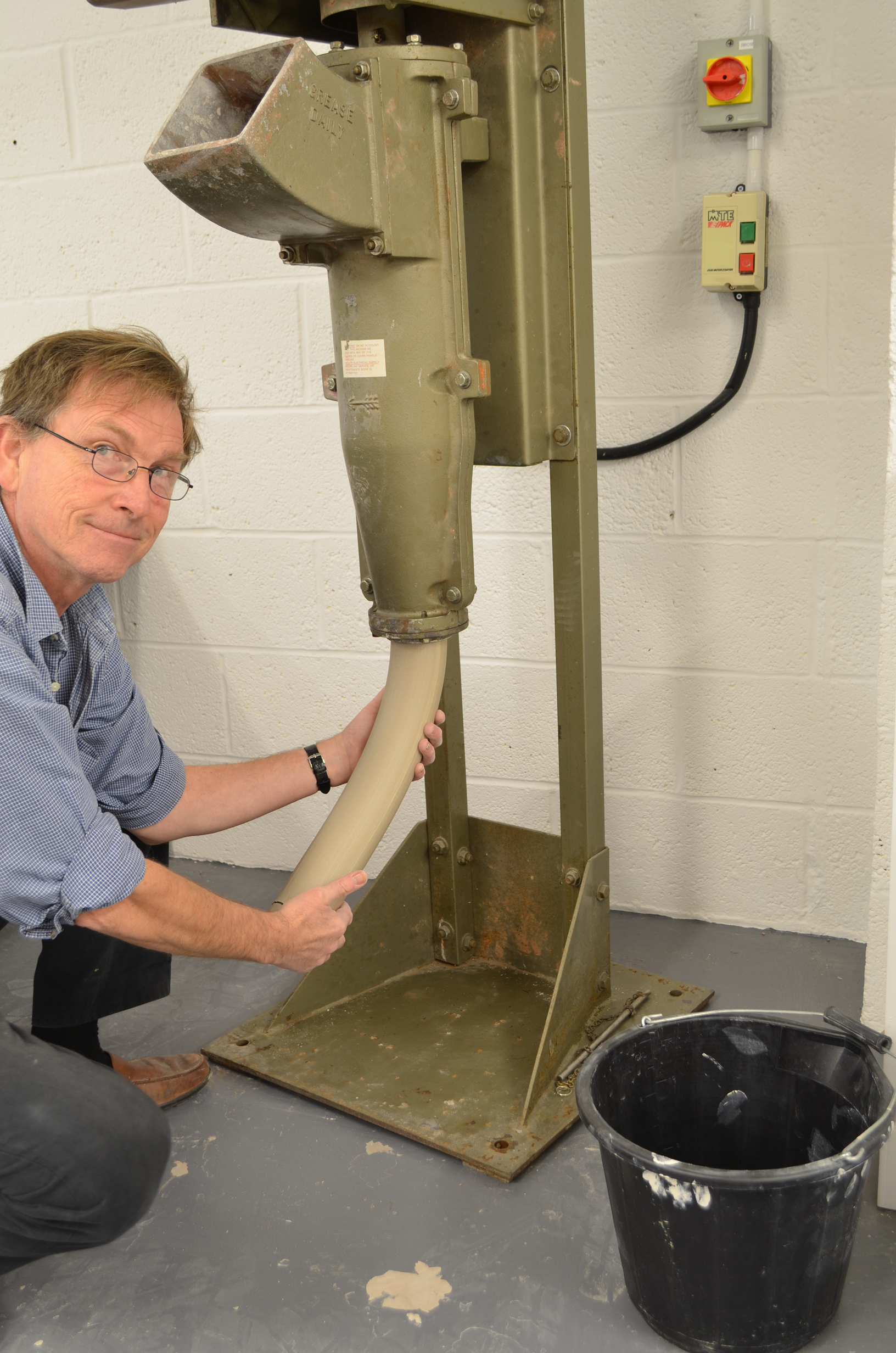
A pugmill is like a large mincer or sausage machine with knives on the screw fan principle that cut and knead the recycled clay, pressing it out of a smaller aperture (3″), smooth and even in texture, and ready to be used.

Most pug mills require you to process the clay to get it to a relatively tight range of consistency before going in. Dry clay has to be soaked in a bucket and wet clay kept wrapped in a plastic bag so that it is just right for the mill. The clay is squeezed out in long tube shapes called “slugs”, which are carefully stacked and wrapped in plastic until required.

The following images will give you an idea of how it all works:

ready for pugging

a lump of clay

clay in a bucket

clay soaking

image of clay going into pugmill

the clay is fed to Thelonius

image of pugmill lever being used to squeeze clay

squeezing the clay through

image of clay slug coming out of pugmill

Thelonius makes his first slug

image of two clay slugs or tubes from the pugmill

voilá, two lovely slugs, ready for use

image of pugmill with Peter Arscott and Staurt Houghton

the team

If you want to follow belatrova’s progress via Facebook or the blog, and unless you have already done so, just click the tag at the bottom right of your screen that says “follow” and you will get notifications everytime the blog is updated with news. We will be opening at No 9 for Christmas – details in the next blog.